U.S. Divorce Is Less Common Than It Used to Be: What the Latest CDC Numbers Show, and How Couples Can Bring Up Hard Things Early
The U.S. recorded 662,950 divorces and annulments in 2024 in the states that report them, a rate of 2.3 per 1,000 people, down from 4.0 in 2000, according to provisional CDC data. Here’s what the numbers do and don’t say, and how to talk about problems while they’re still small.

In the U.S., divorce is less common than it used to be. Provisional figures from the CDC’s National Center for Health Statistics show 662,950 divorces and annulments in 2024 in the states that report them, a rate of 2.3 per 1,000 people, down from 4.0 in 2000. The U.S. marriage rate also fell, from 8.2 to 6.3 per 1,000, so part of the drop may reflect fewer marriages. The numbers show a trend, not its causes. In your own relationship, it still helps to talk about problems early, kindly and specifically.
- The U.S. divorce rate was 2.3 per 1,000 people in 2024 (provisional), down from 4.0 in 2000 (CDC).
- The U.S. recorded 662,950 divorces and annulments in 2024, counting only the states that report the data (CDC).
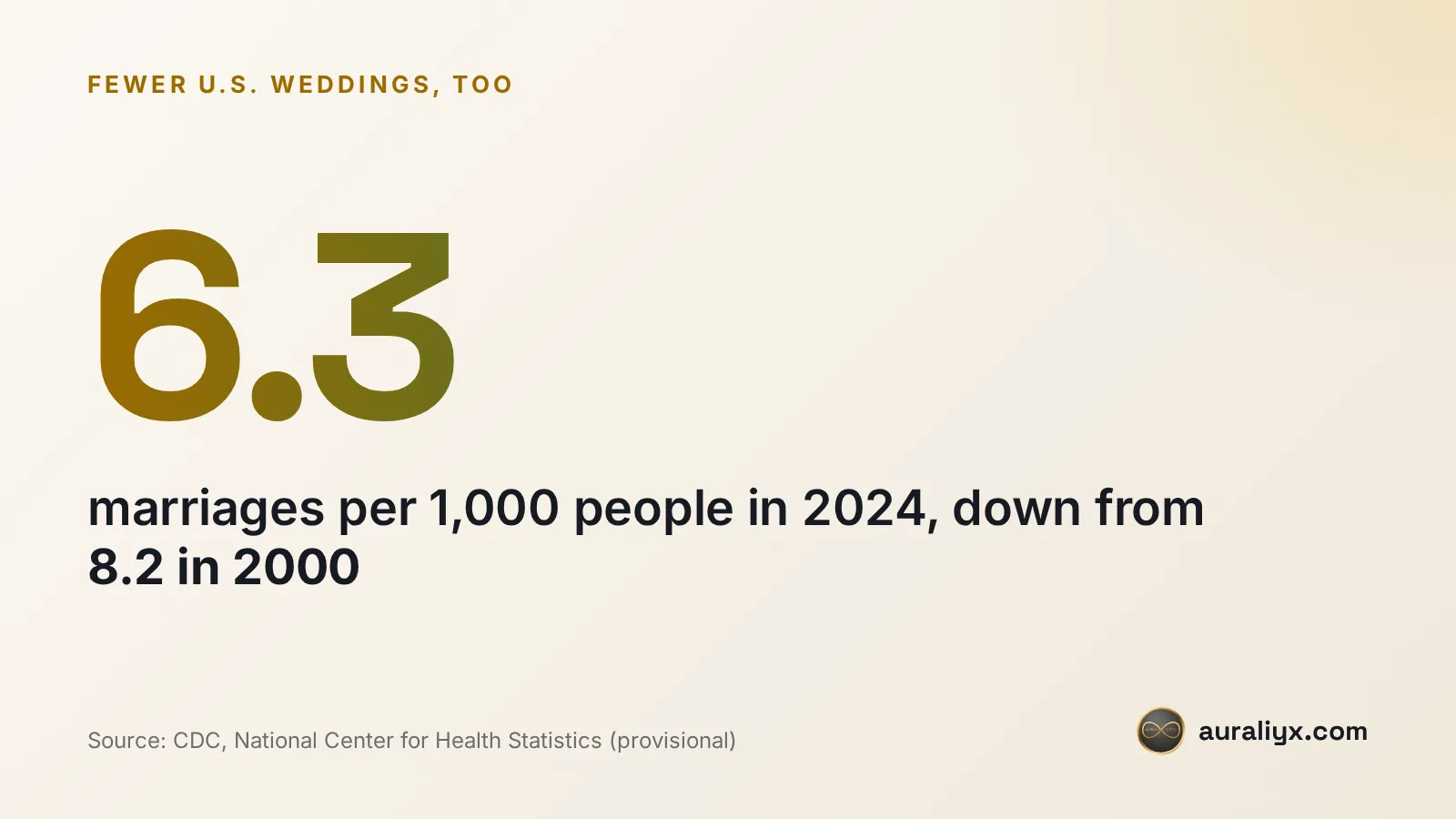
- The U.S. marriage rate also fell, from 8.2 per 1,000 in 2000 to 6.3 in 2024.
- The famous “half of all marriages end in divorce” line looks out of date in the U.S.: a 2025 Institute for Family Studies estimate puts it closer to 40% for first marriages.
- Problems are easier to repair when you bring them up early, kindly and specifically.
If you believe the old line that half of all marriages end in divorce, the latest government numbers may surprise you. Divorce in the U.S. has been falling for years, and it is now far less common than it was at the turn of the century.
Marriage still isn’t easy, but the numbers are more hopeful than that old line. Below, we look at what the CDC data shows, what it can’t tell us, and the conversations that can help when things get hard.
What the CDC data shows
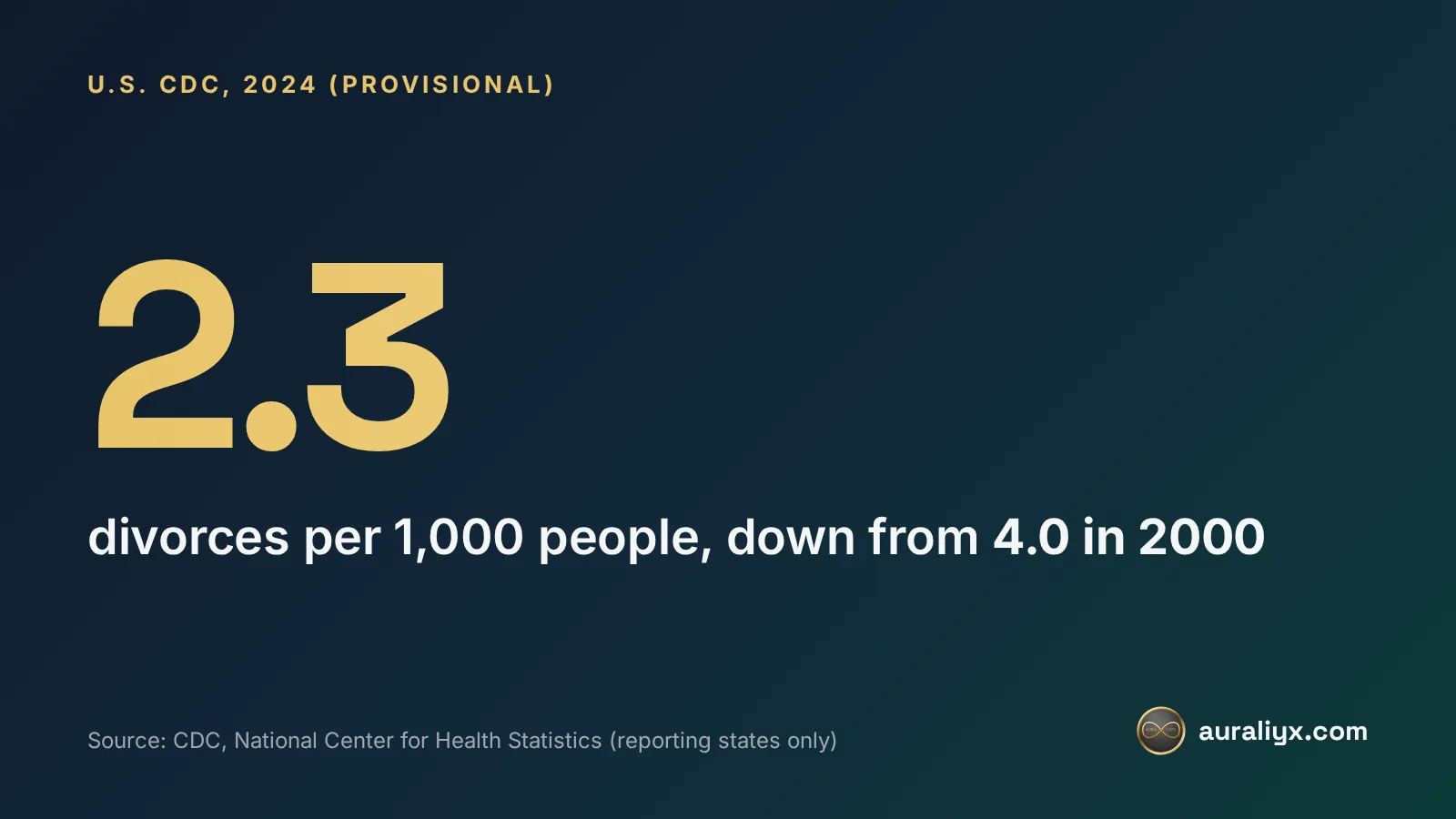
According to provisional figures from the CDC’s National Center for Health Statistics, there were 662,950 divorces and annulments in 2024 in the states that report them, a rate of 2.3 per 1,000 people. In 2000, the rate was 4.0.
The decline has been gradual: 3.6 in 2010, 2.7 in 2019 and 2.4 in 2022 and 2023. The rate also dipped to 2.3 in 2020, then rose to 2.5 in 2021 before falling again. Over the same period, the marriage rate fell from 8.2 to 6.3 per 1,000 people, with 2,128,446 marriages recorded in 2024.
What the numbers don’t tell you
These are useful numbers, but they have limits worth knowing:
- It is a rate per 1,000 people, not per married couple. Because fewer people are marrying, part of the drop may simply reflect fewer marriages.
- Not every state reports. The 2024 divorce count excludes California, Hawaii, Indiana, Minnesota and New Mexico.
- The figures are provisional, and annulments are counted together with divorces.
- The data shows a trend, not the reasons for it. Any explanation you read is someone’s interpretation, not something these numbers prove.
Need to bring up something hard without starting a fight? Tell Auraliyx what’s going on and work out what to say.
Try Auraliyx free →Is it still “half of all marriages”?
Probably not. In a 2025 analysis, researchers at the Institute for Family Studies, a research group focused on marriage and family, estimated that about 40% of today’s first marriages in the U.S. will end in divorce, below the often-repeated 50%. That is an estimate based on survey data and assumptions about the future, so treat it as a ballpark, not a prediction for any one couple.
“About 40% of today’s marriages will end in divorce.”
Institute for Family Studies (2025 estimate for U.S. first marriages)
What can help couples through a rough patch
No dataset can tell you what will happen in your relationship. What you can control is how you talk when things are hard. A few habits can help in everyday conflict:

- Bring it up early. Small issues are easier to fix before they turn into months of resentment.
- Be specific. “I felt alone at the party last night” works better than “You never pay attention to me.”
- Talk about money on purpose. It is one of the top stressors for couples, and secrets make it worse: 43% of Americans see financial secrets as at least as bad as cheating.
- Repair quickly. A sincere apology or a small gesture after a fight matters more than winning it.
- Protect time together. A weekly walk or a dinner without phones keeps you connected when life gets busy.
If sleep is part of the strain, we looked at how some couples make sleeping apart work.

What to say when things feel off
Starting the conversation is often the hardest part. Lead with care and a specific feeling, not a verdict about the whole relationship.
Why it works: It says how you feel without blaming anyone, shows you still care and suggests a calm time to talk.
Why it works: It is honest about the hurt but pauses the fight before anyone says something they cannot take back.
When a therapist or lawyer can help
If the same fight keeps coming back, if you have stopped talking about anything that matters, or if one of you is already thinking about leaving, a licensed couples therapist can help you both feel heard. Getting help doesn’t mean you’ve failed, and it can be a way of taking the relationship seriously. Online sessions can make it easier to start, especially for busy couples. One exception: if you’re afraid of your partner, couples therapy and a calm talk aren’t the place to start. Contact a local domestic violence service first.
If divorce is truly on the table, get proper advice before making big decisions about money, the home or children. A family lawyer or a mediator can explain your options where you live.
This article is general information, not legal or financial advice. Laws and options vary from place to place; talk to a qualified professional.
If you are going through a breakup
Whether you are separating or just went through a hard fight, how you talk now matters, especially if you share friends, a home or children. Calm, short and respectful messages are almost always the right call.
If you need to apologize, this guide can help you find the words.
Why it works: It cools things down and asks you both to stay respectful as you figure out what’s next.
- Money Now Stresses Couples More Than Health, Work or Intimacy. Here's How to Talk About It Without a Fight
- Nearly 1 in 3 Americans Has Tried a “Sleep Divorce.” Here’s How It Can Actually Help Your Relationship
- How Long Does It Take to Get Over a Breakup? A Study Says Longer Than You Think (and Staying in Touch May Slow It Down)
Sources we checked
- CDC, National Center for Health Statistics: Provisional number of marriages and marriage rate, and of divorces and annulments and rate: United States, 2000-2024 (provisional 2024 data)
- Institute for Family Studies: Divorce in Decline: About 40% of Today’s Marriages Will End in Divorce (July 24, 2025)
We open and read every source before we cite it. Spotted an error? Email humansupport@auraliyx.com and we will fix it.
Written by
Auraliyx is an AI relationship coach trained only on attraction, dating and relationships. Every article is built from sources we open and read, every number is checked against the original, and the Auraliyx team reviews it and corrects anything we get wrong.
Frequently asked questions
What is the divorce rate in the U.S.?
Provisional CDC figures put the U.S. divorce rate at 2.3 divorces and annulments per 1,000 people in 2024, in the states that report the data, down from 4.0 per 1,000 in 2000.
Do half of all marriages end in divorce?
That figure is out of date. A 2025 analysis by the Institute for Family Studies estimated that about 40% of today’s first marriages in the U.S. will end in divorce. It’s an estimate, not a prediction for any one couple.
Why is the divorce rate falling?
CDC numbers for the U.S. show the trend but not its causes. Part of the drop may reflect that fewer people are marrying: the marriage rate fell from 8.2 to 6.3 per 1,000 people between 2000 and 2024.
Which states are missing from the divorce data?
The CDC’s 2024 national divorce count excludes California, Hawaii, Indiana, Minnesota and New Mexico, so the true national total is higher than the published count.
How do I bring up problems without starting a fight?
Choose a calm moment, describe a specific situation and how it made you feel, and suggest a time to talk. Avoid words like “always” and “never.”
When should we see a couples therapist?
When the same fights keep repeating, when you have stopped talking about what matters or when one of you is thinking about leaving. Earlier is usually better than later. If you’re afraid of your partner, couples therapy isn’t the place to start: contact a local domestic violence service first.
Found it useful? Send it to someone who needs it
A friend with the same question will thank you.
Not sure what to say?
Paste your partner’s message or describe what’s going on. Auraliyx helps you say hard things calmly and clearly.
Try Auraliyx freeFree · no credit cardShort videos on what to text, what to say and what it really means. Follow Auraliyx:
Join the conversation
Has this happened to you? Share your experience. It might help someone else.
Comment rules
- Be kind. No insults, hate or explicit content.
- No links, ads, contact details or phone numbers.
- English only, for now.
- Don't share private details about other people.
- Comments are checked automatically and may be removed.
We only keep the first name and the comment you post, and the date. We don't ask for your email or store your IP address. To have a comment removed, email humansupport@auraliyx.com.