Nearly 1 in 3 Americans Has Tried a “Sleep Divorce.” Here’s How It Can Actually Help Your Relationship
A survey for the American Academy of Sleep Medicine found 31% of U.S. adults have slept apart from a partner to get better rest. Sleep experts say the key is how you talk about it. Here’s how to bring it up without hurt feelings.
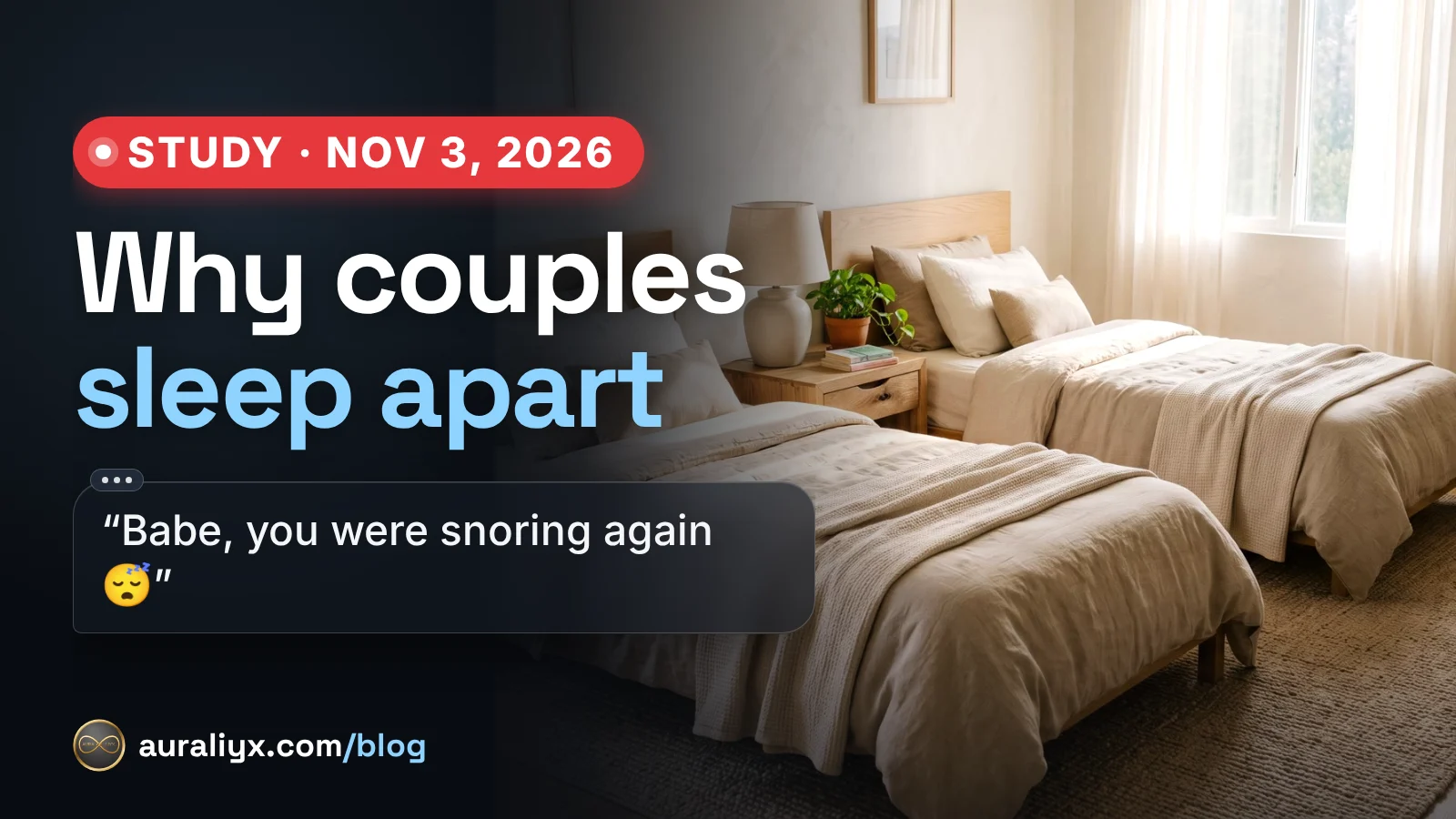
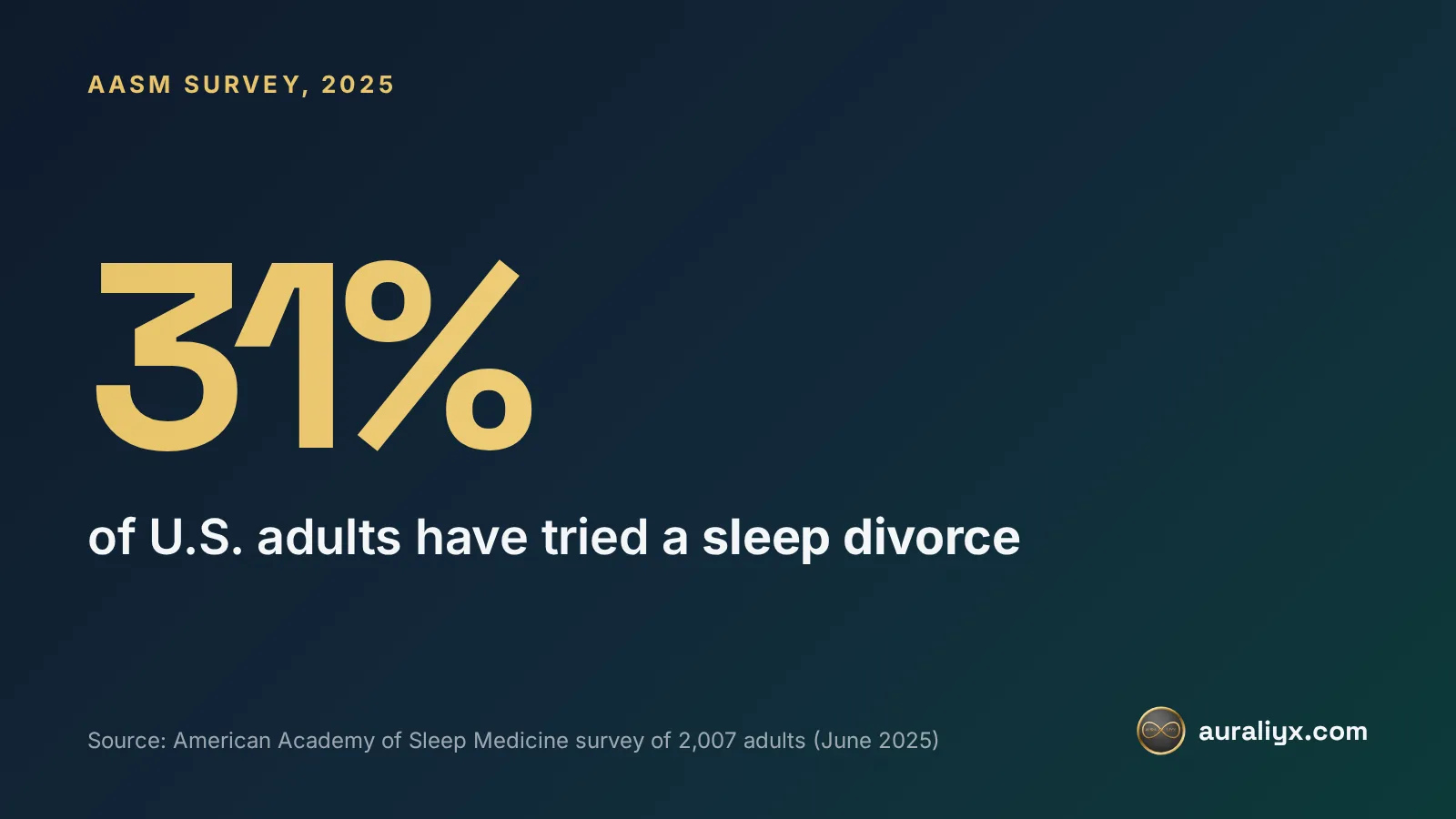
In a survey of 2,007 U.S. adults commissioned by the American Academy of Sleep Medicine (June 2025), 31% said they had engaged in a “sleep divorce,” sleeping in another bed or room to accommodate a bed partner. Adults 35 to 44 were the most likely to do it (39%). Sleeping apart is not automatically a bad sign: the AASM’s spokesperson says the key is to communicate preferences and be intentional about spending time together.
- 31% of U.S. adults have tried a sleep divorce, according to a 2025 survey for the American Academy of Sleep Medicine.
- It is most common between ages 35 and 44 (39%) and least common at 65 and older (18%).
- 37% go to bed at a different time than they would like, just to accommodate a partner.
- Snoring that disrupts sleep can be a sign of a health problem worth checking with a doctor.
- Sleeping apart works best when you talk about it openly and protect time together.
He snores. She kicks. One of you scrolls until 1 a.m. while the other has an alarm at 5:30. Sharing a bed is romantic in theory, and exhausting in practice for a lot of couples.
That is why the “sleep divorce” has gone mainstream. The name sounds dramatic, but for many couples it is the opposite of a breakup: it is a way to stop resenting each other at 3 a.m. Here is what the data says and how to talk about it without anyone feeling rejected.
What the survey found
The American Academy of Sleep Medicine (AASM) commissioned an online survey of 2,007 U.S. adults, conducted by Atomik Research from June 5 to 13, 2025, and released the results in July.
31% said they had engaged in a “sleep divorce,” sleeping in another bed or another space to accommodate a bed partner. It was most common among adults 35 to 44 (39%) and least common among those 65 and older (18%).
- 37% go to sleep at a different time than they want, to accommodate a bed partner.
- 15% use a silent alarm so they don’t wake their partner.
- Men were more likely than women to report both habits.
Why couples end up sleeping apart
The reasons are rarely about love. They are about bodies and schedules: snoring, restless legs, one person running hot and the other cold, different work hours, a baby, a dog that insists on the bed, or simply different bedtimes.
Poor sleep has a way of spilling into everything else. You are more irritable, less patient and quicker to lose your temper over small things the next day. Over weeks, that adds up.
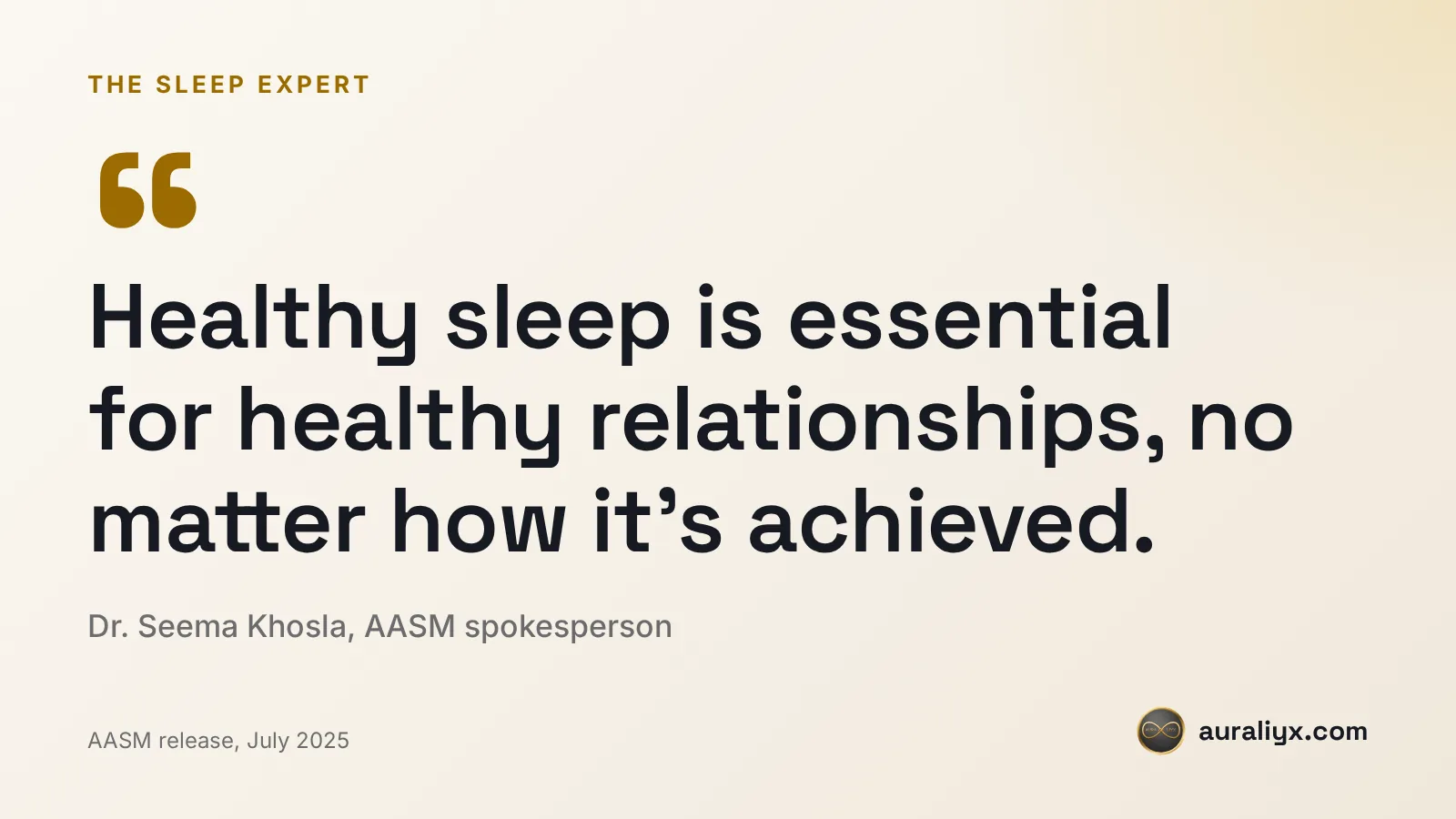
“When our sleep is compromised due to a disruptive partner, resentment can grow.”
Dr. Seema Khosla, AASM spokesperson
Want to bring up sleeping apart without hurting your partner? Paste the conversation and get the right words.
Try Auraliyx free →Is a sleep divorce a red flag?
Not by itself. What matters is the reason and the conversation around it. Moving to the couch in silence after a fight is very different from a calm, shared decision to sleep better.
The AASM’s spokesperson frames it as a matter of respect, not distance: a sleep divorce, she said, “has more to do with mutual respect regarding the sanctity of the sleep space.”
How to bring it up without hurting your partner
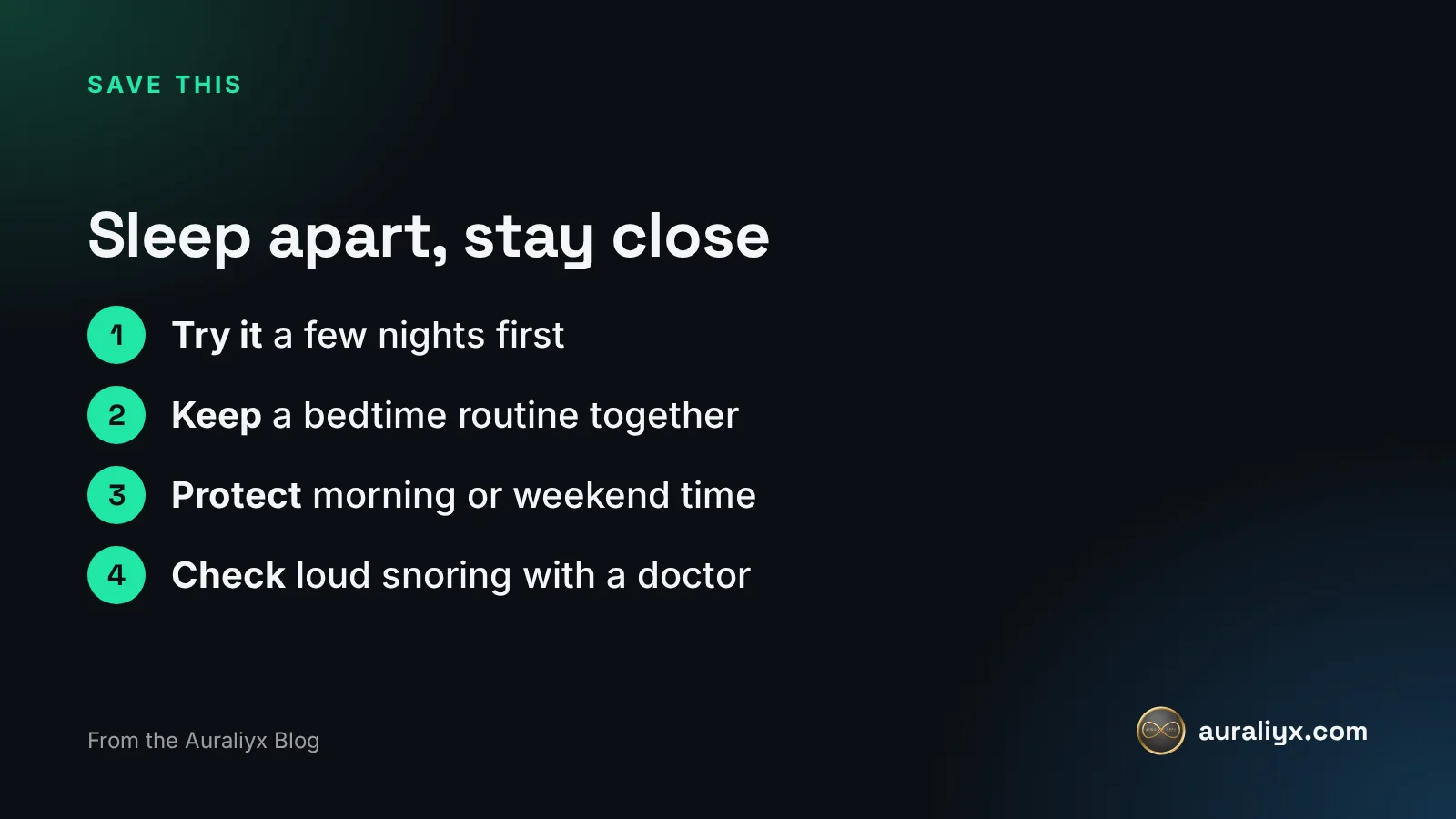
The biggest risk is that your partner hears “I don’t want to be close to you.” So lead with the relationship, then the sleep problem, then a trial, not a verdict.
Why it works: It starts with love, makes it about sleep, not rejection, and proposes a small experiment instead of a permanent change.
Why it works: It protects the closeness you both value while solving the sleep problem.

Keep the closeness: small rituals that matter
Sleeping apart works best when you replace the shared bed with intentional time together. Morning coffee, a few minutes of talking before lights out, or weekend mornings in the same bed can keep the connection strong.
Different needs for touch and closeness are normal in couples, by the way. If that sounds familiar, here is what science says about why some people hate hugs.
“The key is to communicate preferences and be intentional about spending time together.”
Dr. Seema Khosla, AASM spokesperson
Ways to sleep apart that still feel close
A sleep divorce does not have to mean separate rooms every night. Many couples find a middle ground that fits their space and their needs:
- Separate blankets, same bed. One of the simplest fixes when one of you runs hot or steals the covers.
- Two beds in the same room. You still share the room, the routine and the morning chat.
- Weeknights apart, weekends together. Rest when it counts, closeness when there is time to enjoy it.
- Separate rooms with a shared ritual. Fall asleep watching something together, then move to your own bed.
Why it works: It offers options instead of a verdict, and puts the relationship first.
When to talk to a doctor
Loud, regular snoring is not just annoying. According to the AASM’s spokesperson, if snoring is causing a disruption, “that could be a sign of something more serious.” If your partner snores loudly, gasps or seems to stop breathing at night, it is worth asking a doctor about it.
Sometimes treating the cause brings couples back to the same bed, and better rested than before.
Sources we checked
- American Academy of Sleep Medicine: New survey data on sleep divorce (survey of 2,007 U.S. adults, June 2025) (July 21, 2025)
We open and read every source before we cite it. Spotted an error? Email humansupport@auraliyx.com and we will fix it.
Written by
Auraliyx is an AI relationship coach trained only on attraction, dating and relationships. Every article is built from sources we open and read, every number is checked against the original, and the Auraliyx team reviews it and corrects anything we get wrong.
Frequently asked questions
What is a sleep divorce?
It means sleeping in a separate bed or room from your partner to get better sleep, either occasionally or every night. It is about rest, not about ending the relationship.
How many couples sleep apart?
In a 2025 survey for the American Academy of Sleep Medicine, 31% of U.S. adults said they had engaged in a sleep divorce, most often adults aged 35 to 44 (39%).
Is sleeping in separate beds bad for a relationship?
Not necessarily. Sleep experts say what matters is communicating openly and being intentional about spending time together, so the distance at night does not become emotional distance.
How do I ask my partner to sleep apart without hurting them?
Start with how much you love being close, explain the sleep problem, and suggest a short trial instead of a permanent change. Keep a shared routine before bed.
Can snoring be a health problem?
It can. The AASM’s spokesperson notes that disruptive snoring could be a sign of something more serious, so it is worth checking with a doctor. This is not medical advice.
Can couples sleep apart only some nights?
Yes. Many couples sleep apart on work nights and together on weekends, or share a bed but use separate blankets. The best setup is the one you both agree on.
Does sleeping apart mean the romance is over?
No. Many couples who sleep apart say they feel more patient and affectionate because they are rested. What matters is keeping time for closeness, like a bedtime routine or weekend mornings together.
Found it useful? Send it to someone who needs it
A friend with the same question will thank you.
Sleep better without drifting apart
Describe the situation or paste your partner’s message. Auraliyx helps you suggest changes kindly, so both of you feel heard.
Try Auraliyx freeFree · no credit cardShort videos on what to text, what to say and what it really means. Follow Auraliyx:
Join the conversation
Has this happened to you? Share your experience. It might help someone else.
Comment rules
- Be kind. No insults, hate or explicit content.
- No links, ads, contact details or phone numbers.
- English only, for now.
- Don't share private details about other people.
- Comments are checked automatically and may be removed.
We only keep the first name and the comment you post, and the date. We don't ask for your email or store your IP address. To have a comment removed, email humansupport@auraliyx.com.