Is Hiding Money From Your Partner Cheating? 43% of Americans Say It’s at Least as Bad
A Bankrate survey found that 43% of U.S. adults think keeping financial secrets from a partner is at least as bad as physical infidelity, and 45% of couples don’t know everything about each other’s finances. How to come clean, or bring it up, without blowing up your relationship.

Hiding money from a partner isn’t the same as physical cheating, but many people judge it just as harshly. In a Bankrate survey of 2,564 U.S. adults, conducted online by YouGov in December 2025, 43% said hiding money from a romantic partner is as bad as physical cheating or worse. Among couples who are married or living together, 45% said they and their partner don’t know everything about each other’s finances, and 9% of people in committed relationships said they keep major debts, expenses or income secret. The fix is communication, not necessarily merging every account.
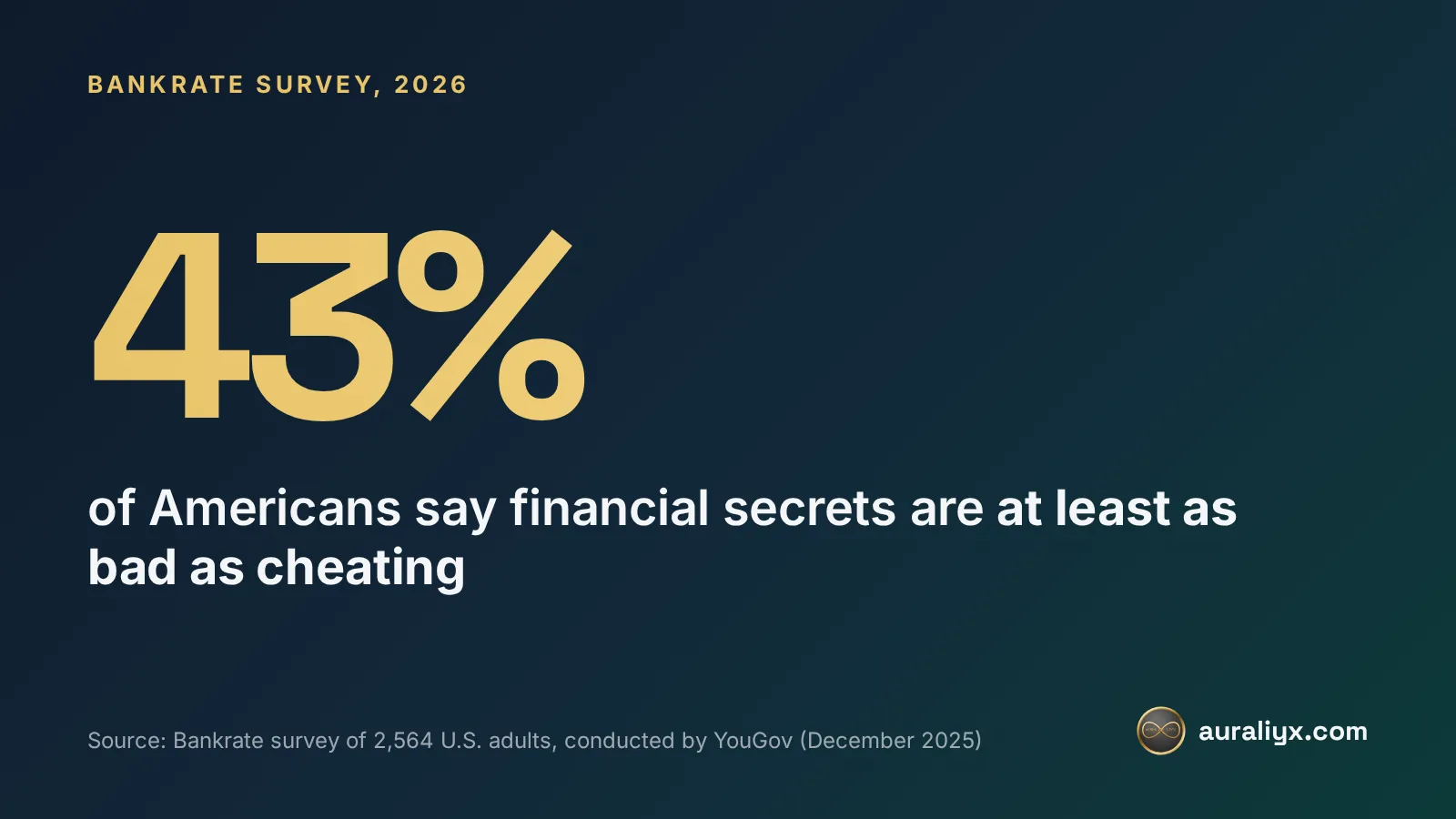
- 43% of U.S. adults in a Bankrate survey say financial secrets are at least as bad as physical cheating: 38% say equally bad and 5% say worse.
- In Bankrate’s survey, millennials are the most likely to say money secrets are at least as bad as physical cheating (47%), followed by Gen X (44%), Gen Z (42%) and baby boomers (39%).
- 45% of married or cohabiting couples in Bankrate’s survey said they don’t know everything about each other’s finances.
- In Bankrate’s survey, 1 in 4 people in committed relationships said they keep minor debts, expenses or income secret; 9% said they keep major ones secret.
- You don’t have to merge every account, but you do need to know where the money is going.
A new jacket you say you’ve “had for ages.” A credit card your partner has never seen. A savings account you keep “just in case.” Money secrets often start small, and the people keeping them don’t always see themselves as liars.
But a lot of people take them very seriously. A Bankrate survey found that more than 4 in 10 Americans consider financial secrets at least as bad as physical cheating. The numbers are below, along with how to come clean or bring it up without turning it into a war.
What Americans said about money secrets
Bankrate’s survey was conducted online by YouGov from December 2 to 8, 2025, and released on January 29, 2026. It asked 2,564 U.S. adults, including 1,208 who are married or live with a partner, about money and trust.
43% said hiding money from a romantic partner is as bad as physical cheating or worse: 38% said it is equally bad and 5% said it is worse. Another 31% said it is not as bad, and 26% had no opinion. By generation, the share who said it is at least as bad was:
- Millennials (ages 30 to 45): 47%
- Gen X (ages 46 to 61): 44%
- Gen Z (ages 18 to 29): 42%
- Baby boomers (ages 62 to 80): 39%
How common are money secrets?
In Bankrate’s survey, among couples who are married or living together, 45% said they don’t know everything about each other’s finances. That includes 29% who know most things, 11% who know some details and 5% who know almost nothing or nothing at all. Baby boomers were the most likely to say they know everything (64%), and Gen Z couples the least likely (44%).
Among Americans in a committed relationship, 1 in 4 (25%) told Bankrate they keep minor sources of debt, expenses or income secret. 11% said they don’t discuss credit scores, credit histories, savings or investments, and 9% said they keep major debts, expenses or income secret.
Need to bring up money, or come clean about it? Paste the conversation, and Auraliyx helps you say it your way and explains why.
Try Auraliyx free →Why people hide money
In the Bankrate survey, among those who don’t share all their financial information with their partner, the most common answer was that their partner wouldn’t care if they were told (43%, a different group from the 43% in the headline), followed by feeling they should be allowed to keep some things to themselves (28%), not wanting the other person to know (15%) and embarrassment (14%).
For some people, the secret comes down to shame: a debt from before the relationship, a credit score you are not proud of, or spending you know your partner would question. The longer it stays hidden, the heavier it gets.
Privacy vs. secrecy: where is the line?
Not every separate account is a betrayal. Plenty of couples keep some money separate on purpose and agree on it openly. The difference is consent: privacy is something you both know about and agreed to; secrecy is something your partner would be upset to discover.
A simple test: if your partner found out tomorrow, would they feel surprised or deceived? If the answer is yes, it is worth talking about, sooner rather than later. The exception is money you keep aside because you’re afraid of your partner: see the safety note in the next section.
Talking about money regularly makes secrets less likely. Money is already one of the biggest sources of stress for couples, and three money conversations can help head off fights. And if you’re both thinking about getting engaged, it helps to know what couples really spend on engagement rings now.
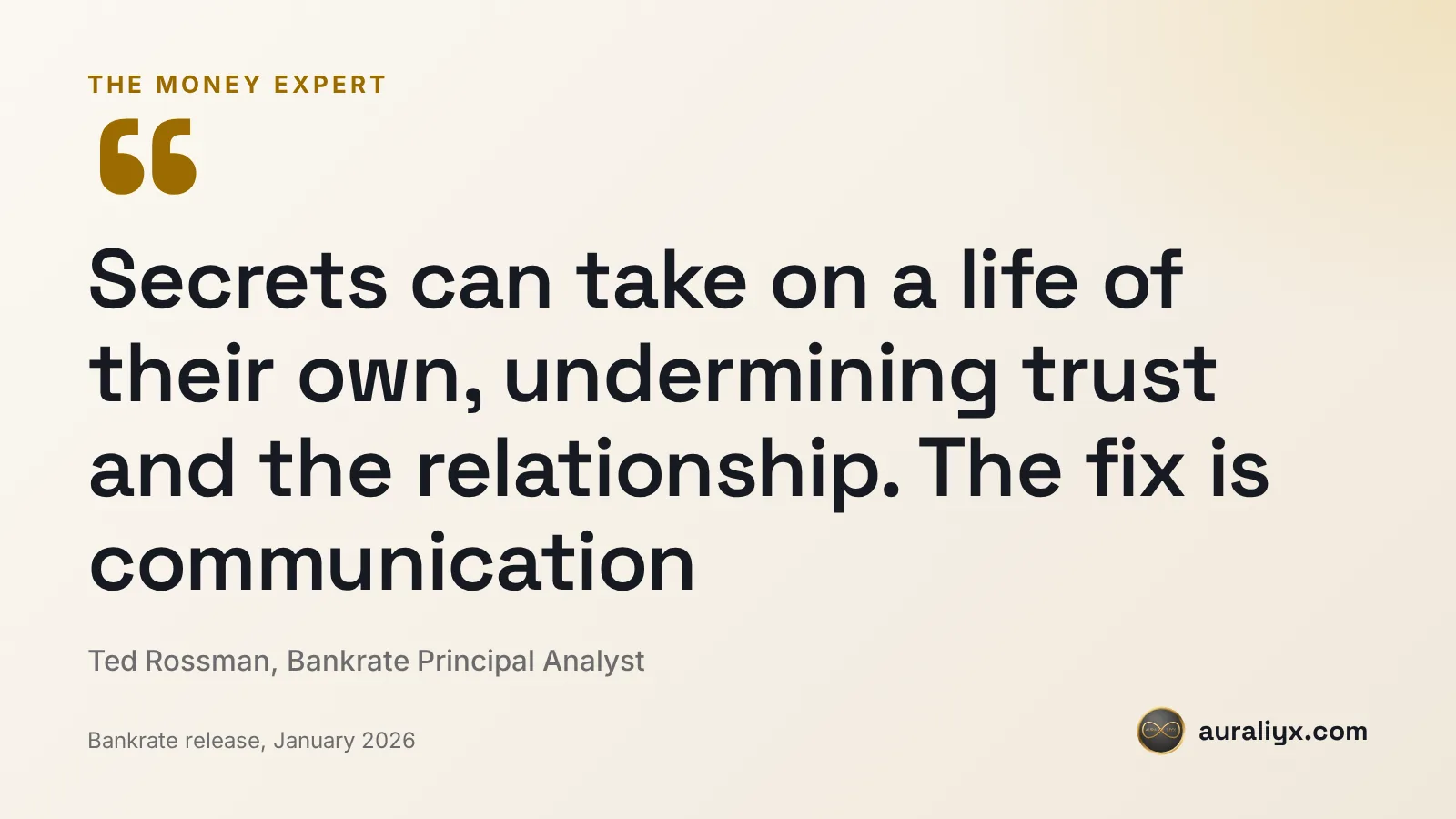
“You don’t necessarily need to combine all of your finances with your partner, but you do need to be aware of where your money is going.”
Ted Rossman, Bankrate Principal Analyst

How to come clean without blowing things up
If you are the one keeping a secret, telling your partner yourself is almost always better than being found out. Pick a calm moment, take responsibility, share the full picture and come with a plan. If it already turned into a fight, start with an apology text that owns what you did. One big exception to coming clean: if you’re keeping money aside because you’re afraid of your partner, or because they control your money, your safety comes first. Talk to a domestic violence hotline or a local support service before you tell them anything.

Why it works: It takes responsibility, sets a calm time to talk and shows you are serious about fixing it.
Why it works: It admits the mistake and turns the moment into a shared agreement instead of a power struggle.
If you think your partner is hiding money
Start with curiosity, not an accusation. You may not have the full story, and leading with blame usually makes people defensive, and more secretive. One caution: if your partner controls the money, blocks you from accounts or makes you afraid to ask, that can be financial abuse. Skip the sit-down and contact a domestic violence hotline where you live.
Why it works: It names the specific thing and your feeling, and invites teamwork instead of a trial.
A money routine that makes secrets harder to keep
Checking each other’s phones won’t stop financial infidelity, but making money easy to talk about can help. You want a relationship where either of you can say “I messed up with money” and hear “Okay, let’s fix it together.” A few habits make that easier:

- A monthly money date: 20 minutes to look at spending, bills and goals, without judgment.
- A no-questions budget: a set amount each of you can spend freely, no explanation needed.
- A check-in limit: agree on an amount, and talk before buying anything over it.
- No hidden debt: student loans, credit cards and buy now, pay later plans all go on the table.
This article is not financial or legal advice. If debt feels overwhelming, consider talking to a financial professional or a nonprofit credit counselor.
Sources we checked
- Bankrate: 43% Believe Financial Infidelity is at Least as Bad as Physical Cheating (survey of 2,564 U.S. adults, December 2025) (January 29, 2026)
- Bankrate: Survey: More Than 2 In 5 Americans Believe Financial Secrets Are At Least As Bad As Cheating (January 2026)
We open and read every source before we cite it. Spotted an error? Email humansupport@auraliyx.com and we will fix it.
Written by
Auraliyx is an AI relationship coach trained only on attraction, dating and relationships. Every article is built from sources we open and read, every number is checked against the original, and the Auraliyx team reviews it and corrects anything we get wrong.
Frequently asked questions
What is financial infidelity?
Financial infidelity means keeping money secrets from a partner, such as hidden debt, secret spending, a credit card or account they don’t know about, or lying about income. It is about broken trust, not about separate accounts you both agreed on.
Is financial infidelity as bad as cheating?
Financial infidelity isn’t the same as physical cheating, but many people judge it just as harshly. In a Bankrate survey, 43% of U.S. adults said keeping financial secrets from a partner is at least as bad as physical infidelity, including 5% who said it is worse.
How common is hiding money from a partner?
In Bankrate’s survey of U.S. adults, 25% of people in committed relationships said they keep minor debts, expenses or income secret, and 9% said they keep major ones secret. Separately, 45% of married or cohabiting couples said they don’t know everything about each other’s finances, which isn’t always the same as hiding something.
Is it okay to have a separate bank account in a relationship?
Yes, as long as your partner knows about it and you both agree on how it works. Separate accounts become a problem when they are secret. The exception is money you’re keeping aside because you’re afraid of your partner or because they control your money: your safety comes first, and a domestic violence support service where you live can help.
How do I tell my partner I have debt?
Pick a time when neither of you is stressed, then tell them what you owe, how it happened and what you plan to do about it. It’ll land better coming from you than from a statement they find later. This is not financial advice.
What should I do if my partner is hiding money?
Bring it up calmly, with a specific example and how it made you feel, and suggest looking at your finances together. If trust is badly damaged, a couples counselor or a financial professional can help. If your partner controls the money or makes you afraid to ask, skip the talk and contact a domestic violence support service where you live.
Found it useful? Send it to someone who needs it
A friend with the same question will thank you.
Talk about money without the fight
Paste your partner’s message or describe the situation. Auraliyx helps you say hard things about money honestly and kindly.
Try Auraliyx freeFree · no credit cardShort videos on what to text, what to say and what it really means. Follow Auraliyx:
Join the conversation
Has this happened to you? Share your experience. It might help someone else.
Comment rules
- Be kind. No insults, hate or explicit content.
- No links, ads, contact details or phone numbers.
- English only, for now.
- Don't share private details about other people.
- Comments are checked automatically and may be removed.
We only keep the first name and the comment you post, and the date. We don't ask for your email or store your IP address. To have a comment removed, email humansupport@auraliyx.com.