How Long Does It Take to Get Over a Breakup? A Study Says Longer Than You Think (and Staying in Touch May Slow It Down)
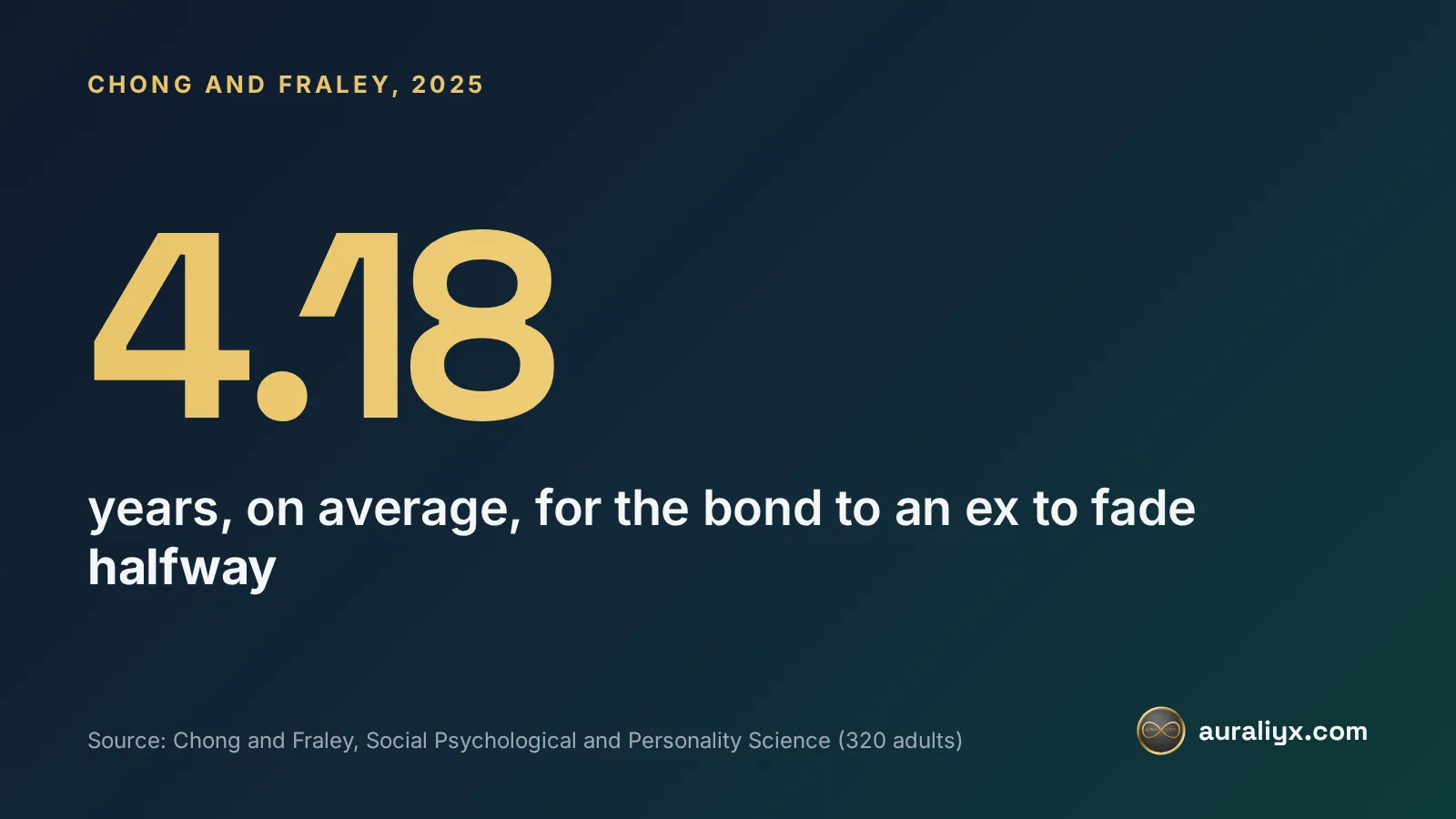
In a study of 320 adults whose long relationships had ended, it took about 4.18 years, on average, for the emotional bond to an ex to fade halfway. If you're still not over yours, you're not behind, and a few small choices can help, especially around the holidays.
Getting over a breakup often takes years, longer than most people expect. In a University of Illinois study, it took about 4.18 years, on average, for the emotional bond to an ex to fade halfway, after relationships that lasted more than two years. A Psychology Today write-up estimates that the typical person's bond would be gone at around 8 years, though the range was wide. Most people did let go fully in the end. Ongoing contact with the ex was the factor most linked to feelings that linger, while starting a new relationship did not speed things up.
- It took about 4.18 years, on average, for the bond to an ex to fade halfway (Chong and Fraley, 320 adults).
- In the long run, most people's bond to an ex faded to the level they'd feel for a stranger (Chong and Fraley).
- Regular contact with an ex, online or in person, was the factor most linked to a bond that lingers (Chong and Fraley).
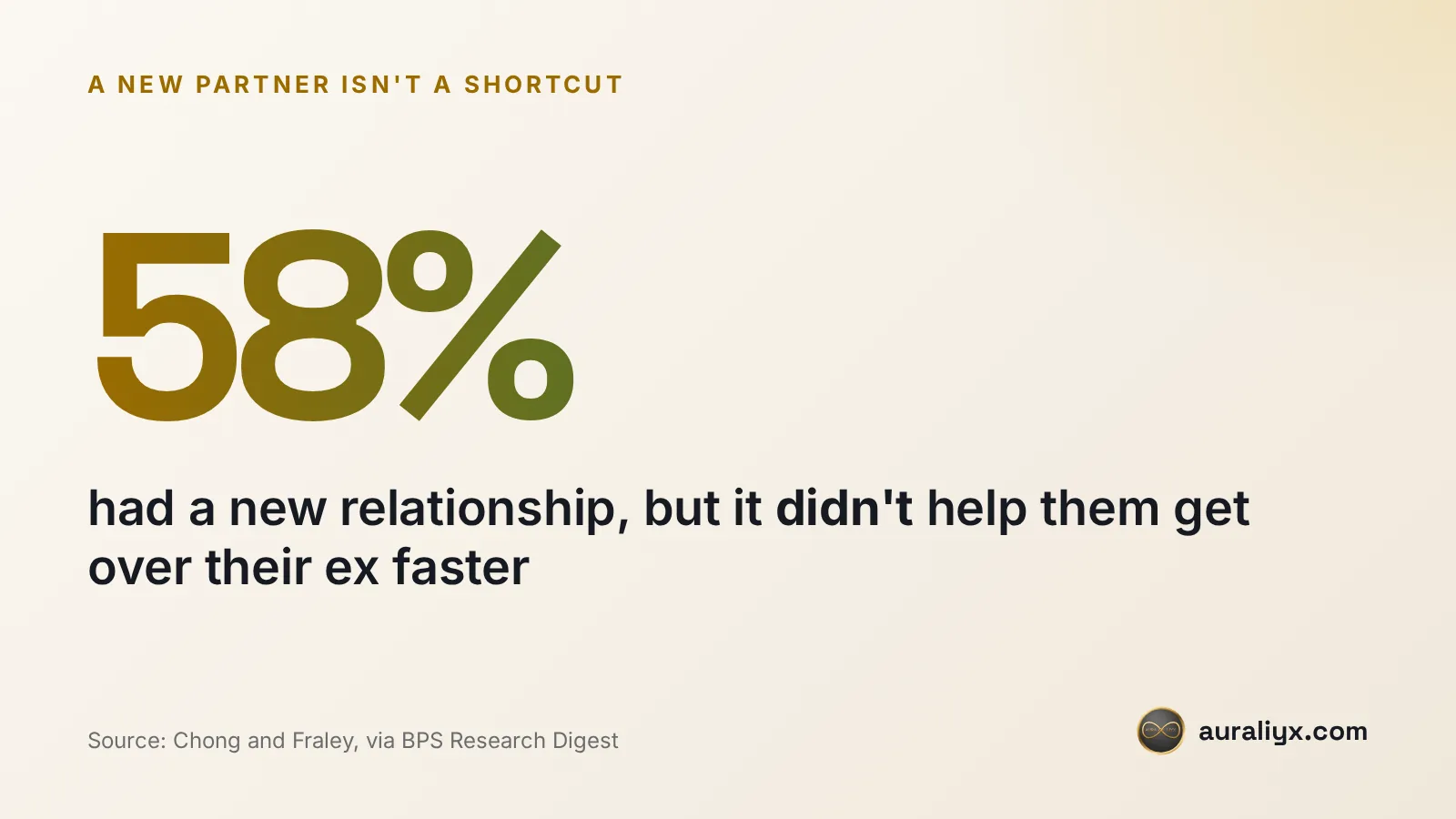
- About 58% of the adults in Chong and Fraley's study had started a new relationship, but that didn't help them get over their ex faster.
- Feeling attached years later is normal. It doesn't mean you want your ex back.
It's been months, maybe longer. You're fine most days. Then a song comes on in the grocery store, or their name pops up in your feed, and you're right back in it. And then there are the holidays, with all the old traditions and a phone that makes it very easy to send a quick "Merry Christmas."
If you've been asking yourself why you're not over it yet, research has a reassuring answer: you're not slow. Getting over someone you loved simply takes a long time. Here's what one study found, what seems to keep the bond alive, and what to say (or not say) if you're tempted to reach out over the holidays.
How long does it take to get over a breakup, according to research?
Psychologists Jia Y. Chong and R. Chris Fraley at the University of Illinois Urbana-Champaign looked at this question in a study published in Social Psychological and Personality Science. They surveyed 320 adults who had gone through a breakup after a relationship of more than two years.
On average, those relationships had lasted about 4.6 years, and people were about 5 years past the breakup when they took part. They answered questions about how much they still turned to their ex for closeness, comfort and a sense of security, and the same questions about a stranger, so the researchers had something to compare against. The participants were university students and online volunteers, at different points after their breakups, so these figures are averages for this group, not a schedule for everyone.
The result: the emotional bond to an ex took about 4.18 years to fade by half. Based on that pace, a Psychology Today write-up of the study estimates the bond would be fully gone at around 8 years for the typical person, though the range was wide. The hopeful part is that, in the long run, most people's bond to their ex faded to the same level they'd feel for a stranger. For some people, though, the journal abstract says traces of the bond never fully fade.
For context on how relationships tend to wind down in the first place, read about the two-stage decline researchers see before many breakups.
A note on the number: the journal's abstract lists 320 participants, while the three write-ups we link below say 328.
Why the "half the length of the relationship" rule doesn't hold up
You've probably heard that it takes half as long as the relationship lasted to get over it. Together for a year? Six months and you're good.
But that rule of thumb isn't based on research, and the University of Illinois study suggests the real timeline is often longer. It also helps to know what was measured. The study looked at attachment, not at how happy or sad people felt day to day. Attachment is the quieter part: the reflex to think of that one person when you're stressed, sad or have good news to share. You can be sleeping, working and laughing with friends again while that reflex is still slowly fading.
So if you're living your life and still feel a pang when you see their photo, that isn't failure. It's what attachment looks like on its way out. Most people hold on to an ex in their heads, sometimes for years.
“It's normal to do this; it doesn't mean you want to reconnect with your ex, nor does it reveal anything about your current or future relationships.”
Theresa DiDonato, Ph.D., social psychologist at Loyola University Maryland, in Psychology Today
Got a message from your ex and not sure how to answer? Paste it and see how your reply is likely to land before you hit send.
Try Auraliyx free →What seems to keep you attached to an ex (and what doesn't help)
The study also looked at what went along with the bond fading faster or slower. These are patterns linked to how attached people still felt, not proof of cause and effect, but they're useful to know:
- Staying in touch. People in regular contact with an ex, whether online or face to face, were much less likely to let go completely. This was the factor most consistently linked to how the bond faded.
- Anxious attachment. People who tend to worry about being left ended up holding on longer and were more likely to seek comfort from their ex. People who prefer emotional distance let go sooner.
- A new relationship didn't speed it up. About 58% had started a new relationship since the breakup, but that didn't help them get over their ex faster.
- Having kids together. Parents had a stronger bond with their ex at first, but it faded more quickly than for exes without children.
Should you text your ex over the holidays?
Thanksgiving (if you celebrate it), Christmas and New Year's Eve are prime time for "just checking in" texts. You see their favorite pie, you walk past the place you used to go, and suddenly a message feels harmless. Since contact was the factor most linked to a bond that lingers, it's worth pausing before you hit send.
Ask yourself one honest question: what do I want to happen after they reply? If the answer is "feel close to them again" or "find out if they miss me," the text is more likely to reopen the wound than to close it. If you share kids, a lease or a friend group, short and practical messages are fine. Keep them about logistics, not feelings.
If you do want to reach out, keep it short and skip the questions, so they're free to reply or not. And if you're single over the holidays and feeling the pull to pair up fast, our look at the real reasons people pair up in the winter might help you slow down.
Why it works: The first one reopens the relationship and puts them on the spot. The second is kind and complete, and it doesn't ask for anything back, so a reply (or no reply) won't throw you off.
Why it works: If you share kids, contact is part of life. Keeping messages about plans, not past hurt, protects them and gives your feelings room to settle.
What to say if your ex texts you first
Sometimes the message comes from them. A "Merry Christmas" or "saw this and thought of you" can knock you off balance, especially if you've been doing well. You don't owe an instant reply. Give yourself an hour, or a day, and decide what you actually want from this contact.
A warm but brief answer lets you be polite without getting pulled back in. If they keep reaching out and it's setting you back, it's okay to say so clearly and kindly: "I'd rather not stay in touch. Take care." And if they go quiet after a friendly reply, read what to do when you're left on read before you send a second message.
Why it works: It's friendly and ends the conversation there. You stay kind without signaling that the door is open, which protects the progress you've made.
How to help the bond fade (without forcing it)
You can't make attachment fade on command, but you can stop feeding it. Small choices add up:
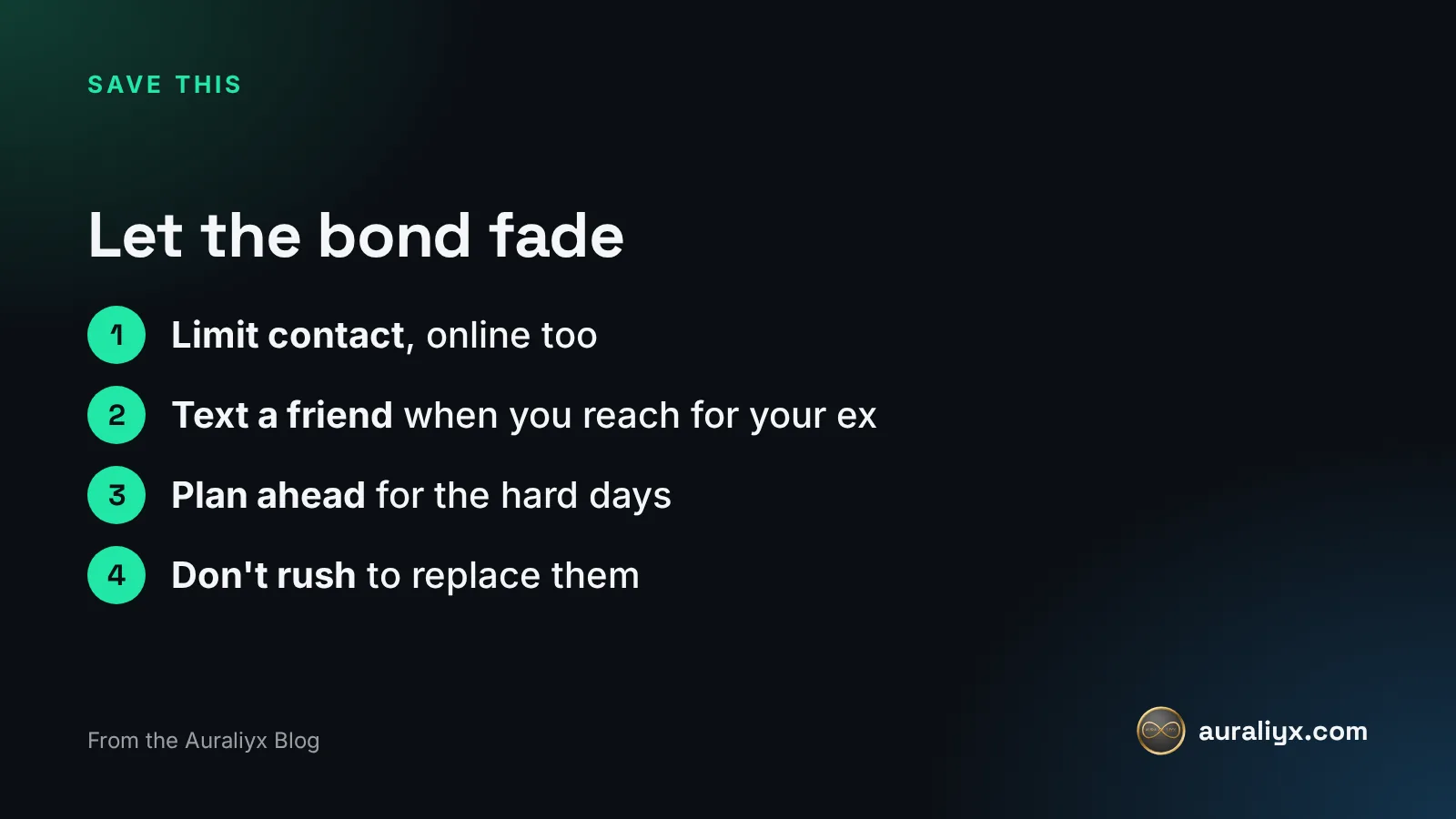
- Limit contact. Mute or unfollow for a while. Checking their stories keeps them on your mind, even if you never reach out.
- Find new places for comfort. When you instinctively reach for your ex after a bad day, text a friend or a sibling instead. You're retraining a habit.
- Plan for the hard days. Holidays, birthdays and anniversaries hit harder. Put something on the calendar so you're not alone with your phone.
- Notice your attachment style. If you tend to worry and seek reassurance, expect the pull to feel stronger, and go easy on yourself. Our post on relationship anxiety and doubts about the future explains the difference between attachment anxiety and avoidance.
- Don't rush to replace them. Date when you want to, not to prove you've moved on. A new relationship didn't speed things up in the University of Illinois study.
When getting over an ex needs extra support
Lingering feelings are normal. But if months after the breakup you can't sleep, can't focus at work, have stopped seeing friends, or feel hopeless, it's a good time to talk to a licensed therapist. Breakups can stir up old wounds, and a professional can help you sort out what belongs to this relationship and what's older.
If you have thoughts of hurting yourself, call or text 988 in the U.S. to reach the Suicide and Crisis Lifeline, any time, day or night. Outside the U.S., call your local emergency number or crisis line. If an ex's behavior makes you feel unsafe, contact local emergency services or a domestic violence hotline.
This article is general information, not medical or mental health advice. If you're struggling after a breakup, please talk to a qualified professional.
- Signs Your Relationship Is Ending Often Show Up Years Early. What a Big Study Found, and What to Say While There’s Still Time
- Chrishell Stause and G Flip’s Breakup Statements Show How to End Things With Respect
- Relationship Anxiety Often Comes Down to One Question: Does This Have a Future? Here’s What a New Study Found
Sources we checked
- Social Psychological and Personality Science (Chong and Fraley): The Long-Term Stability of Affective Bonds After Romantic Separation: Do Attachments Simply Fade Away? (March 12, 2025)
- Psychology Today (Sebastian Ocklenburg, Ph.D.): How Long It Really Takes to Get Over an Ex (April 3, 2025)
- British Psychological Society, Research Digest: How long does it take to get over an ex? (2025)
- Psychology Today (Theresa E. DiDonato, Ph.D.): Why Our Attachment to Ex-Partners Lingers for Years (March 5, 2026)
We open and read every source before we cite it. Spotted an error? Email humansupport@auraliyx.com and we will fix it.
Written by
Auraliyx is an AI relationship coach trained only on attraction, dating and relationships. Every article is built from sources we open and read, every number is checked against the original, and the Auraliyx team reviews it and corrects anything we get wrong.
Frequently asked questions
How long does it take to get over a breakup?
In a University of Illinois study of 320 adults whose relationships had lasted more than two years, it took about 4.18 years, on average, for the emotional bond to an ex to fade halfway. A Psychology Today write-up of the study estimates that, at that pace, the typical person's bond would be gone at around 8 years, though the range was wide. The study measured attachment, not day-to-day mood.
Is it true it takes half the length of the relationship to get over someone?
No. That rule of thumb isn't based on research, and a University of Illinois study suggests the bond to an ex often lasts longer than that.
Why can't I get over my ex?
Often it just takes time. Attachment fades slowly. In a University of Illinois study, regular contact with your ex and a more anxious attachment style were both linked to a bond that lingers longer.
Does a new relationship help you get over an ex?
Not faster, according to a University of Illinois study. About 58% of participants had started a new relationship, and it made no difference to how quickly the bond faded.
Should I text my ex over the holidays?
Ask what you want to happen after they reply. If you're hoping to feel close again, it's likely to set you back. If you share kids or practical ties, keep the message short and about plans.
Is it normal to still have feelings for an ex years later?
Yes. University of Illinois researchers found that most people still feel some attachment years after a breakup. It doesn't mean you want them back, and for most people it does fade in the end.
Found it useful? Send it to someone who needs it
A friend with the same question will thank you.
Reply without reopening old wounds
It's not AI talking for you. It's you, talking better. Paste your ex's text or describe the situation, and Auraliyx shows you how they're likely to feel reading your reply, and explains why, so you can stay kind and still protect your peace.
Try Auraliyx freeFree · no credit cardShort videos on what to text, what to say and what it really means. Follow Auraliyx:
Join the conversation
Has this happened to you? Share your experience. It might help someone else.
Comment rules
- Be kind. No insults, hate or explicit content.
- No links, ads, contact details or phone numbers.
- English only, for now.
- Don't share private details about other people.
- Comments are checked automatically and may be removed.
We only keep the first name and the comment you post, and the date. We don't ask for your email or store your IP address. To have a comment removed, email humansupport@auraliyx.com.