Why Some People Love Hugs and Others Hate Them, According to a Study of 15,000 Adults
New research explains why the same hug can feel like comfort to one person and pressure to another, and what that means for your relationship.
It is mostly about who you are, not about how much you love someone. In a study of 15,049 UK adults published in PLOS One on October 28, 2026, people with more empathy, a stronger sense of their own body and more attachment anxiety were more likely to remember a hug for its emotional impact, while people who tend to keep emotional distance (attachment avoidance) were less likely to. If your partner is not a hugger, it usually says more about their wiring than about your relationship.
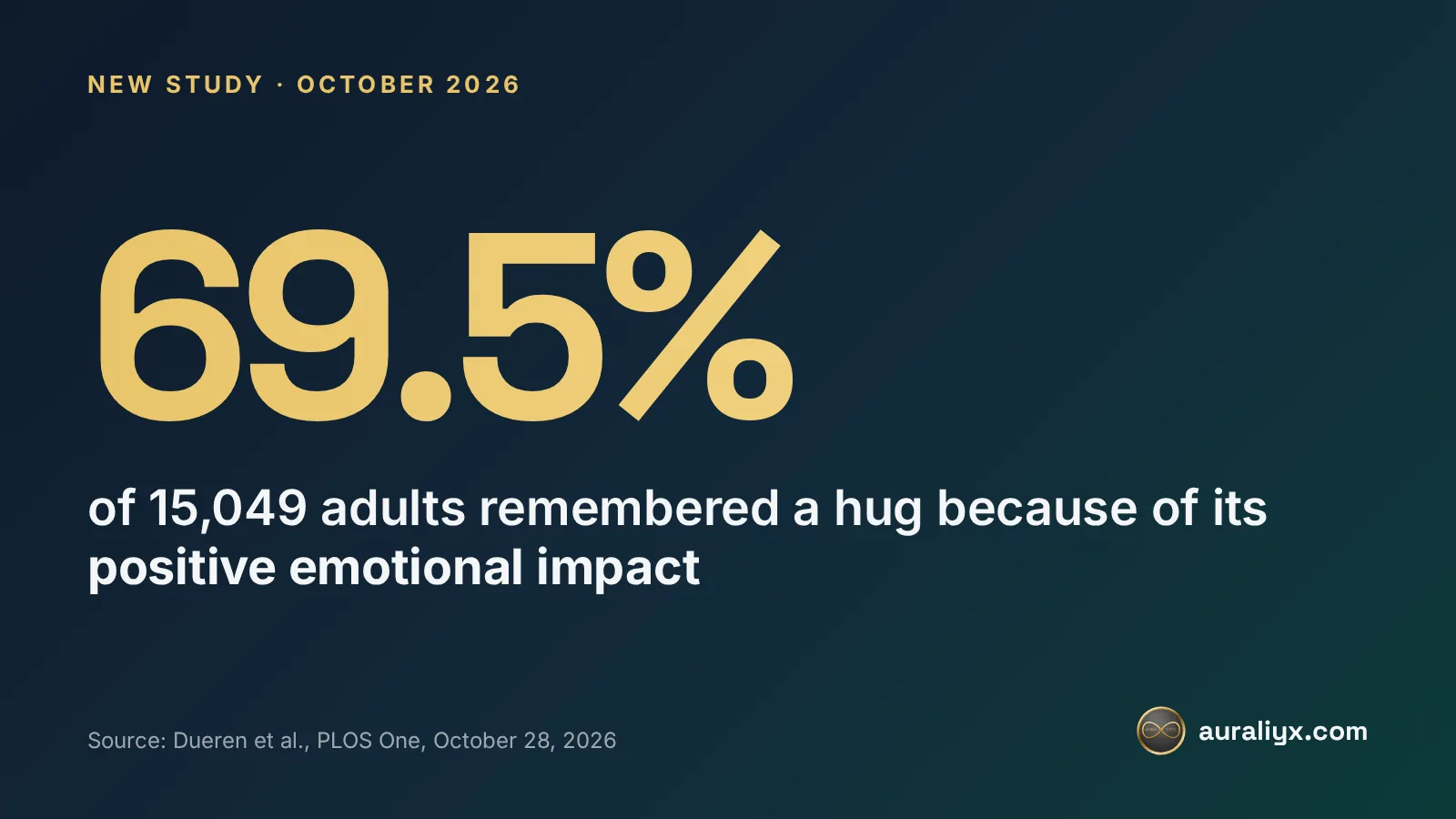
- 7 in 10 people (69.5%) remembered a hug because of its positive emotional impact.
- The most common reason a hug stuck with people was comfort. Physical arousal was the least common.
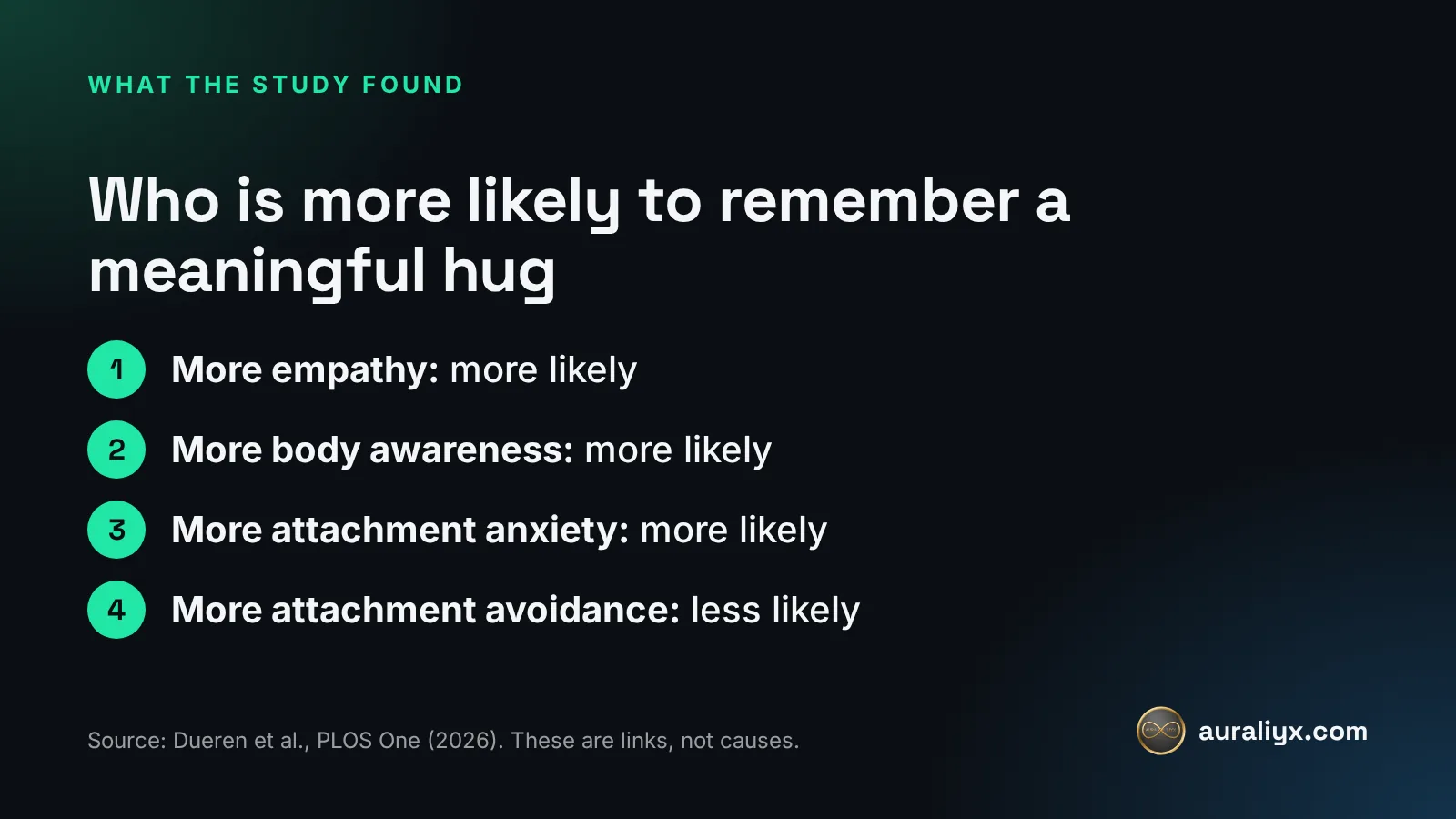
- Empathy, body awareness and attachment anxiety went with stronger hug memories; attachment avoidance went with weaker ones.
- Men were more likely than women to name a physically arousing hug as their most memorable one.
- The study shows links, not causes, and about three in four participants were women in the UK.
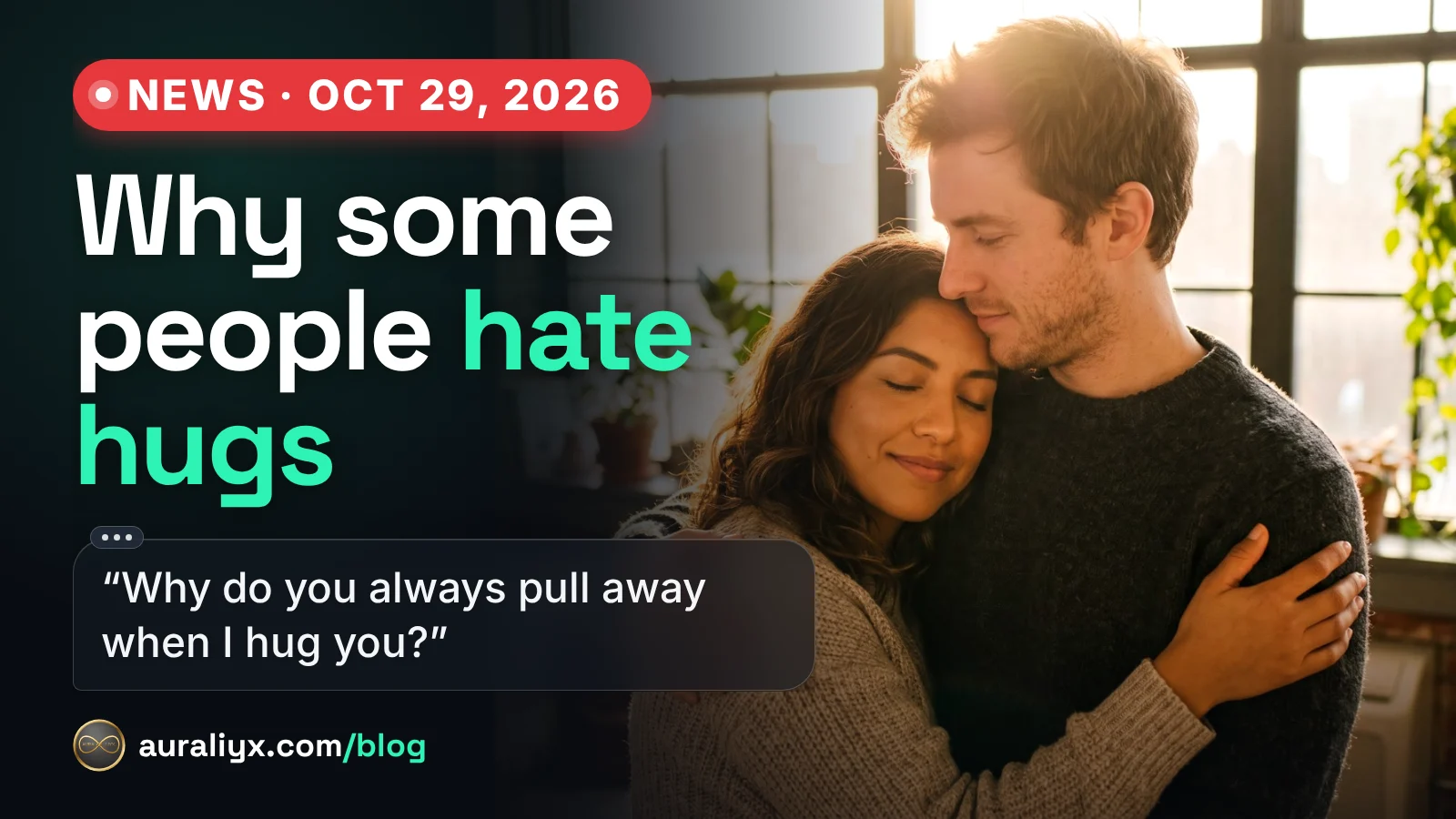
You go in for a hug and feel your partner stiffen. Or you are the one counting the seconds until it ends, while the other person seems to melt into it. It is one of the quietest sources of hurt in a relationship, because it is so easy to read as rejection.
A study published this week offers a calmer explanation. Researchers asked more than 15,000 adults about the hugs they remember and found that our reactions follow our personalities: how empathic we are, how tuned in we are to our own bodies, and how we attach to the people we love.
What the researchers found
The study, titled "Why we hug: Individual differences predict emotional touch memories", was led by Anna Lena Dueren at the University of Bristol and published in PLOS One on October 28, 2026. The team surveyed 15,049 adults in the UK, recruited with help from the BBC and other media, about how often they hug, how they relate to others and the hugs that stayed with them.
Most people had one: 69.5% recalled a hug because of its positive emotional impact. Comfort was the most common reason a hug became memorable; support and the feeling of being understood also came up often. Physical arousal was the least common reason overall.
Personality made a difference. People who scored higher on empathy, on body perception (how aware they are of signals inside their own body) and on attachment anxiety were more likely to recall an emotionally meaningful hug. People higher on attachment avoidance were less likely to. How often someone hugged did not predict whether they had such a memory.
“We hope our findings will help explain why hugs are perceived differently from person to person.”
The study's authors, quoted by Neuroscience News
Why the same hug can feel so different
Think of a hug as a message your body has to decode. If you are naturally empathic, you pick up a lot from touch: the other person's mood, their tension, their care. That makes a hug feel full of meaning.
Body awareness works in a similar way. Some people easily notice their heartbeat, breathing and muscle tension. For them, the shift that a good hug brings is easier to feel, and easier to remember.
Attachment style is the piece that matters most in couples. People with more attachment anxiety tend to crave reassurance, so a hug can feel like proof that they are safe and loved. People with more attachment avoidance tend to protect their independence, and lots of closeness, even welcome closeness, can feel like too much, too fast. Neither style is wrong. They are different strategies people learn for feeling safe.
The study found links, not causes. About three in four participants were women and all lived in the UK, so the results may not apply equally to everyone.
Not sure how to bring up hugs or affection without starting a fight? Paste what they said and get a calm, honest reply.
Try Auraliyx free →If you're the hugger and your partner isn't
First, try not to turn their stiffness into a story about your worth. Based on this research, a partner who is less into hugs is often simply wired for more space, not less love.
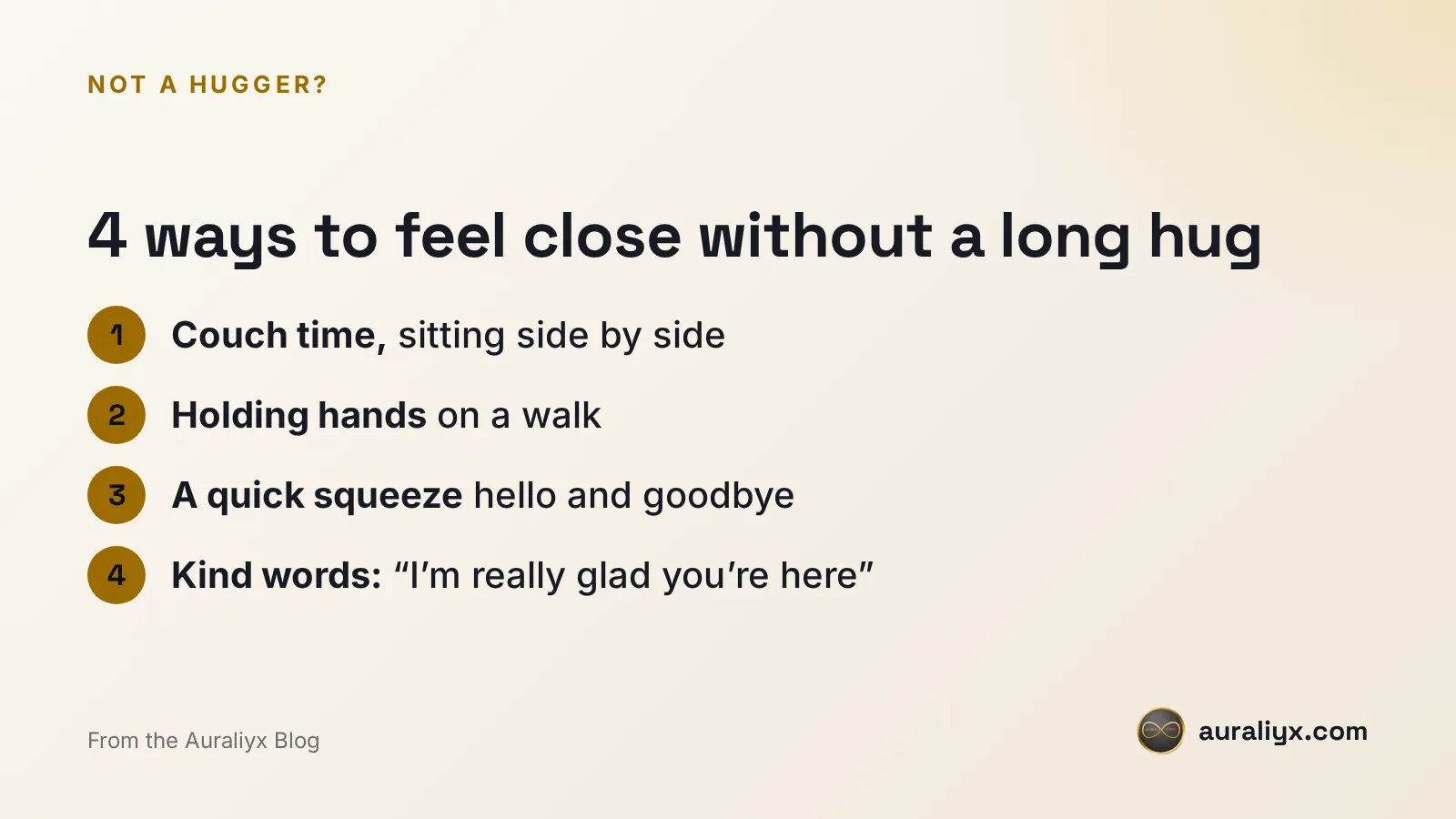
Second, get curious instead of keeping score. Ask what makes them feel close. Many people who are lukewarm about long hugs love other kinds of closeness: sitting side by side, a hand on your back, doing something together, or words.
Third, ask for what you need in a specific, low-pressure way. "Can I get a real hug when I get home?" lands much better than "You never hug me." And if the distance shows up in their texts too, here is how to respond to a cold text from your partner.
Why it works: It opens a curious conversation instead of an accusation, and it invites them to share their version of closeness.
Why it works: You name the difference without blame and make a small, concrete request that is easy to say yes to.
If you're the one who doesn't love hugs
Your partner cannot read your mind, and silence tends to get filled with the worst explanation. A short, warm explanation protects them from feeling rejected.
Lead with the relationship, then explain your preference, then offer an alternative. That order matters: it tells them the problem is not them.
Why it works: It reassures first, explains second and gives them a clear way to connect with you.

Hugs in new relationships and situationships
Early on, a hug carries extra weight. It can say "I like you" or "I'm not sure yet", and both people are reading the signals closely.
If you are unsure whether a hug is welcome, offer it lightly and let the other person choose. If you want more distance, a warm side hug and a clear "let's do this again" keep the door open without overcommitting. Afterward, a short text can carry the warmth for you.

Why it works: It acknowledges the moment warmly without making it awkward, and moves things forward with a simple question.
When touch differences become a bigger problem
Different needs for touch are normal and usually workable. It becomes a problem when one person feels constantly rejected or the other feels constantly pressured, and the same argument keeps coming back.
If that is where you are, a licensed couples therapist can help you both understand what is underneath and find a rhythm that works. And if a partner ever forces touch you have said no to, that is not a difference in preferences. It is a boundary being crossed, and it is worth talking to someone you trust or to a support line.
Touch is not the only thing couples quietly struggle with. Money now tops the list of stressors for American couples, and these three money conversations prevent most fights.
- Money Now Stresses Couples More Than Health, Work or Intimacy. Here's How to Talk About It Without a Fight
- Loneliness Rose Again in 2025, and Young Adults Felt It Most: How to Reach Out, Even If It Feels Awkward
- Are Couples Really Happier Than Singles? Yes, but the Gap Varies by Where You Live (and Most Long-Term Singles Are Doing Fine)
Sources we checked
- PLOS One: Why we hug: Individual differences predict emotional touch memories (Dueren et al.) (October 28, 2026)
- Neuroscience News: Why Some People Love Hugs While Others Hate Them (October 28, 2026)
We open and read every source before we cite it. Spotted an error? Email humansupport@auraliyx.com and we will fix it.
Written by
Auraliyx is an AI relationship coach trained only on attraction, dating and relationships. Every article is built from sources we open and read, every number is checked against the original, and the Auraliyx team reviews it and corrects anything we get wrong.
Frequently asked questions
Is it normal not to like hugs?
Yes. In the 2026 PLOS One study, how people experienced hugs was linked to traits like empathy, body awareness and attachment style. Not loving hugs is a common preference, not a flaw.
Does my partner not love me if they don't like hugging?
Usually not. The research points to personality differences, such as attachment avoidance, rather than a lack of feelings. Ask what makes them feel close and look for the kinds of affection they do enjoy.
What is attachment avoidance?
It is a tendency to protect your independence and feel uncomfortable with a lot of closeness. People high in avoidance can still love deeply; they often show it through actions, time together or practical help rather than lots of physical affection.
Did the study find differences between men and women?
Gender did not predict whether people remembered a meaningful hug. But when explaining why a hug was memorable, men were more likely than women to mention physical arousal or friendliness.
How do I ask for more affection without pressuring my partner?
Be specific and keep it small: name one moment that matters to you, such as a hug when you get home, and ask whether that works for them. Then ask what closeness looks like for them, so it goes both ways.
Found it useful? Send it to someone who needs it
A friend with the same question will thank you.
Turn "we're just different" into a real conversation
Tell Auraliyx what happened or paste their message. It explains what might be going on and suggests words that bring you closer instead of further apart.
Try Auraliyx freeFree · no credit cardShort videos on what to text, what to say and what it really means. Follow Auraliyx:
Join the conversation
Has this happened to you? Share your experience. It might help someone else.
Comment rules
- Be kind. No insults, hate or explicit content.
- No links, ads, contact details or phone numbers.
- English only, for now.
- Don't share private details about other people.
- Comments are checked automatically and may be removed.
We only keep the first name and the comment you post, and the date. We don't ask for your email or store your IP address. To have a comment removed, email humansupport@auraliyx.com.