Are Couples Really Happier Than Singles? Yes, but the Gap Varies by Where You Live (and Most Long-Term Singles Are Doing Fine)
A Psychological Science study of 382,078 adults in Great Britain found the happiness gap between couples and singles grows where more people are partnered, while singles stay about as satisfied. A second study followed long-term singles for 11 years.
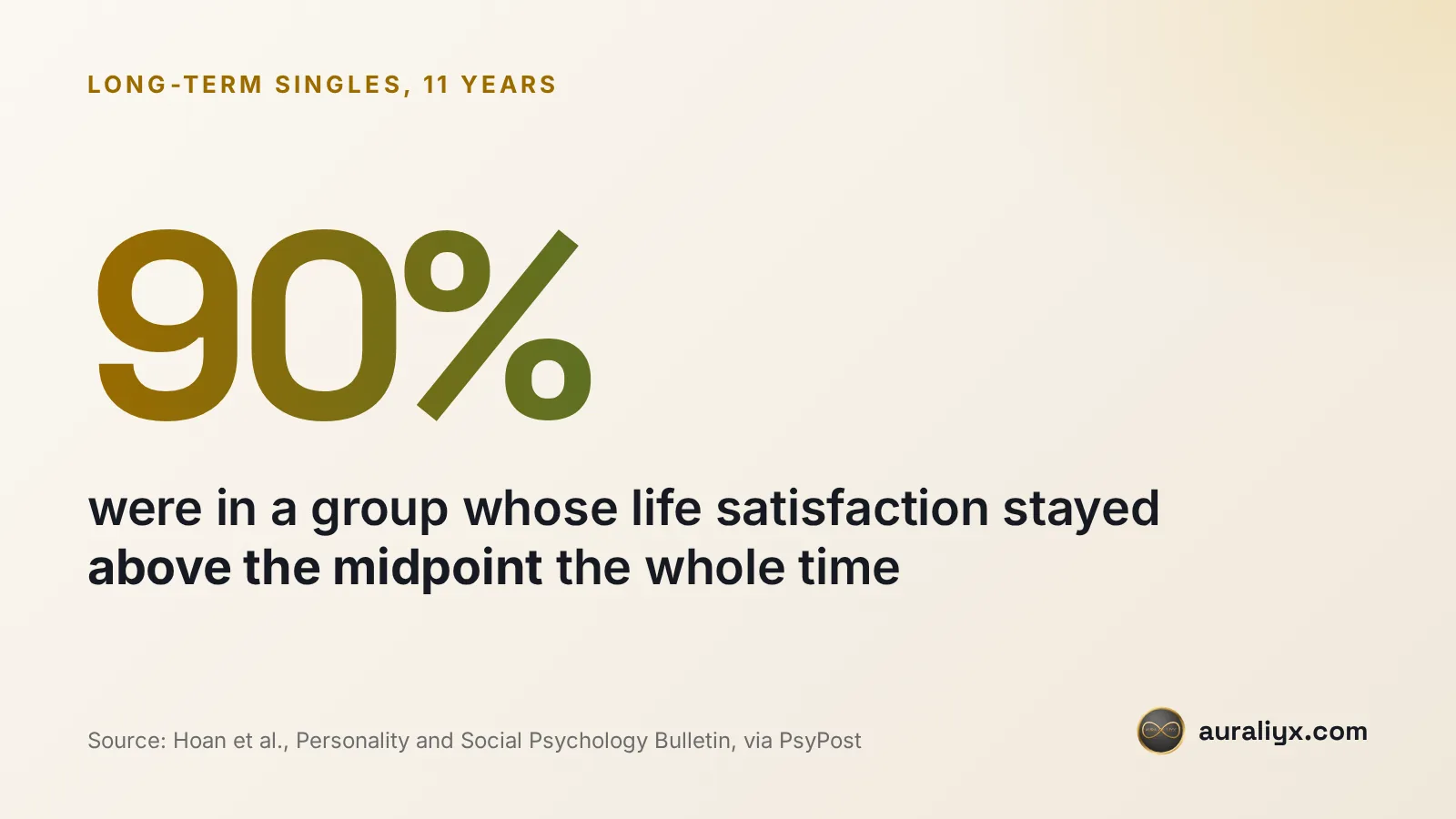
On average, yes, though the gap isn’t the same everywhere. A study of 382,078 adults in Great Britain, published in Psychological Science, found partnered people reported higher life satisfaction than singles everywhere, and the gap was wider in districts where more people were partnered (0.63 vs 0.49 standard deviations). That widening came mostly from happier couples, not unhappier singles. A separate 11-year study of 2,930 never-married singles in Germany, published in Personality and Social Psychology Bulletin, found roughly 90 percent were in a group whose life satisfaction stayed above the midpoint the whole time. Both studies show links, not causes.
- Partnered people reported higher life satisfaction than singles across Great Britain, in a study of 382,078 adults.
- The gap grew from 0.49 to 0.63 standard deviations between the least and most coupled-up districts.
- Singles’ satisfaction stayed roughly the same no matter how many people around them were partnered.
- In an 11-year study, roughly 90 percent of long-term singles were in a group whose life satisfaction stayed above the midpoint.
- Both studies show links, not causes, and the British data was collected between 2009 and 2011.
Somewhere around the second helping of mashed potatoes, someone looks up. “So… are you seeing anyone?” Maybe it’s an aunt, maybe it’s your mom, maybe it’s the cousin who just got engaged. And suddenly you’re doing math on your own life in front of everyone.
Two new studies, both covered by PsyPost in October, add some useful perspective. One found that the size of the happiness gap between couples and singles varies depending on where you live. The other followed long-term singles for 11 years and found that most stayed satisfied with their lives the whole time. Here’s what they say, and what to say back over the holidays.
Are couples happier than singles? What the study found
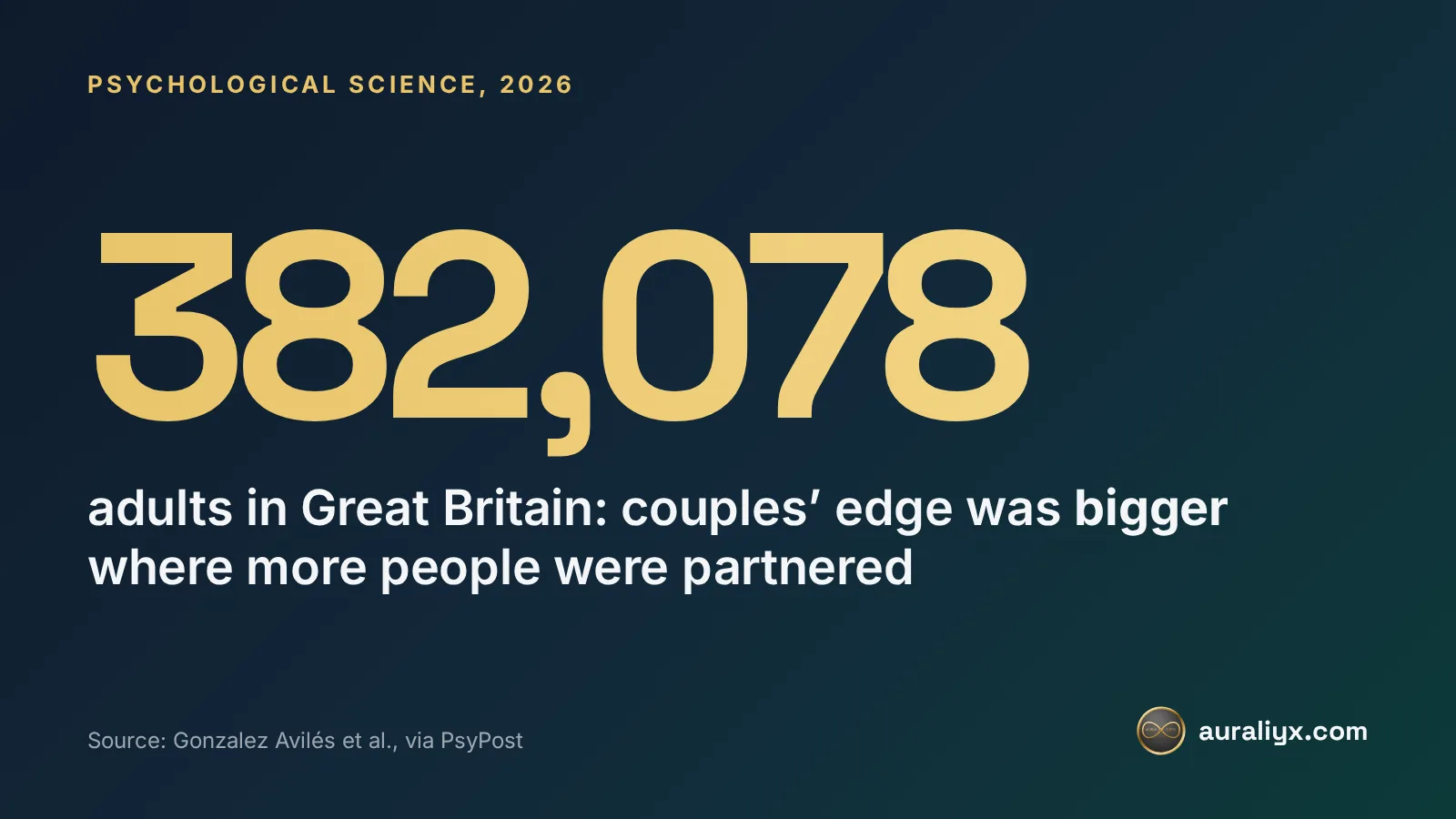
The study, published in Psychological Science, used data from the BBC Big Personality Test. It included 382,078 adults across 379 local districts in Great Britain. Each person said whether they had a partner and scored how satisfied they were with life, from one to seven.
Across the country, partnered people came out ahead. Their life satisfaction ran about half a standard deviation higher, which the authors say is in the same range as the gap tied to employment status.
The interesting part is where that gap changed. Districts ranged from about 55 percent of people in a relationship to 80 percent. In the least coupled-up districts, the gap between couples and singles was 0.49 standard deviations; in the most coupled-up ones, it grew to 0.63, nearly 29 percent wider.
And here’s the part that matters if you’re single: the wider gap came mostly from couples reporting more satisfaction in those areas. Singles’ life satisfaction stayed roughly the same, no matter how many people around them were paired up.
Singles weren’t less happy in “couple towns”
The researchers actually expected the opposite. Their idea was that singles might feel left out, or feel more pressure, in places where being part of a couple is the norm.
What seemed to matter more for singles was the local attitude toward being single. In extra analyses that weren’t planned in advance, the gap was bigger in more politically conservative and religious districts, mostly because singles there were less satisfied. The authors call this explanation speculative, since they didn’t measure attitudes toward singlehood directly.
One more detail: singles in high-relationship areas placed slightly less importance on having a relationship. The researchers suggest some of them may simply be putting their energy into other goals.
At a holiday table, the pressure often comes from the questions, not from being single. And if you’re in something undefined right now, here’s how to ask “what are we?” before the holidays without turning it into a big scene.
“We expected single people to be less satisfied where many others are partnered but found no evidence for this”
Tita Gonzalez Avilés, lead researcher, University of Bamberg (to PsyPost)
Dreading the “so, are you seeing anyone?” text? Paste it in and work out a reply that’s warm, light and still you.
Try Auraliyx free →What 11 years of data says about long-term singles
A second study, published in Personality and Social Psychology Bulletin, looked at singles over time instead of comparing them with couples. Researchers led by Elaine Hoan at the University of Toronto followed 2,930 adults in the German Family Panel from 2009 to 2021, all of whom stayed never married and without a committed partner for the whole 11 years.
The result: roughly 90 percent of participants in each age group followed a pattern where life satisfaction stayed above the scale’s midpoint for all 11 years. It dipped slightly over time in the two younger groups, and a small minority started lower.
How people felt about being single varied a lot more. About 67 percent of the youngest adults were consistently happy being single, while older singles split into groups with high, middling and low satisfaction.
Most still wanted a partner to some degree, and about 47 percent of young adults were in a group with a strong desire for one. In other words, you can be satisfied with your life and still want someone to share it with. Those two things don’t cancel each other out.
What these studies can’t tell you
Both studies are useful, but they come with real limits:
- They show links, not causes. Happier couples might simply be more likely to move to places where relationships are common. The authors tried to check for this, but a correlational study can’t rule it out.
- The British data is old. It comes from online volunteers surveyed between 2009 and 2011, which makes it more than 15 years old, and roughly 64 percent of them were women.
- The regional effect was modest. Couples reported higher satisfaction than singles even in the districts with the fewest couples.
- Each study covers one country. One used British data, the other German data. Neither looked at the U.S., Canada or Australia, and the singles study only followed people into their late forties.
- The singles study only counted people who stayed single. Anyone who found a partner along the way was left out, and it didn’t compare singles with couples, so it can’t say whether staying single or finding a partner leaves people happier. Another study covered by PsyPost in 2026 tracked people from age 16 to 29 and linked staying single to declining life satisfaction compared with peers who found partners.
- Averages aren’t you. Your own life can look very different from the middle of a chart.
What to say when someone asks “So, are you seeing anyone?”
For a lot of singles, the holidays mean the same question asked five different ways. You don’t owe anyone a full update on your love life. A short, warm answer usually works better than a defensive one, because it ends the topic without making the moment awkward. Here are two common ways it goes wrong, and what tends to work instead.
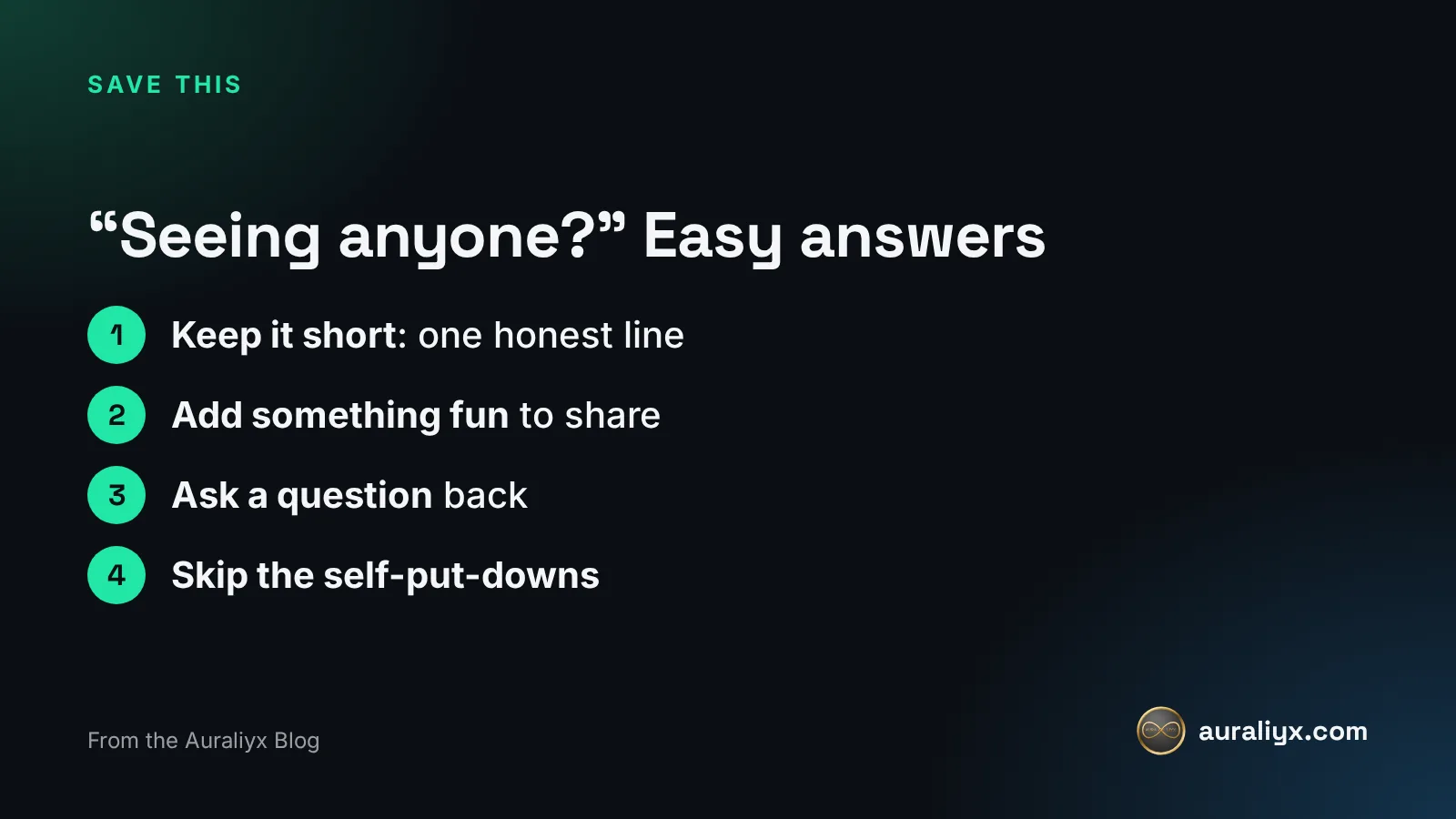
Why it works: It answers honestly in one line, adds something fun, and hands the conversation back to them with a question.
Why it works: It sounds confident without being defensive and gently closes the topic. Putting yourself down tends to invite advice you didn’t ask for.
Want a relationship? Date because you want to, not because you feel pressured
Plenty of singles in the German study wanted a partner while still being satisfied with their lives. That’s a good place to date from. Holiday pressure makes it easy to rush someone just so you have an answer at the table.
- Notice the deadline in your head. “I need someone by Christmas” is the calendar talking. Give new people time, because the slow burn is often worth it.
- Keep your messages about the person you’re texting. Interest in them is attractive. Panic about being alone usually isn’t.
- Follow up when it’s good. After a date you liked, a simple, specific text beats a clever one. These texts for after a first date cover the timing, too.
Why it works: The first puts your holiday pressure on someone you barely know. The second shows real interest in them and makes the next step easy to say yes to.
If you’re in a couple: how to be a better friend to singles
In the British study, couples reported higher satisfaction in places full of other couples. If you’re part of one, you can help your single friends feel just as welcome, especially around the holidays.
- Skip the “why are you still single?” question. It sounds like concern, but it usually lands as judgment.
- Invite them on their own terms. A holiday dinner, game night or a long walk doesn’t need a plus-one.
- Ask about their life, not just their love life. Work, hobbies and travel plans are all fair game.
- Sort out your own plans early, so you have room for friends. If you two are still deciding whose family to visit, here’s a fair way for couples to split the holidays.
Why it works: It includes them without making their relationship status the topic, and it makes clear they’re wanted exactly as they are.
Sources we checked
- Psychological Science: Ties That Bind, Places That Matter: The Life-Satisfaction Gap Between Partnered and Single Individuals Varies Across Regions (August 24, 2026)
- Personality and Social Psychology Bulletin: The Eras of Singlehood: 11-Year Longitudinal Trajectories of Never-Married Singles’ Well-Being Across Cohorts (August 21, 2026)
- PsyPost: Researchers identify a factor linked to how much happier couples are than singles (October 12, 2026)
- PsyPost: Most long-term singles stay satisfied with their lives over 11 years, study finds (October 11, 2026)
We open and read every source before we cite it. Spotted an error? Email humansupport@auraliyx.com and we will fix it.
Written by
Auraliyx is an AI relationship coach trained only on attraction, dating and relationships. Every article is built from sources we open and read, every number is checked against the original, and the Auraliyx team reviews it and corrects anything we get wrong.
Frequently asked questions
Are couples happier than singles?
On average, people in relationships report somewhat higher life satisfaction. A large study of adults in Great Britain found that gap everywhere, but it was bigger in districts where more people were partnered. The data is correlational, so it doesn’t prove relationships cause happiness.
Are single people happy in the long run?
Most seem to be. In an 11-year study of never-married singles in Germany, the large majority were in a group whose life satisfaction stayed above the scale’s midpoint the whole time. How happy they were about being single, and how much they wanted a partner, varied much more.
Why are people in relationships happier?
Researchers don’t know for sure. A partner may offer support and company, but happier people may also be more likely to find partners in the first place. The data can’t say which comes first.
Does where you live affect how happy you are as a single person?
In a Psychological Science study of adults in Great Britain, singles were about as satisfied whether many or few people around them were partnered. But they were less satisfied in more conservative and religious districts, which the authors think may reflect local attitudes toward singlehood, though they call that speculative.
How do I answer “Why are you still single?” at a holiday dinner?
Keep it short and warm, then change the subject: “Haven’t met the right person yet, but I did bring pie! How’s the new job?” You don’t owe anyone a detailed explanation.
Is it okay to be single and still want a relationship?
Yes. An 11-year study of never-married singles in Germany found that many people were satisfied with their lives and still wanted a partner. Wanting love doesn’t mean your life is on hold until you find it.
Found it useful? Send it to someone who needs it
A friend with the same question will thank you.
Single, dating or taken: say it well
Paste the question you’re dreading or the message you want to send. Auraliyx shows how it’s likely to land, and why. It’s not AI talking for you. It’s you, talking better.
Try Auraliyx freeFree · no credit cardShort videos on what to text, what to say and what it really means. Follow Auraliyx:
Join the conversation
Has this happened to you? Share your experience. It might help someone else.
Comment rules
- Be kind. No insults, hate or explicit content.
- No links, ads, contact details or phone numbers.
- English only, for now.
- Don't share private details about other people.
- Comments are checked automatically and may be removed.
We only keep the first name and the comment you post, and the date. We don't ask for your email or store your IP address. To have a comment removed, email humansupport@auraliyx.com.