Loneliness Rose Again in 2025, and Young Adults Felt It Most: How to Reach Out, Even If It Feels Awkward
Gallup found that 21% of U.S. adults felt lonely a lot of the previous day in mid-2025, the highest level since 2021, and 29% of adults under 30 did. See what the data shows, plus simple messages that make reconnecting easier.
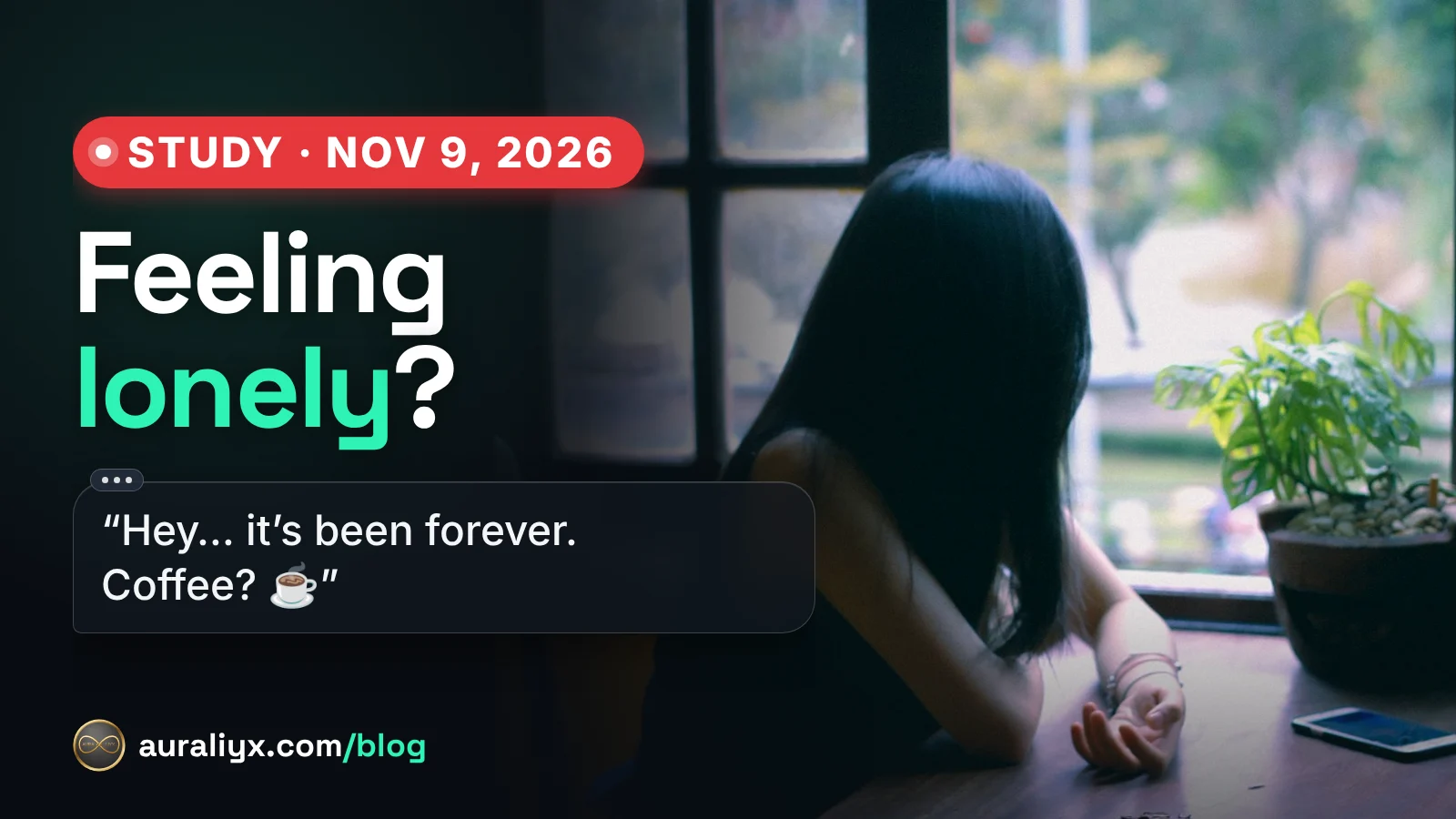
Loneliness is common, and it rose again through mid-2025. In a Gallup survey of 5,426 U.S. adults conducted May 27 to June 4, 2025, 21% said they felt loneliness “a lot of the day yesterday,” the highest level since March 2021. Among adults 18 to 29, it was 29%. To reach out, send a small, specific message to someone you already know: mention a shared memory and suggest an easy plan, like coffee on Saturday. If loneliness comes with a low mood that won’t lift, talk to a doctor or a mental health professional.
- 21% of U.S. adults felt lonely a lot of the previous day in mid-2025, the highest since March 2021 (Gallup).
- In Gallup’s mid-2025 U.S. survey, adults 18 to 29 were the loneliest age group: 29%.
- In Gallup’s World Poll, 25% of U.S. men aged 15 to 34 felt lonely a lot of the day, versus 18% of young women.
- Loneliness and depression are closely linked in Gallup’s data, so it is worth taking seriously.
- Reaching out works best when it is small, specific and low-pressure.
You can have hundreds of contacts in your phone and a group chat that never stops, and still feel completely alone at the end of the day. If that sounds familiar, you’re not imagining it, and you’re definitely not the only one.
Gallup data shows loneliness climbed again in the U.S. through mid-2025, and young adults were feeling it most. Here is what the numbers say, why reaching out can feel so hard, and messages you can actually send today.
What Gallup found
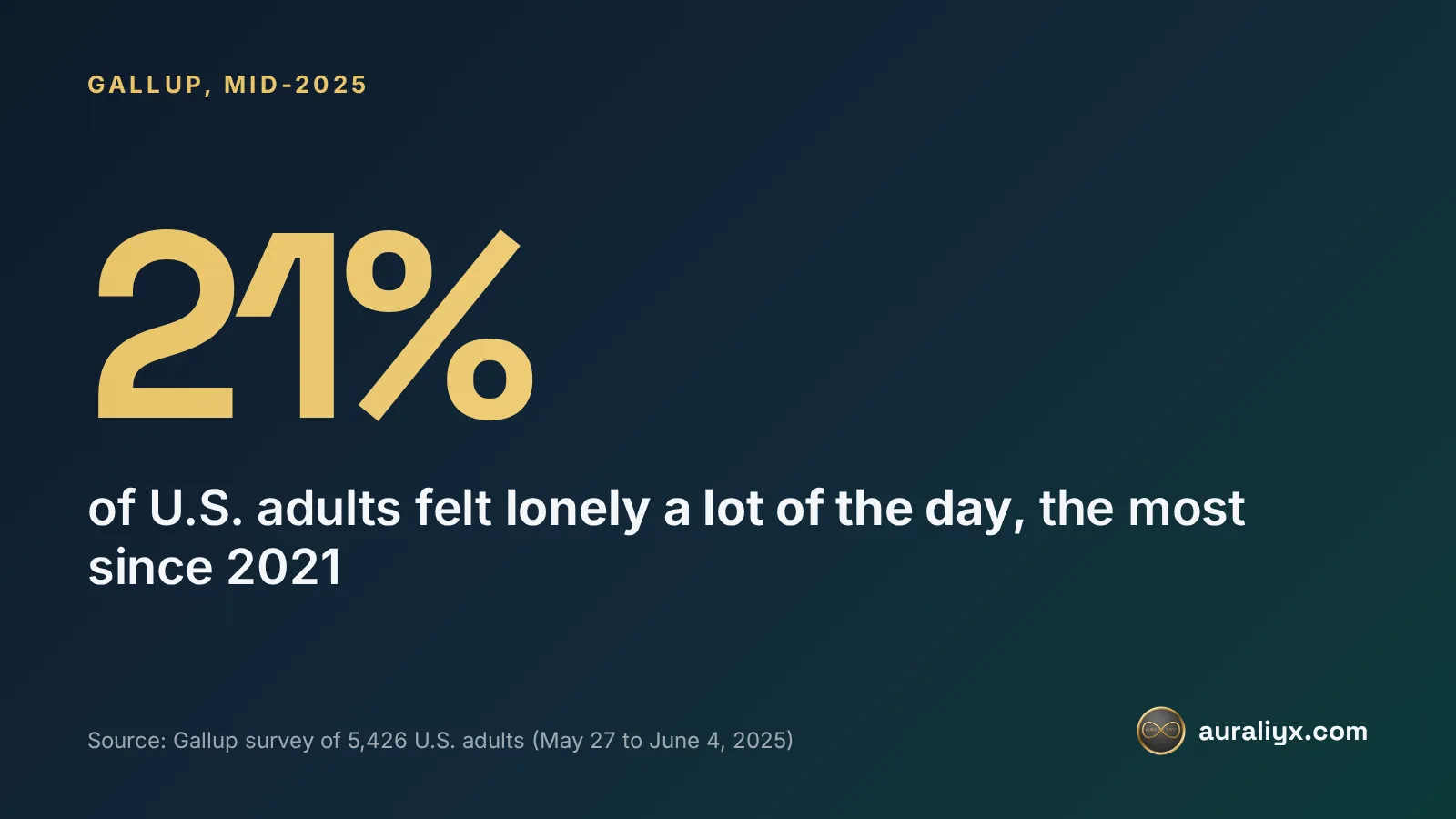
In a quarterly survey of 5,426 U.S. adults conducted from May 27 to June 4, 2025, Gallup found that 21% felt significant loneliness “a lot of the day yesterday.” That was the highest level since March 2021, though still below the pandemic-era highs of 25%.
Loneliness had settled at 17% to 18% for most of 2022 and 2023, then started climbing again in the second half of 2024. The youngest adults reported it most: 29% of those aged 18 to 29, compared with 15% of adults 65 and older.
Young men are among the loneliest
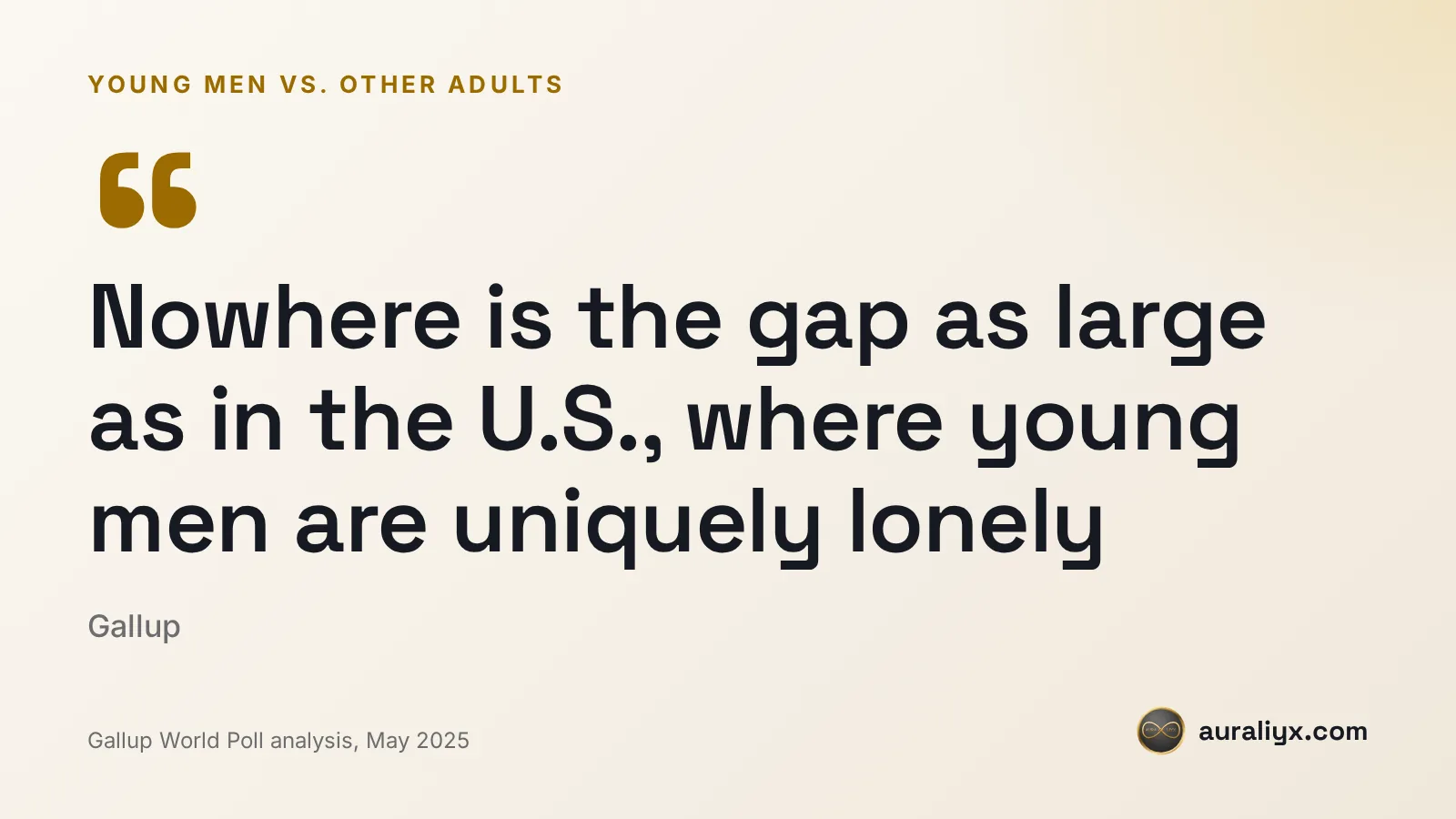
A separate Gallup analysis of its World Poll, based on 2023 and 2024 data, found that 25% of U.S. men aged 15 to 34 felt lonely a lot of the previous day. That compares with 18% of young women and 18% of Americans overall.
The gap stood out internationally. Across OECD countries, the median for younger men was 15%, and young men reported more loneliness than other adults in only three countries, the U.S., Iceland and Denmark. The gap was largest in the U.S. (25% vs. 17%).
That matters for dating, too. Feeling lonely can make every unanswered text feel bigger, and every first message feel riskier, than it really is.
Not sure how to reach out after a long time? Tell Auraliyx what’s going on and work out a message that still sounds like you.
Try Auraliyx free →Why loneliness is worth taking seriously
Gallup describes a strong link between loneliness and depression. Among people who felt lonely the day before, one-third also had depression, versus 13% of people who hadn’t felt lonely.
That is a link, not proof that one causes the other. But it is a good reason not to brush loneliness off as “just a phase,” especially when it lasts for weeks.
This article is not medical advice. If you feel low most days, talk to a doctor or a mental health professional. In the U.S., you can call or text 988, the Suicide & Crisis Lifeline, any time. Elsewhere, contact your local crisis line, and if you’re in immediate danger, call your local emergency number.
Why reaching out feels so hard
When you are lonely, your brain tends to write the worst-case script: they’re busy, they forgot about you, it’d be weird to text after so long. So you wait, and the silence gets longer.
The trick is to make the first step so small that it barely feels like a risk. You’re just saying hi. Nobody has to fix your life, and nobody’s grading your text.
It also helps to drop the idea that you need a reason. “I thought of you” is a reason.
And if a message gets no reply, don’t read it as a verdict on you. People get busy, texts get buried, and one friendly follow-up a few days later is completely normal. If that goes unanswered too, or they’ve told you they want space, leave it there and try someone else.
Messages that make reconnecting easier
Specific beats vague, and an easy next step beats an open-ended “we should hang out sometime.” A few examples:

Why it works: A specific memory shows they matter to you, and the plan makes it easy to say yes.
Why it works: A concrete time and place turns a nice idea into an actual plan.
Why it works: It says how you feel without blaming anyone and gives your partner a simple way to respond.
Small habits that help
Reconnecting is easier to keep up when it is part of your week instead of a big effort. Try one or two of these:
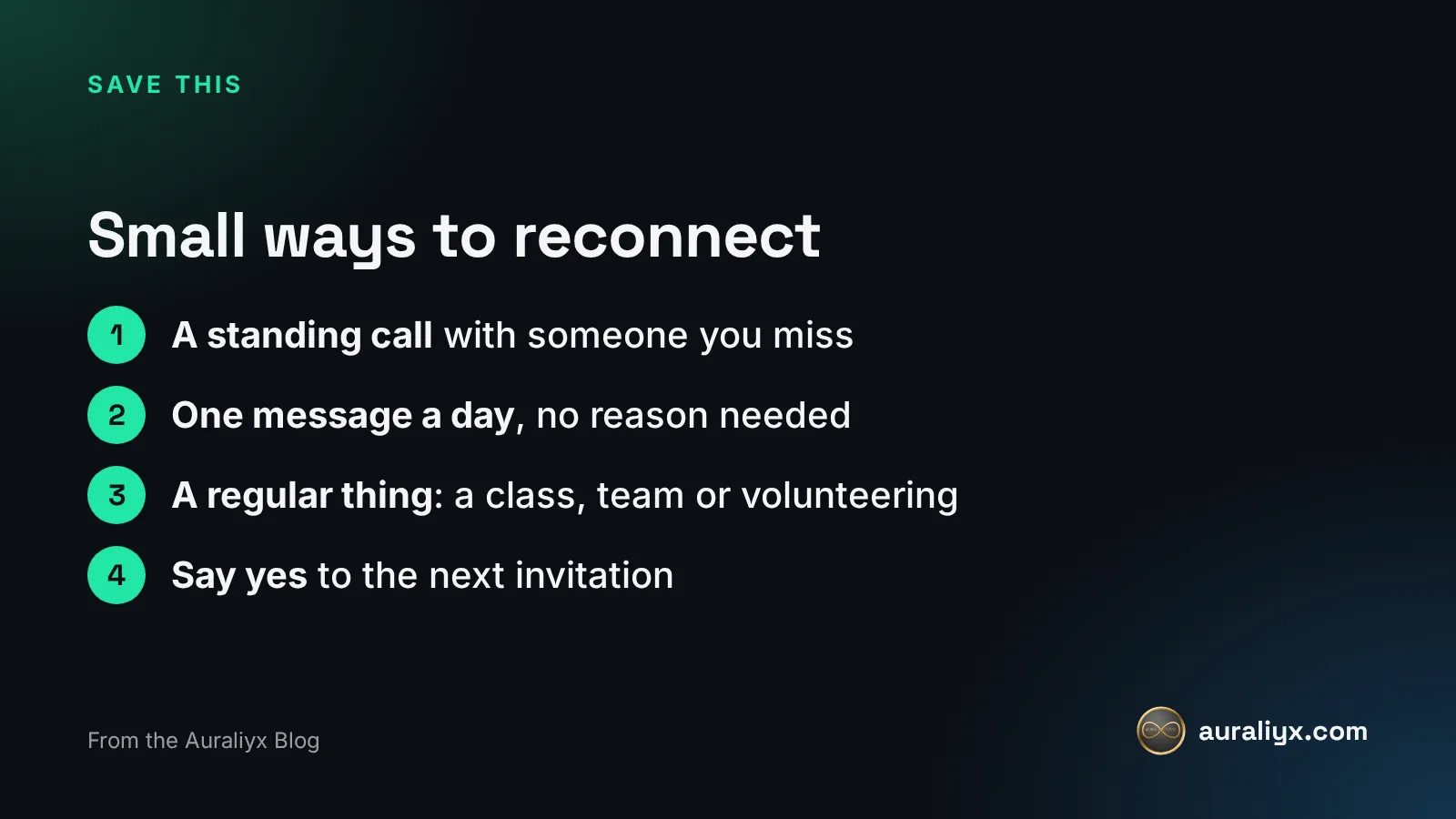
- A standing call. Same day, same time, with one person you miss.
- One message a day. A photo, a meme or a memory, sent to someone you haven’t talked to in a while.
- A regular thing. A weekly class, team or volunteer shift where you see the same faces.
- Say yes once. Accept the next invitation you would normally skip.
- Keep conversations going. Here are questions to ask over text that actually get answers.
Lonely in a relationship
You can share a home with someone and still feel alone. It often creeps in quietly: busy schedules, phones at dinner, conversations that are only about logistics.
The fix usually starts with one honest sentence, no blame, and a small plan, like the dinner example above. If the distance lasts for months, or every attempt to talk turns into a fight, a couples counselor can help you both feel heard again. If you’re ever afraid of your partner, or they’re cutting you off from friends and family, put your safety first and contact a local domestic violence service instead.
Small differences in how partners show closeness are normal, too: here is what science says about why some people hate hugs. And if you are single and dating, cuffing season may not be about the cold at all.
Sources we checked
- Gallup: U.S. Depression Rate Remains Historically High (loneliness survey of 5,426 adults, May 27 to June 4, 2025) (September 9, 2025)
- Gallup: Younger Men in the U.S. Among the Loneliest in West (May 20, 2025)
We open and read every source before we cite it. Spotted an error? Email humansupport@auraliyx.com and we will fix it.
Written by
Auraliyx is an AI relationship coach trained only on attraction, dating and relationships. Every article is built from sources we open and read, every number is checked against the original, and the Auraliyx team reviews it and corrects anything we get wrong.
Frequently asked questions
How many Americans feel lonely?
In Gallup’s mid-2025 survey, 21% of U.S. adults said they felt lonely a lot of the previous day, the highest level since March 2021.
Who is the loneliest age group?
Young adults. In Gallup’s mid-2025 U.S. survey, 29% of adults aged 18 to 29 reported significant daily loneliness, compared with 15% of those 65 and older.
Are young men lonelier than young women?
In Gallup’s World Poll data, 25% of U.S. men aged 15 to 34 felt lonely a lot of the day in 2023 and 2024, compared with 18% of young women.
Is loneliness bad for your health?
Gallup found a strong link between loneliness and depression: one-third of people who felt lonely the day before were also suffering from depression, though that doesn’t prove one causes the other. If you feel low most days, talk to a doctor or a mental health professional.
How do I reach out to someone after a long time?
Keep it short and specific: mention a memory, ask how they are and suggest an easy plan. You don’t need a special reason; “I thought of you” is enough.
Can you feel lonely in a relationship?
Yes. It is common when couples get busy. Say how you feel without blaming anyone, and suggest one small, regular moment together, like a phone-free dinner.
Found it useful? Send it to someone who needs it
A friend with the same question will thank you.
Reach out, without overthinking it
Tell Auraliyx who you want to reconnect with (a friend, a crush or your partner) and work out a warm message, in your own words, that you can send today.
Try Auraliyx freeFree · no credit cardShort videos on what to text, what to say and what it really means. Follow Auraliyx:
Join the conversation
Has this happened to you? Share your experience. It might help someone else.
Comment rules
- Be kind. No insults, hate or explicit content.
- No links, ads, contact details or phone numbers.
- English only, for now.
- Don't share private details about other people.
- Comments are checked automatically and may be removed.
We only keep the first name and the comment you post, and the date. We don't ask for your email or store your IP address. To have a comment removed, email humansupport@auraliyx.com.