Got the Ick? Why It Hits So Fast, What It Might Mean, and What to Do Before You Bail
A new psychology explainer published in October breaks down why attraction can flip to repulsion in seconds. Add a peer-reviewed study in which 64% of single adults had felt the ick and 26% ended things on the spot, and the lesson is clear: pause before you bail.
The ick is a sudden feeling of cringe or repulsion toward someone you were attracted to, often over a small habit like loud chewing or an awkward outfit. Psychologists have offered several explanations, from disgust sensitivity and avoidant attachment to learned associations with past partners. In one peer-reviewed study of 125 single adults, 64% had felt the ick, and 26% ended things immediately. The researchers suggest taking each ick with a grain of salt: some point to real red flags, but many are trivial and worth a second look.
- In a peer-reviewed study of 125 single adults, 64% said they had experienced the ick.
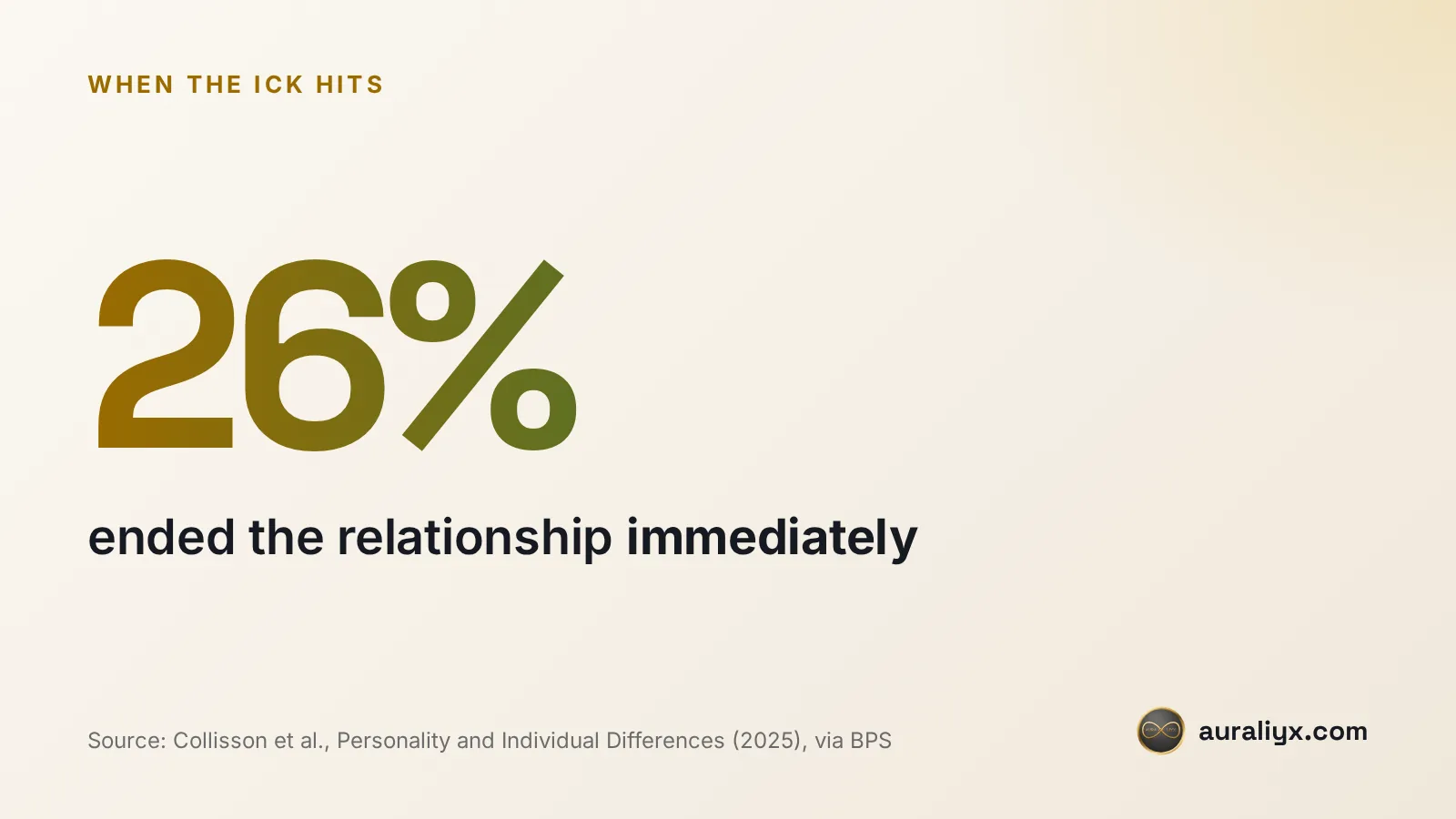
- 26% ended the relationship immediately after getting the ick, and 42% stopped seeing the person after it.
- Women were more likely to report it: 75% of women compared with 57% of men.
- Psychologists link the ick to disgust sensitivity, avoidant attachment, old associations and perfectionism, and no single explanation fits everyone.
- Some icks are real red flags, but many are trivial. Ask whether it’s about values or just style before you end things.
You were into them. Then they clapped when the plane landed, or called their food “yummy” in a baby voice, or chewed with their mouth open, and just like that, something switched off. You can’t unsee it. You’ve caught the ick.
The ick is all over TikTok, and psychologists are taking it seriously. A new explainer published in October lays out why attraction can flip to repulsion so fast, and an earlier peer-reviewed study put numbers on how often it ends things. Here’s what the science says, how to tell a real red flag from a passing cringe, and what to say either way.
What is the ick, exactly?
The ick is that sudden wave of cringe or disgust toward someone you were attracted to, usually set off by something small: an outfit, a phrase, a laugh, the way they eat. It feels instant and hard to reverse, which is exactly why it’s so confusing.
In an explainer published by The Conversation and republished on Phys.org on October 6, Rachael Leggett notes that singles and couples now bond online over their most specific, often ridiculous triggers. Her conclusion is refreshingly honest: there’s no single explanation for the ick, and it seems to come down to individual differences. So if the ick is partly about you, it isn’t always reliable information about them.
What the research found about the ick
The most detailed look so far comes from psychologists at Azusa Pacific University, who published their study in the peer-reviewed journal Personality and Individual Differences in 2025. They began with a pilot analysis of the first 100 TikTok videos tagged #theick and sorted the triggers described in 86 of them.
Then they surveyed 125 single adults, aged 24 to 72, about their own experiences and how likely they’d be to get the ick from common triggers. Here’s what stood out:
Keep the limits in mind. This was a small online sample, slightly below the size the researchers had planned for, and everything was self-reported. It shows patterns, not proof of what causes the ick.
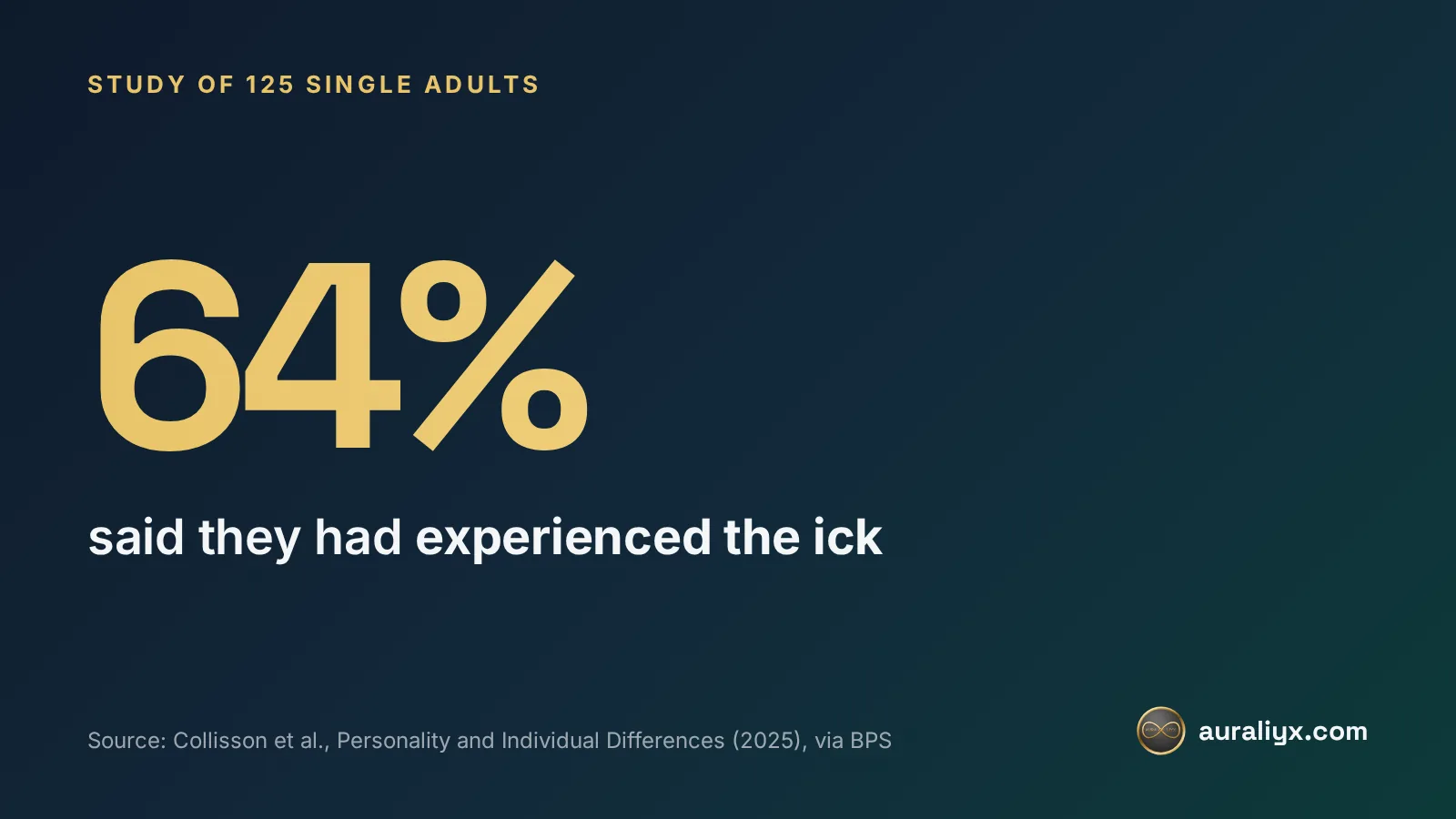
- 64% said they had experienced the ick once it was defined for them.
- 42% stopped seeing someone after getting the ick, and 26% ended the relationship immediately.
- Women were more likely to have felt it: 75% of women compared with 57% of men.
- Women were also more likely to know the term: 63% of women compared with 39% of men.
- Almost everyone talked about it with someone, usually friends or family. Only a minority told the person who caused it.
Got the ick and not sure what to say? Describe it and see how they’re likely to feel before you hit send.
Try Auraliyx free →Why does the ick hit so fast? 4 possible explanations
Researchers don’t agree on one cause. Leggett’s explainer and the 2025 study point to a few overlapping ideas, and each one has limits.
Personality seems to play a part, too. People who scored higher in grandiose narcissism were more likely to react to perceived flaws, and people who hold others to very high standards got the ick both more readily and more often. These are associations, not causes, but a long ick list may say as much about its owner as about their dates.
- Disgust sensitivity. Some psychologists link the ick to sexual disgust, an emotion thought to steer people away from poor mates. In the 2025 study, people who are easily disgusted in general were more likely to get the ick from specific behaviors, but that didn’t predict how often they felt it. It also doesn’t explain why men get the ick.
- Avoidant attachment. For people who get uneasy when things get close, the ick may work as a defense mechanism, an easy exit that protects their independence. If yours tends to show up right when things start getting serious, notice that. Here’s how relationship anxiety is tied to doubts about the future.
- Old associations. A habit that reminds you of an ex, or something you were taught to see as gross, can trigger disgust through plain classical conditioning. The reaction is real, but it’s about your history, not necessarily this person.
- Sound sensitivity. For people with misophonia, a reduced tolerance for certain sounds, loud chewing can feel unbearable rather than mildly annoying.
Is the ick a red flag or just a quirk?
Some icks are your gut doing its job. Women in the study described misogynistic behavior as an ick, and that’s not something to talk yourself out of. Others, like watching someone push a pull door or chase a ping-pong ball, have little to do with whether you’d be happy together.
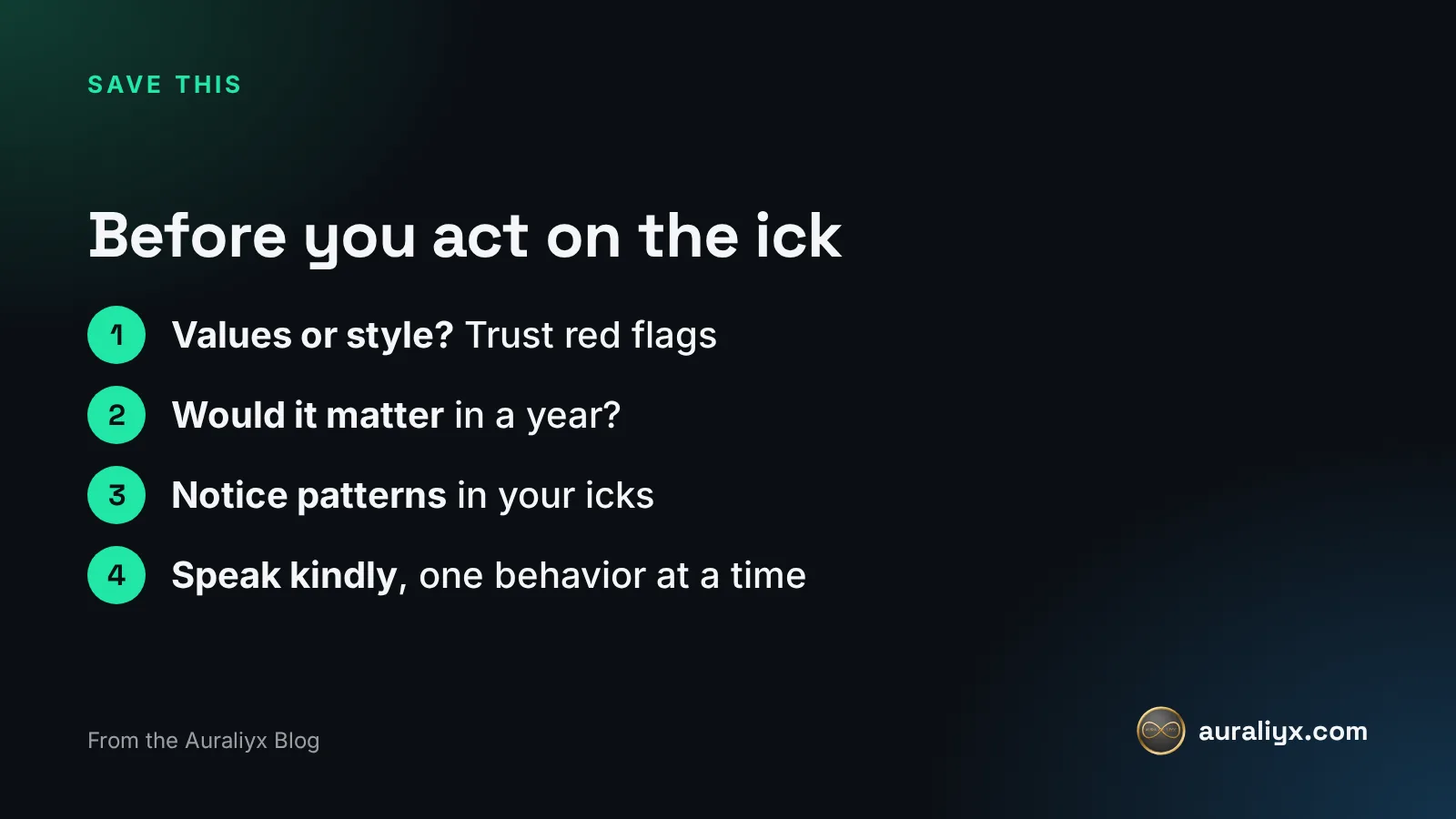
Before you act on it, run a quick check:
The ick also overlaps with the “no spark” problem. Attraction often grows as you get to know someone, which is why the slow burn is making a comeback on first dates.
- Is it about values or safety? Disrespect, cruelty, dishonesty or pressure are red flags. Trust that feeling.
- Is it about style? Clothes, slang, a laugh. These often stop bothering you once you know someone.
- Would it matter in a year? If you can’t picture caring about it later, give it a little more time.
- Is it a pattern for you? If almost everyone gives you the ick by the third date, the common thread may be your standards, not your dates.
“Ask yourself: Is this something I truly can’t deal with, or am I being overly critical? Is this ‘ick’ their fault, or is it mine?”
Eliana Saunders, study author, Azusa Pacific University (to PsyPost)
What to say when you get the ick
You almost never need to tell someone they gave you the ick. You do need to decide whether you want to keep seeing them, and then be kind either way. The hard part is usually the next text.
If you decide it’s worth another shot, a warm follow-up helps. Here are ideas for what to text after a first date that keep things friendly without overpromising.
Why it works: It’s honest and clear without picking them apart. Nobody needs to hear that a habit made you cringe, and a kind ending beats ghosting.
Why it works: It frames the issue as your sensitivity, not their flaw, and offers an easy fix. They don’t feel judged, so the evening keeps going.
Can you get the ick in a long-term relationship?
Yes, and it can feel scarier there. The 2025 study focused on single adults, and the researchers say they want to learn whether people still get the ick with a partner they’ve been with for years. For now, there isn’t good data on that.
What does help is not letting small irritations pile up in silence. Bring it up early, keep it to one specific behavior and keep your tone light. If the ick is really a sign of bigger distance, like contempt or no wish to spend time together, take a look at the signs a relationship is starting to end.
Why it works: It asks permission, names one behavior instead of attacking the person, and suggests a middle ground. Your partner can say yes without losing face.
What if you get the ick with everyone?
If your ick list is pages long, it may be protecting you from something. The study authors note that the ick may help people avoid mismatches but may also feed a rejection mindset that works against dating success. They also wonder whether watching ick content online makes people pickier over time, which hasn’t been tested yet.
Try this: the next time it hits, jot down what triggered it and how close you were feeling right before. If the ick keeps showing up the moment someone gets emotionally closer, that pattern is worth exploring, ideally with a licensed therapist.
This article is general information, not medical or mental health advice. If strong disgust, anxiety or sound sensitivity is affecting your relationships or daily life, talk to a qualified professional.
- No Spark on First Date? Nearly Half of Singles Say Attraction Grew Later. Here’s When to Try Again
- Relationship Anxiety Often Comes Down to One Question: Does This Have a Future? Here’s What a New Study Found
- Signs Your Relationship Is Ending Often Show Up Years Early. What a Big Study Found, and What to Say While There’s Still Time
Sources we checked
- Phys.org (from The Conversation): The ick: The psychology of why a romantic partner can suddenly repulse you (October 6, 2026)
- PsyPost: The psychology behind “the ick”: Study links sudden dating turn-offs to narcissism and perfectionism (May 5, 2025)
- British Psychological Society, Research Digest: New study nails down “the ick” (March 14, 2025)
- Phys.org: Why people develop ‘the ick’ regarding potential dating targets (February 17, 2025)
We open and read every source before we cite it. Spotted an error? Email humansupport@auraliyx.com and we will fix it.
Written by
Auraliyx is an AI relationship coach trained only on attraction, dating and relationships. Every article is built from sources we open and read, every number is checked against the original, and the Auraliyx team reviews it and corrects anything we get wrong.
Frequently asked questions
What does it mean to get the ick?
It means feeling a sudden wave of cringe or repulsion toward someone you were attracted to, often because of a small behavior like the way they eat, dress or talk.
Why do I get the ick so easily?
Research links it to traits like high disgust sensitivity, very high standards for others and grandiose narcissism. Some psychologists also connect it to avoidant attachment or reminders of past partners. These are associations, not a diagnosis.
Is the ick a red flag?
Sometimes. If it’s about disrespect, dishonesty or how someone treats people, take it seriously. If it’s about clothes, slang or a quirky habit, it may fade as you get to know them.
Can the ick go away?
It can, especially when the trigger is minor or tied to your own history rather than the person. Giving it time, or gently mentioning the behavior, often helps.
Do men get the ick too?
Yes. In the 2025 study, 57% of men said they had experienced it, compared with 75% of women. Men and women tended to be put off by different kinds of behavior.
Should I tell someone they gave me the ick?
Usually not in those words. If you want to stop seeing them, say you didn’t feel the connection you’re looking for. If you want to keep going, mention the specific behavior kindly.
Found it useful? Send it to someone who needs it
A friend with the same question will thank you.
Pause the ick, then talk
Describe the moment that put you off or paste their message. Auraliyx helps you decide if it’s a dealbreaker, find kind and honest words, and shows how they’ll likely feel reading them. It’s not AI talking for you. It’s you, talking better.
Try Auraliyx freeFree · no credit cardShort videos on what to text, what to say and what it really means. Follow Auraliyx:
Join the conversation
Has this happened to you? Share your experience. It might help someone else.
Comment rules
- Be kind. No insults, hate or explicit content.
- No links, ads, contact details or phone numbers.
- English only, for now.
- Don't share private details about other people.
- Comments are checked automatically and may be removed.
We only keep the first name and the comment you post, and the date. We don't ask for your email or store your IP address. To have a comment removed, email humansupport@auraliyx.com.