Different Political Views in a Relationship? What the Research Says, and What to Say on Election Day
In a study of more than 500 couples, political differences were linked to only slightly lower relationship quality. Here’s what the research and a 2026 poll show, and how to talk politics with your partner without a fight.
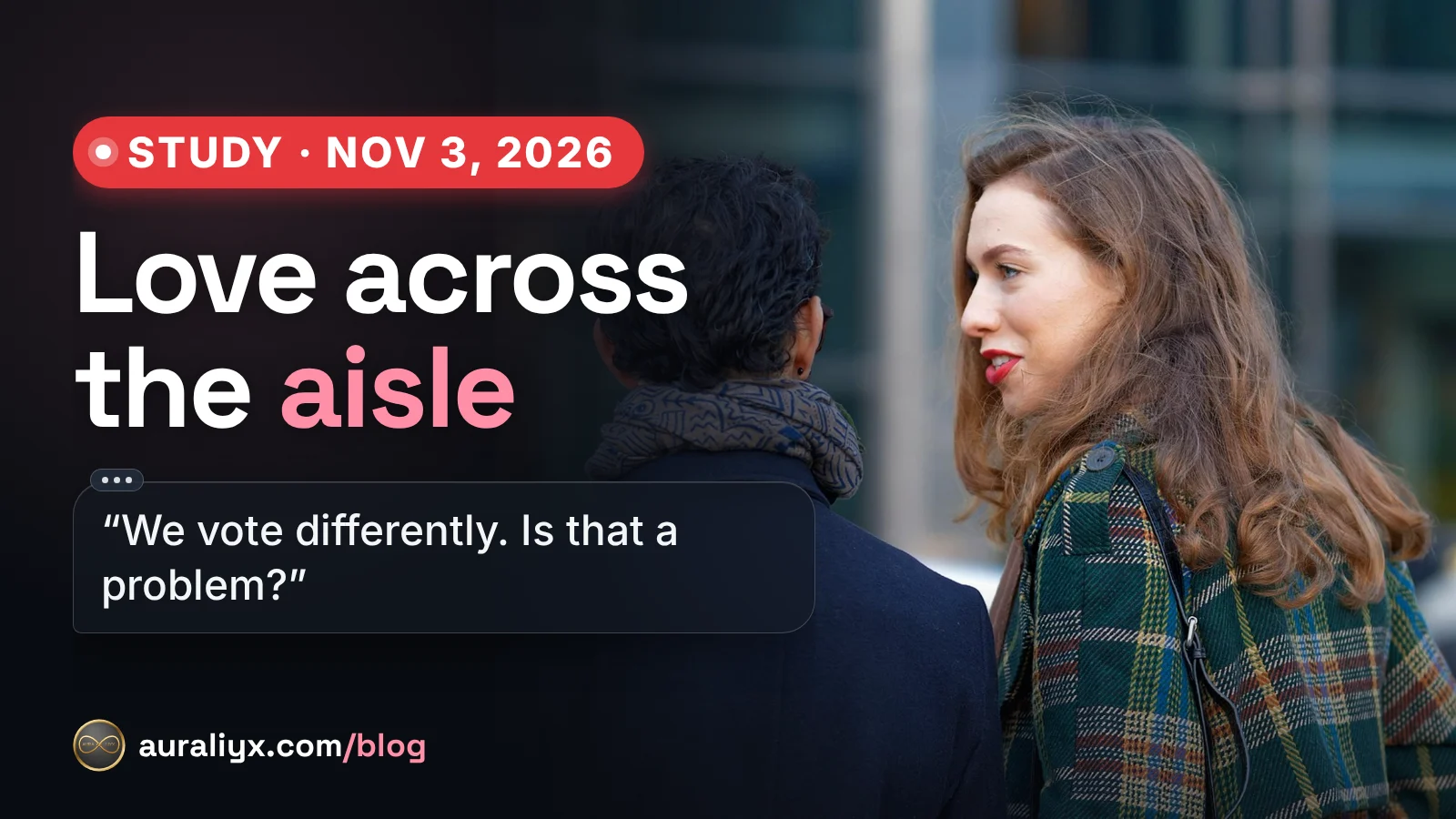
Different political views in a relationship are linked to slightly lower satisfaction, but the effect is small. A study of more than 500 couples by researchers at the University of Michigan and UC Berkeley found that feeling different from your partner mattered more than party labels, and the gap showed up mostly on politically stressful days. Feeling appreciated and trying to see your partner’s point of view softened it. Most voters agree love can cross party lines: in a 2026 Fox News poll, 6 in 10 said it’s possible.
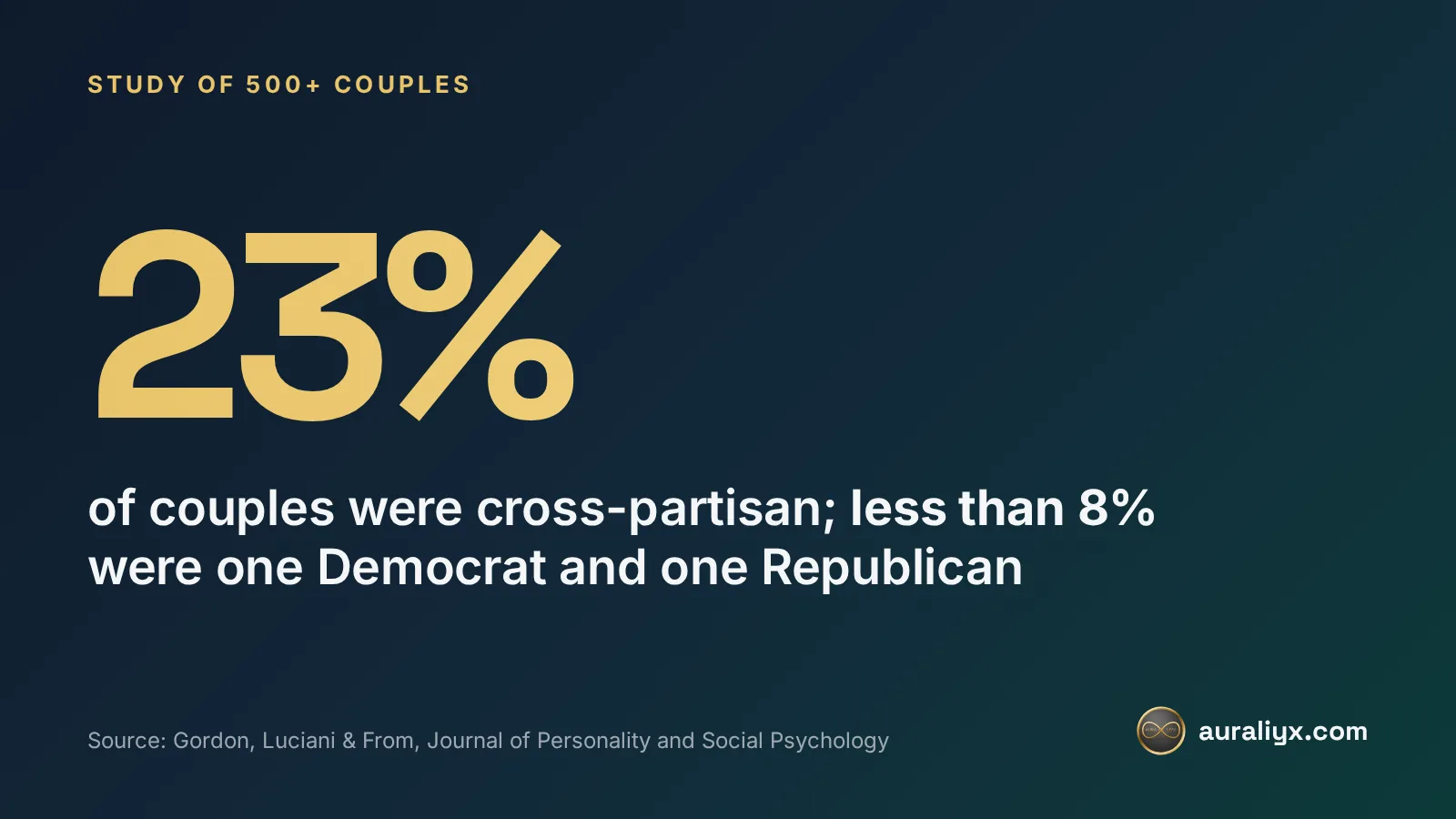
- Only 23% of couples in a study of more than 500 were cross-partisan, and less than 8% were one Democrat and one Republican.
- Political differences were linked to slightly lower relationship quality. The study is correlational, and the effects were small.
- Feeling different mattered more than actual party labels, and the tension showed up mostly on days of high political stress.
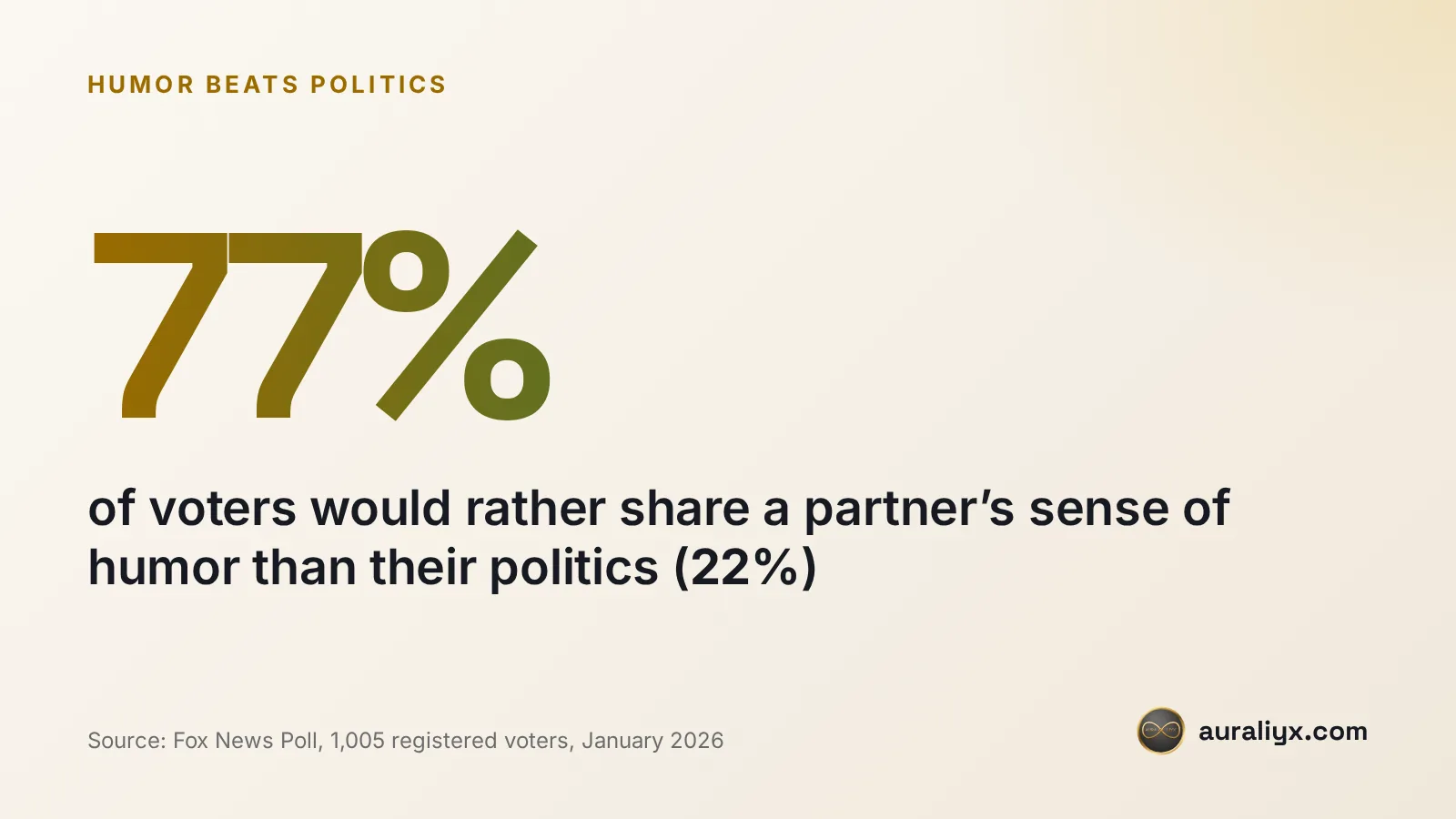
- 77% of voters would rather share a partner’s sense of humor than their politics (22%), according to a 2026 Fox News poll.
- Appreciation and curiosity help: ask what matters to your partner, not just who they vote for.
It’s Election Day, and your phone buzzes. Your partner just sent a link with a comment that makes your stomach drop. Or maybe your new date casually mentions who they’re voting for, and it’s not who you expected. Suddenly you’re running the math in your head: is this a dealbreaker, or just a Tuesday?
If you love someone whose politics don’t match yours, you’re not doomed, and you’re not the only one finding it hard. Research on real couples suggests the difference matters a little, and that how you handle it matters a lot more. Here’s what the data says, and what to actually say when politics walks into the room.
What research says about different political views in a relationship
Psychologists Amie Gordon and Annika From of the University of Michigan and Maria Luciani of UC Berkeley pooled eleven datasets collected between 2020 and 2022, covering over 4,000 participants and more than 500 romantic couples. Their paper, published in the Journal of Personality and Social Psychology, has a title plenty of couples will recognize: “I Love You but I Hate Your Politics.”
The first finding is that politically mixed couples are less common than you might think. Only 23% of the couples were cross-partisan, a group that includes independents and third-party voters, and less than 8% were one Democrat and one Republican. Most people, it seems, screen for politics long before things get serious.
The second finding: when partners saw their politics as different, they reported slightly lower relationship quality, measured by satisfaction, closeness and conflict. The key word is slightly. The authors describe the effects as small, and the study is correlational, so it can’t prove that politics causes the dip. It’s just as possible that unhappy couples notice their differences more.
Why feeling different matters more than the party label
One of the most useful details is the gap between perceived and actual differences. The link with lower satisfaction was strongest when people felt their partner was different from them. When the researchers compared what each partner actually reported, the link was weaker.
In other words, a checked box on a survey isn’t the whole story. What seems to sting is the feeling that you’re not on the same team. That’s good news, because how you feel about your partner can shift with how you talk to each other, while party registration usually doesn’t.
In a two-week daily diary part of the study, actual differences in ideology did predict lower quality from day to day, but the effect was still small. Trust, commitment and how you communicate explain far more about whether a relationship works.
Not sure how to answer a political jab from your partner? Paste the message and get calm words that keep you on the same team.
Try Auraliyx free →Can you love someone with opposite political views? Most voters think so
Americans are more open to this than the headlines suggest. In a Fox News poll of 1,005 registered voters conducted in January 2026, 6 in 10 said it’s possible to find love with someone whose political views are opposite their own, and another 1 in 10 said it had already happened to them. The remaining 3 in 10 called it a no-go.
Humor beat politics by a wide margin: 77% would rather share a partner’s sense of humor, versus 22% who’d rather share their political views. Still, the wish for shared politics has grown 15 percentage points since 2015, and women, voters under 30 and Democrats were more likely to put shared politics first. So if politics feels like a bigger deal than it used to, you’re not imagining it.
What helps: appreciation, curiosity and timing
Gordon’s team looked for things that soften the effect of political differences. People who felt more appreciated by their partner, and people who made an effort to see their partner’s point of view, were less affected by the gap. These habits didn’t erase it, but they took some of the sting out.
Timing matters, too. In the daily diaries, differences showed up mainly on days when people felt stressed about politics and current events. On calmer days, cross-party couples were about as satisfied as same-party couples. That’s worth remembering during an election week: the tension you feel tonight may say more about the news cycle than about your relationship.
Staying quiet to avoid a fight didn’t reliably help in this study. Dodging the topic forever isn’t a plan; choosing when and how to talk is.
“Perhaps the key to quality romance is focusing more on what unites than divides”
Wendy L. Patrick, Ph.D., writing about the study in Psychology Today

What to say when politics comes up
The goal isn’t to win the argument. It’s to stay on the same team while you disagree. Here are a few swaps that change the whole tone of the conversation.
Already said something you regret? Here’s how to write an apology text that actually lands.
Why it works: It asks about values instead of attacking character, so your partner keeps talking instead of getting defensive.
Why it works: It’s honest about how you feel and pauses the fight without shutting your partner out.
Why it works: It acknowledges the split without keeping score and reminds you both that the relationship comes first.
Dating someone new? How to talk politics without a fight
If you’re in the early stages, you might wonder when to bring it up. A Match survey cited by the researchers found that 78% of singles were unlikely to talk politics on or before a first date. That makes sense, but if values matter a lot to you, you don’t have to wait months either.
Try asking about values instead of parties: what they care about, what they’d change in their town, how they make up their mind. You’ll learn more than a label could tell you. If things are still new and undefined, here’s what science says about texting during cuffing season.
- Lead with curiosity: “What issue do you care about most right now, and why?”
- Share yours briefly: a sentence or two about what matters to you, not a speech.
- Watch how they disagree: respect for your view tells you more than agreement does.
- Know your real dealbreakers: some issues touch your safety, your body or how you’d raise kids. It’s okay to treat those as non-negotiable.
Ground rules for politically mixed couples
Couples who make it work often agree on a few rules ahead of time, when nobody is upset. Some ideas to talk through:
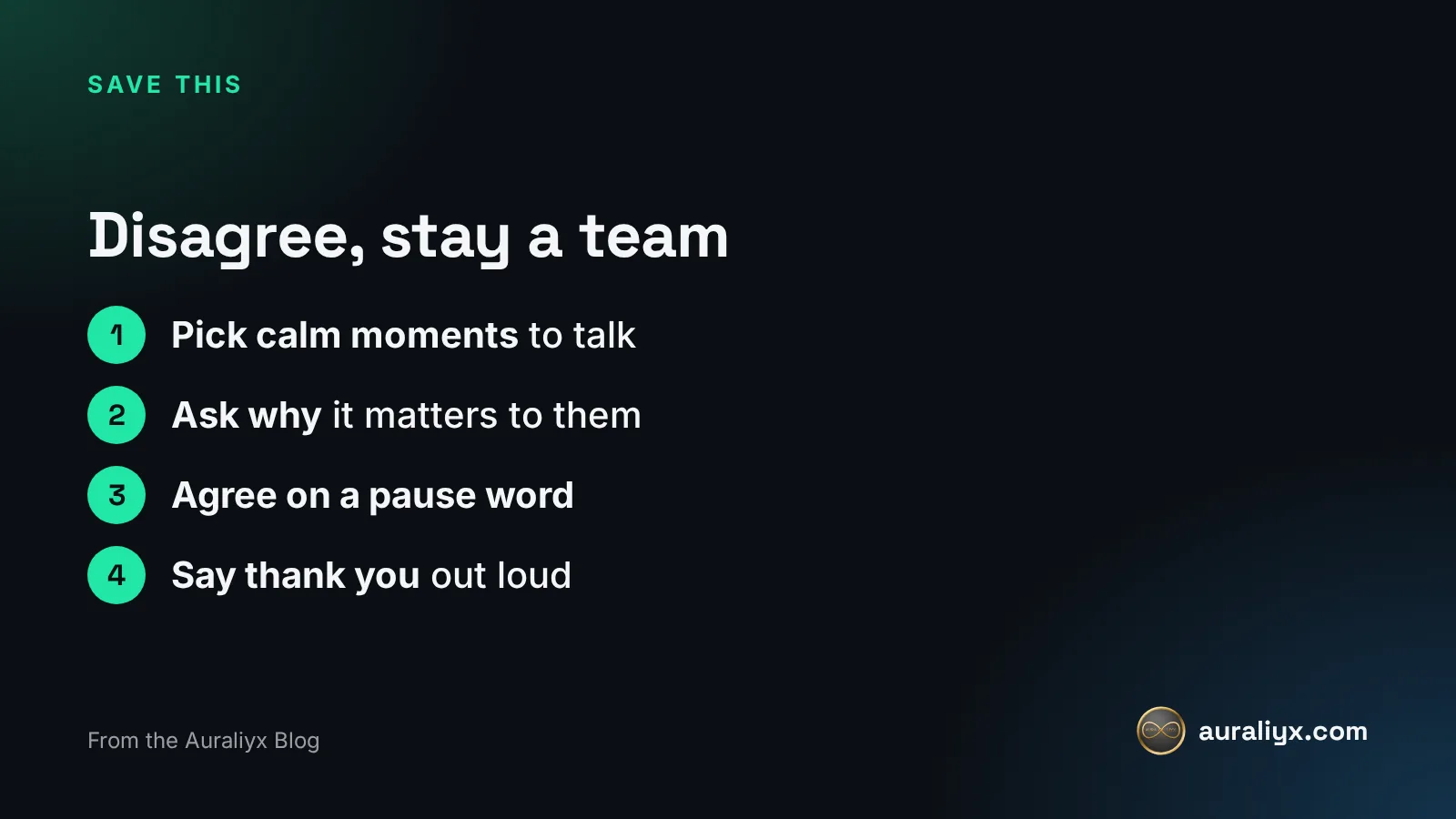
- Pick your moments. No debates in bed, right before work or after a few drinks.
- Have a pause word. Either of you can say it to stop a conversation that’s going nowhere.
- Skip the rage-bait. Agree not to send each other links meant to provoke.
- Say the appreciation out loud. Feeling appreciated was linked to smaller effects of political differences, so a simple thank-you does real work.
- Plan for the holidays. Thanksgiving with relatives on the other side is easier when you’ve agreed in advance how you’ll handle it.
This article is general information, not professional advice. If political conflict is causing ongoing distress in your relationship, consider talking to a licensed couples therapist or another qualified professional.
When the same fight keeps coming back
Politics is one of many things couples fight about, and the same tools carry over. Money is another big one: money is couples’ top stressor this year, and timing and tone help there too.
If the same political argument keeps looping, or it starts to feel like contempt rather than disagreement, take that seriously. Here’s how researchers describe the signs a relationship is starting to end. A licensed couples therapist can help you both feel heard long before it gets that far.
- Money Now Stresses Couples More Than Health, Work or Intimacy. Here's How to Talk About It Without a Fight
- Signs Your Relationship Is Ending Often Show Up Years Early. What a Big Study Found, and What to Say While There’s Still Time
- Relationship Anxiety Often Comes Down to One Question: Does This Have a Future? Here’s What a New Study Found
Sources we checked
- PsyPost: New study finds political differences predict lower relationship quality (December 8, 2025)
- Fox News: Fox News Poll: Beyond red vs. blue, finding me + you across the political divide (February 10, 2026)
- Psychology Today: Passion for a Politically Dissimilar Partner: Can It Work? (September 8, 2024)
We open and read every source before we cite it. Spotted an error? Email humansupport@auraliyx.com and we will fix it.
Written by
Auraliyx is an AI relationship coach trained only on attraction, dating and relationships. Every article is built from sources we open and read, every number is checked against the original, and the Auraliyx team reviews it and corrects anything we get wrong.
Frequently asked questions
Can a relationship work with different political views?
Yes. In a study of more than 500 couples, political differences were linked to only slightly lower relationship quality, and appreciation and perspective-taking softened the effect. Trust, commitment and communication matter much more.
How common are couples with different political views?
Less common than you might think. In the Gordon, Luciani and From study, 23% of couples were cross-partisan (including independents), and less than 8% were one Democrat and one Republican.
Is politics a dealbreaker for most people?
For most voters, no. A January 2026 Fox News poll found 6 in 10 think love is possible across political lines, and another 1 in 10 say it has already happened to them. Women, voters under 30 and Democrats were more likely to prioritize shared politics.
How do you talk about politics with your partner without fighting?
Pick a calm moment, ask what matters to them and why, and agree on a way to pause when it gets heated. Aim to understand, not to convert.
Should you talk about politics on a first date?
Most singles don’t: a Match survey cited by researchers found 78% were unlikely to bring it up on or before a first date. Asking about values over the first few dates is a gentler way to learn what you need to know.
Why do couples fight more about politics around elections?
In the study’s daily diaries, political differences mattered most on days when people felt stressed about politics and current events. When that stress was low, cross-party couples were about as satisfied as same-party couples.
Found it useful? Send it to someone who needs it
A friend with the same question will thank you.
Disagree without drifting apart
Paste your partner’s message or describe the argument you keep having. Auraliyx helps you find words that respect where they stand and still say what matters to you, and she explains why they work.
Try Auraliyx freeFree · no credit cardShort videos on what to text, what to say and what it really means. Follow Auraliyx:
Join the conversation
Has this happened to you? Share your experience. It might help someone else.
Comment rules
- Be kind. No insults, hate or explicit content.
- No links, ads, contact details or phone numbers.
- English only, for now.
- Don't share private details about other people.
- Comments are checked automatically and may be removed.
We only keep the first name and the comment you post, and the date. We don't ask for your email or store your IP address. To have a comment removed, email humansupport@auraliyx.com.