Most Romance Scams in the US Now Start on Social Media: The Red Flags, and What to Text Back
Among people who told the US Federal Trade Commission they lost money to a romance scam in 2025, nearly 60% said it started on social media. How these scams work, the warning signs, and exactly what to say when someone you’ve never met asks for money.
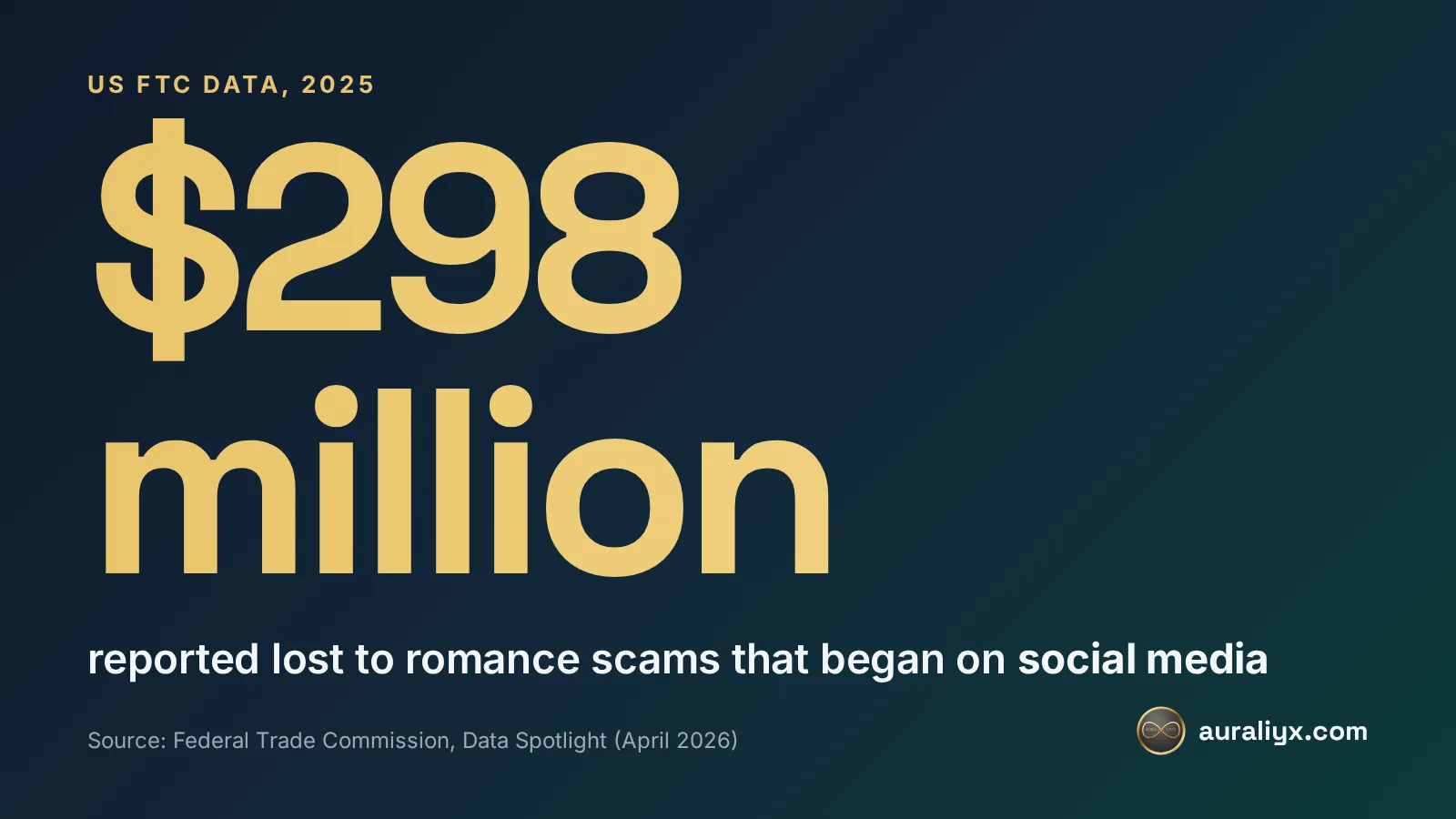
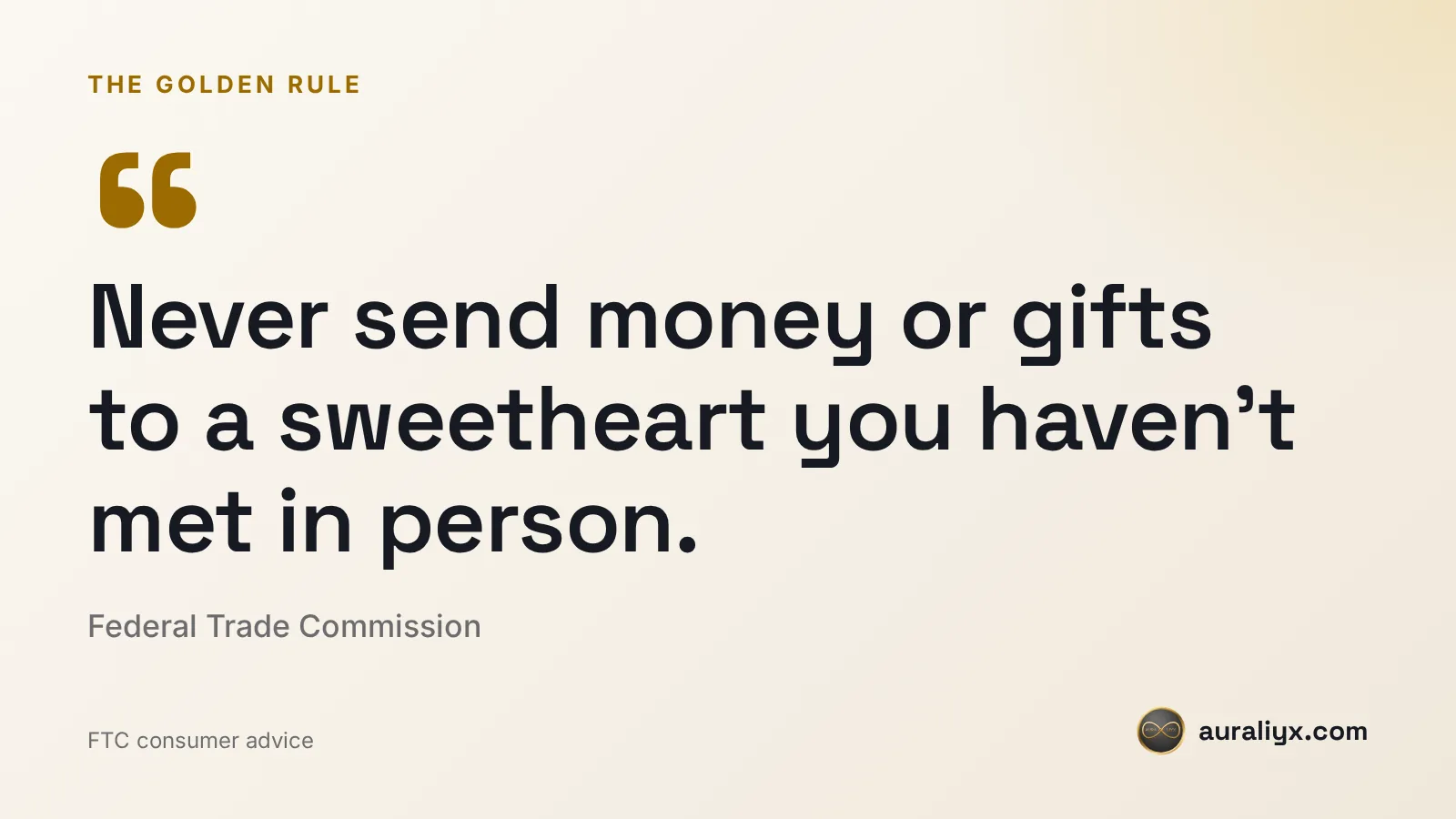
In the US, romance scams now mostly start on social media. Among people who told the US Federal Trade Commission they lost money to one in 2025, nearly 60% said it started there, and romance scams that began on social media cost people a reported $298 million that year. Be careful with anyone you have never met in person who brings up money. Scammers build trust, then invent a crisis or pitch an “investment.” The FTC’s rule is simple: never send money or gifts to someone you haven’t met in person.
- Nearly 60% of people who reported losing money to a romance scam in 2025 said it started on social media (US FTC).
- People told the US FTC they lost $298 million to romance scams that began on social media in 2025, and the agency says most scams are never reported.
- The usual script: a sudden crisis that needs money, or “investment advice” that leads to a fake platform.
- Red flags: they can’t meet, they move you off the app fast and they ask for gift cards, wire transfers or crypto.
- You can be kind and still say no. Never send money to someone you haven’t met in person.
It feels like the real thing. They text good morning every day, remember your dog’s name and say they have never felt this way before. Then, one evening, there is an emergency, or a “once in a lifetime” investment they want to share with you.
Romance scams are built to feel exactly like falling for someone. Data from the US Federal Trade Commission shows where most of them start now, and the patterns that give them away. Here is what to watch for, and what to say if it happens to you or someone you love.
What the FTC found
In a Data Spotlight published in April 2026, the US Federal Trade Commission (FTC) found that among people who reported losing money to a romance scam in 2025, nearly 60% said it started on social media. People reported losing $298 million to romance scams that began on social media that year, far below the $1.1 billion lost to investment scams that began there. Overall, people reported losing $2.1 billion to scams that began on social media in 2025.
The FTC’s figures only include what people reported. The agency notes that most scams are never reported to the government, so the real losses are likely much higher, and that it could not collect reports while the US federal government was shut down in 2025.
How a romance scam usually works
According to the FTC, scammers often tailor their act to what people share on their profiles. Once trust is built, they invent a crisis that requires money, or casually offer investment advice to draw people onto a fake investment platform.
Some go further. The FTC also describes scammers who trick people into sending intimate photos and then threaten to send the images to their social media contacts unless they pay. If that happens, stop replying, tell someone you trust and report it. The reporting options are further down.
What makes it work is time. The FTC’s consumer advice puts it simply: they build a relationship over time, and then one day the conversation turns to money.
“Romance scammers play the long game.”
Federal Trade Commission, consumer alert (May 2026)
Got a message that feels off? Paste it and work out a calm reply with Auraliyx.
Try Auraliyx free →The red flags to watch for
The FTC’s consumer advice lists warning signs that show up again and again. One alone may not prove anything, but two or three together should make you slow down, and any request for money is reason enough to stop:
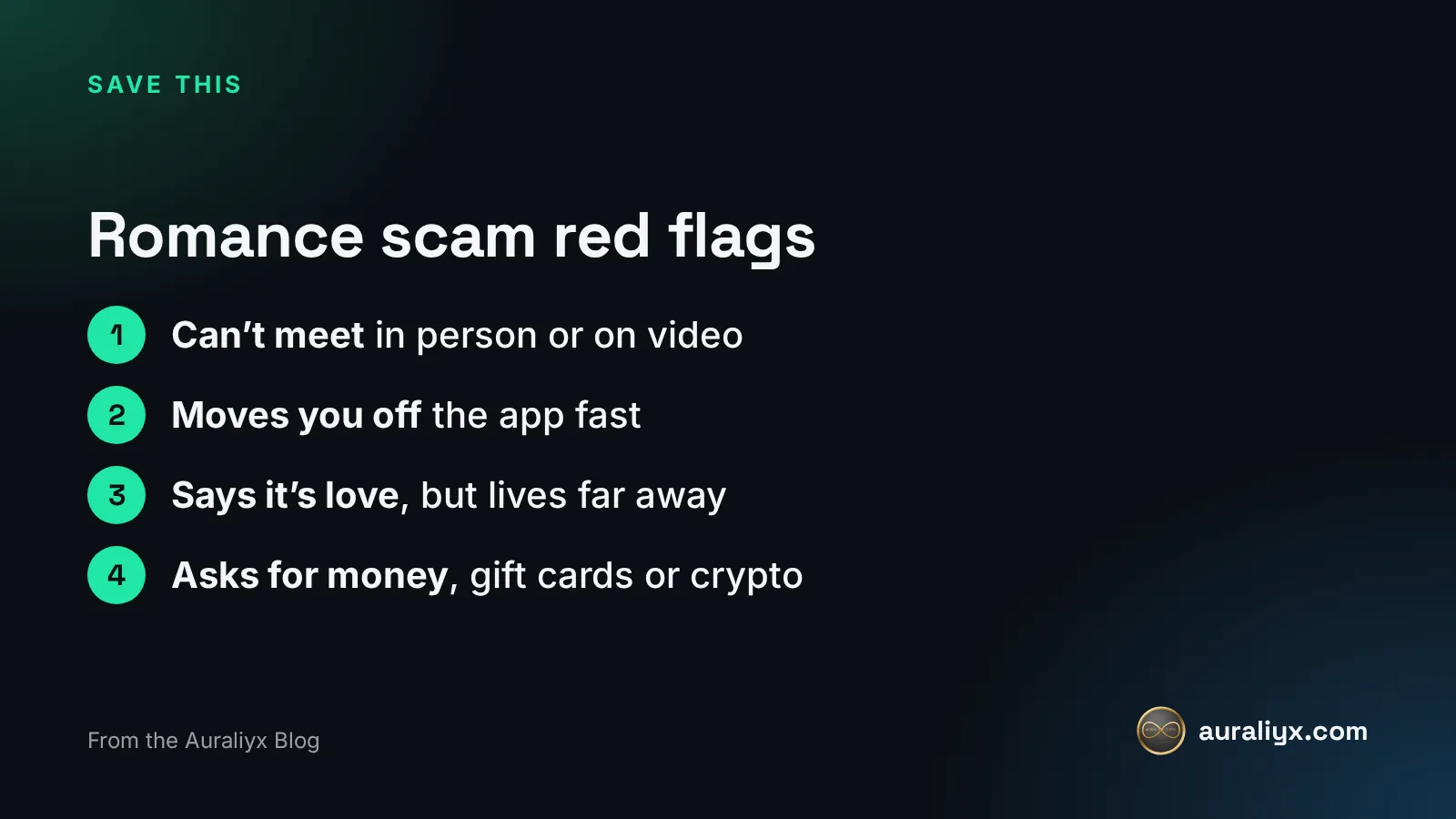
- They move fast. Soon they want to email, call or message you somewhere other than the app or site where you met.
- They can’t meet. There is always a reason, like working on an oil rig or being in the military.
- They say it’s true love, but they live far away.
- There is a money problem, like medical expenses for them or a family member.
- They want hard-to-trace payments: gift cards and their PIN codes, wire transfers, payment apps or cryptocurrency.
- They offer to help you invest, often in crypto.
Why smart people fall for it
Falling for a romance scam says nothing about how smart you are. These scams work because they feel like love: daily attention, inside jokes, plans for the future. By the time money comes up, sending it feels like helping your partner.
That is also why shame keeps so many people quiet. If it happened to you, you are not stupid, and you are far from alone. Telling someone you trust can help you put a stop to it.
Someone who really cares about you can take a “no” about money. A scammer may push harder, guilt-trip you or come back with a new story, so pay attention to what happens after you say it.
Money secrets hurt real relationships too: in a Bankrate survey, 43% of U.S. adults said financial secrets are at least as bad as cheating. If you’re wondering how AI fits into dating, here’s what the data shows about singles using AI. And if you’re dating in the US, here’s our guide on how to text someone you met on an app, from the first message to the first date.
What to text when they ask for money
You don’t owe anyone a long explanation, but having the words ready makes it much easier to hold the line, especially when the request comes with a sad story or a deadline.
Why it works: It sets a clear boundary without drama and asks for a live video call, which scammers often dodge. A call alone doesn’t prove someone is real, though, so your answer on money stays no.
Why it works: It closes the door on the “investment” script, which the FTC says scammers use to lure people onto fake platforms.
If you already sent money
Act fast. The FTC advises contacting your bank or the payment company right away and telling them what happened.
Then stop contact and report it: ReportFraud.ftc.gov in the US; Report Fraud in England, Wales and Northern Ireland; Police Scotland in Scotland; the Canadian Anti-Fraud Centre in Canada; ReportCyber or Scamwatch in Australia. Also tell the app or social media site where you met. Talk to someone you trust; the FTC specifically recommends listening to friends or family who are worried.
This article is general information, not legal or financial advice. If you lost money, contact your bank first and consider talking to a professional.
How to protect someone you love
If a parent, friend or sibling suddenly has an online partner they have never met, who always seems to need money, bring it up gently. Don’t blame them, and ask questions instead of attacking the person they believe they love.
Why it works: It protects your relationship with them while planting a useful question. Someone who keeps dodging a video call is a red flag, though a call alone doesn’t prove they’re real.
Sources we checked
- Federal Trade Commission: Data Spotlight: Reported losses to scams on social media eight times higher than in 2020 (April 27, 2026)
- Federal Trade Commission: Consumer alert: New trends in reports of imposter scams (May 7, 2026)
- Federal Trade Commission: What To Know About Romance Scams (August 2022)
We open and read every source before we cite it. Spotted an error? Email humansupport@auraliyx.com and we will fix it.
Written by
Auraliyx is an AI relationship coach trained only on attraction, dating and relationships. Every article is built from sources we open and read, every number is checked against the original, and the Auraliyx team reviews it and corrects anything we get wrong.
Frequently asked questions
What is a romance scam?
A romance scam is when someone fakes a romantic relationship online to get money or personal information. They build trust over weeks or months, then invent an emergency or an “investment” that needs your money.
Where do most romance scams start?
According to the US Federal Trade Commission (FTC), nearly 60% of people who reported losing money to a romance scam in 2025 said it started on a social media platform.
How much money do people lose to romance scams that start on social media?
In 2025, people told the US Federal Trade Commission (FTC) they lost $298 million to romance scams that began on social media, and the FTC says most scams are never reported, so real losses are likely much higher.
What are the biggest red flags?
They won’t meet in person, they move you off the app quickly, they declare love fast while living far away, and they ask for money through gift cards, wire transfers, payment apps or crypto, or offer to help you invest.
What should I do if I sent money to a scammer?
Contact your bank or the payment company right away, stop contact, report it (ReportFraud.ftc.gov in the US; Report Fraud in England, Wales and Northern Ireland; Police Scotland in Scotland; the Canadian Anti-Fraud Centre in Canada; ReportCyber or Scamwatch in Australia) and tell the app or site where you met. This is not legal or financial advice.
How do I tell a friend they might be talking to a scammer?
Be gentle and curious instead of judgmental. Ask whether they have ever had a live video call or met in person, and offer to help them look into the person’s profile together.
Found it useful? Send it to someone who needs it
A friend with the same question will thank you.
Not sure if it’s real?
Paste the conversation or describe what’s happening. Auraliyx helps you think it through and reply with clear, kind boundaries.
Try Auraliyx freeFree · no credit cardShort videos on what to text, what to say and what it really means. Follow Auraliyx:
Join the conversation
Has this happened to you? Share your experience. It might help someone else.
Comment rules
- Be kind. No insults, hate or explicit content.
- No links, ads, contact details or phone numbers.
- English only, for now.
- Don't share private details about other people.
- Comments are checked automatically and may be removed.
We only keep the first name and the comment you post, and the date. We don't ask for your email or store your IP address. To have a comment removed, email humansupport@auraliyx.com.