Regret Not Telling Someone How You Feel? The Science of the Text You Never Sent
Cornell research found that our longest-lasting regrets are usually about what we didn’t do. Other studies show people badly underestimate how much a surprise message or a thank-you means to the person who gets it. Here’s why that unsent text matters, and how to send it.
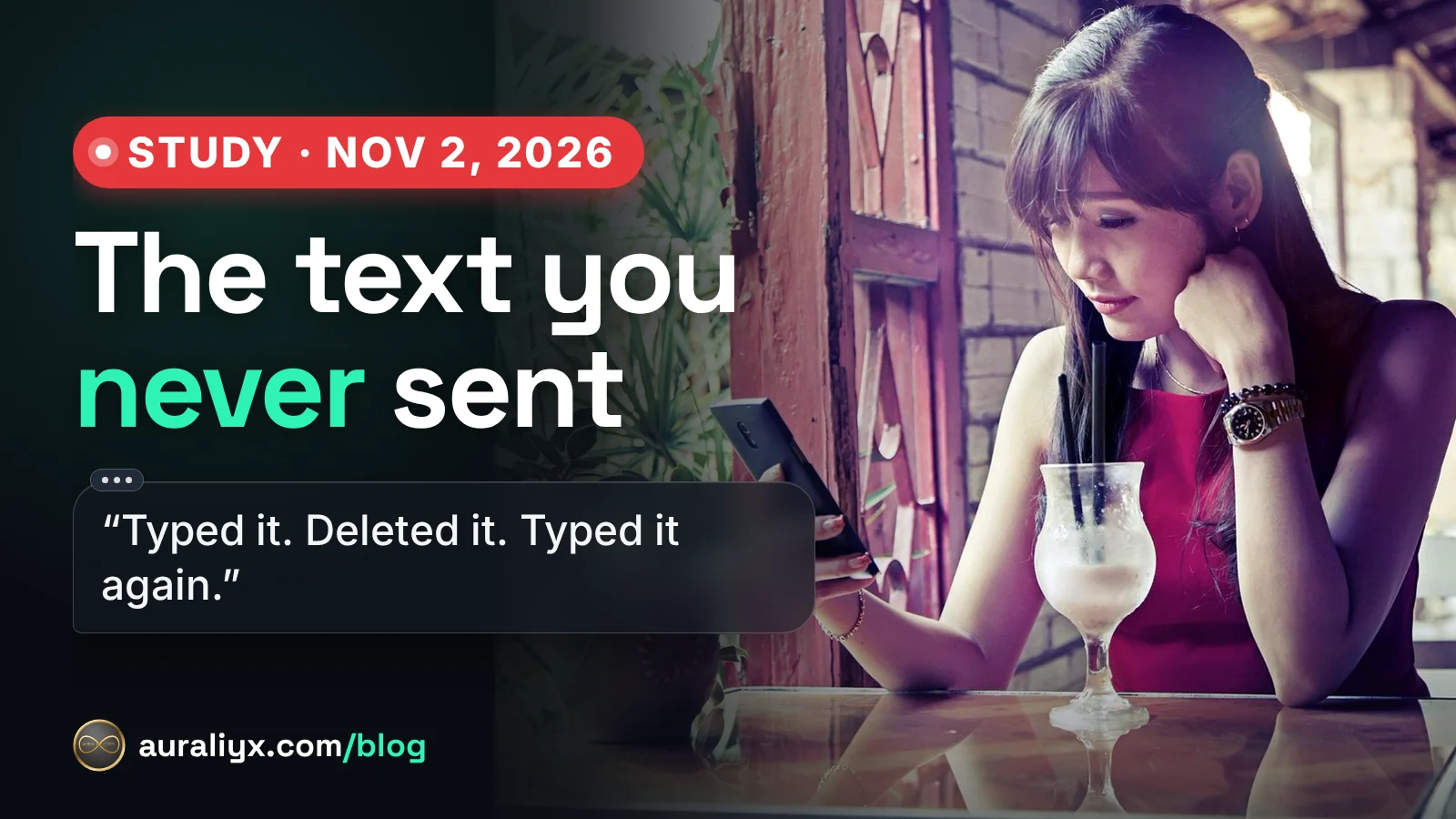
If you regret not telling someone how you feel, you’re not alone, and research suggests that kind of regret lasts. Cornell psychologist Tom Gilovich found that in the short term people regret their actions more, but in the long term the regrets about what they didn’t do stick around longer. Other studies show people significantly underestimate how much others appreciate an unexpected message or a note of thanks. A short, warm, specific text usually lands better than you fear.
- In the short term we regret what we did; in the long term, what we didn’t do sticks around longer (Cornell).
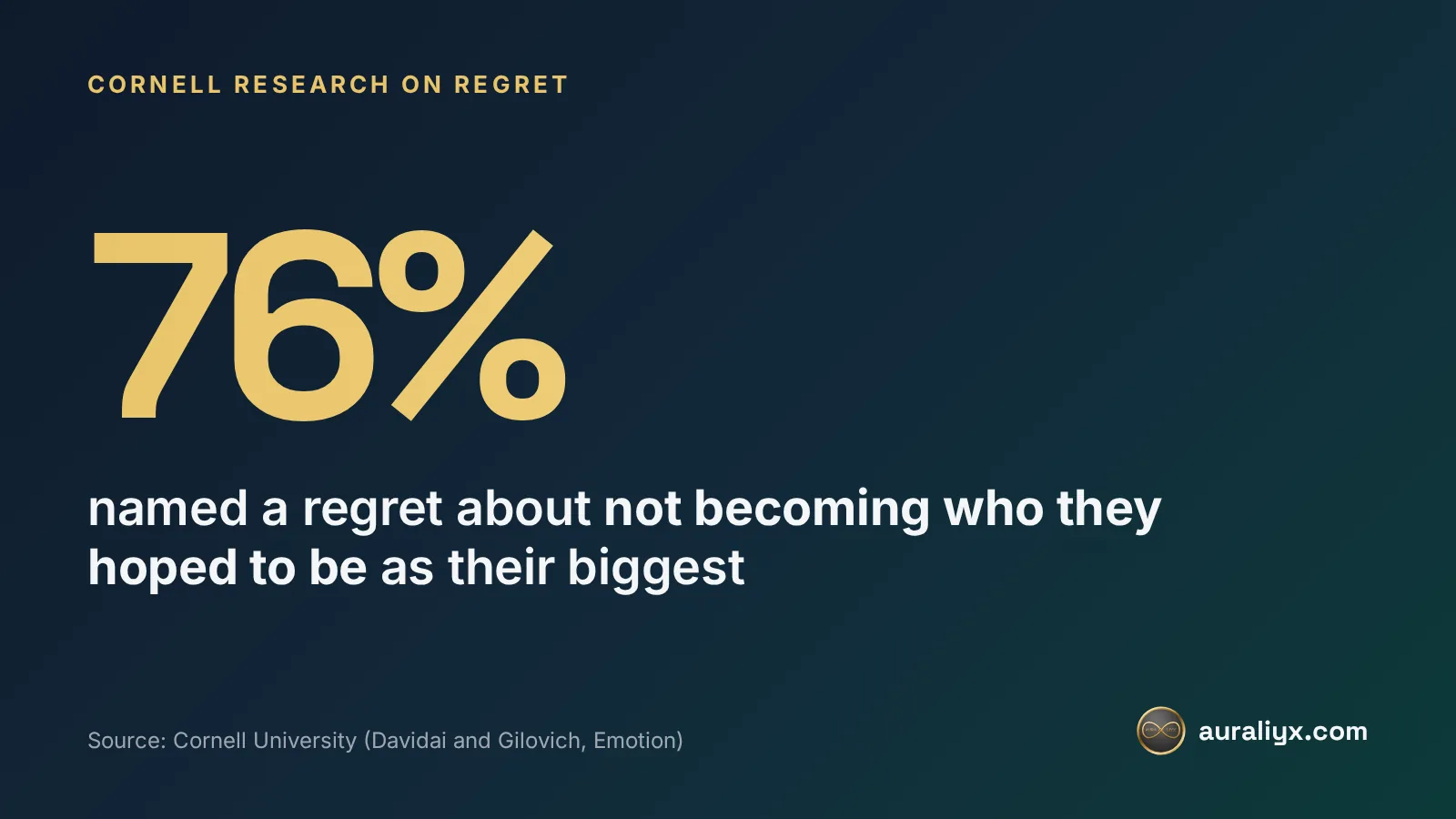
- 76 percent of participants named a failure to become their ideal self as their single biggest regret.
- People consistently underestimate how much others appreciate an unexpected text just to say hello (APA, more than 5,900 participants).
- People writing thank-you letters worried about their wording; the people reading them mostly felt the warmth of the gesture.
- A short, specific, no-pressure message beats a perfect speech you never send.
Most of us have one. A message sitting in the notes app, or typed into the chat and deleted three times. “I’m really proud of you.” “I still think about that trip.” “I’m sorry about how I left things.” You meant to send it. Then the moment passed, and it started to feel too late, too random or too much.
Then something shakes you, maybe a scary headline, a close call or a friend’s bad news, and the same question comes back: if today were your last chance, who would you text, and what would you say? Psychology has a fairly clear answer about what to do with that feeling. Here’s what the research shows, and how to send the message without making it heavy.
Why we regret not telling someone how we feel
Cornell psychologist Tom Gilovich has studied regret for decades. His earlier work found a pattern a lot of people recognize in their own lives: the mistakes we make sting right away, but the chances we skip are the ones that linger.
In a later set of six studies with Shai Davidai, published in the journal Emotion, people said their regrets were about their “ideal self,” the person they hoped to become, far more often than about duties and obligations: 72 percent versus 28 percent. Asked to name their single biggest regret in life, 76 percent picked one about not living up to that ideal self.
Gilovich notes that falling short of your ideal self is usually an inaction. Not saying “I love you.” Not telling a friend what they meant to you. Not making the call. Those regrets are hard to put away because there’s no clear moment when they’re resolved, unless you do something about them.
“In the short term, people regret their actions more than inactions. But in the long term, the inaction regrets stick around longer.”
Tom Gilovich, professor of psychology at Cornell University
They’ll appreciate it more than you think
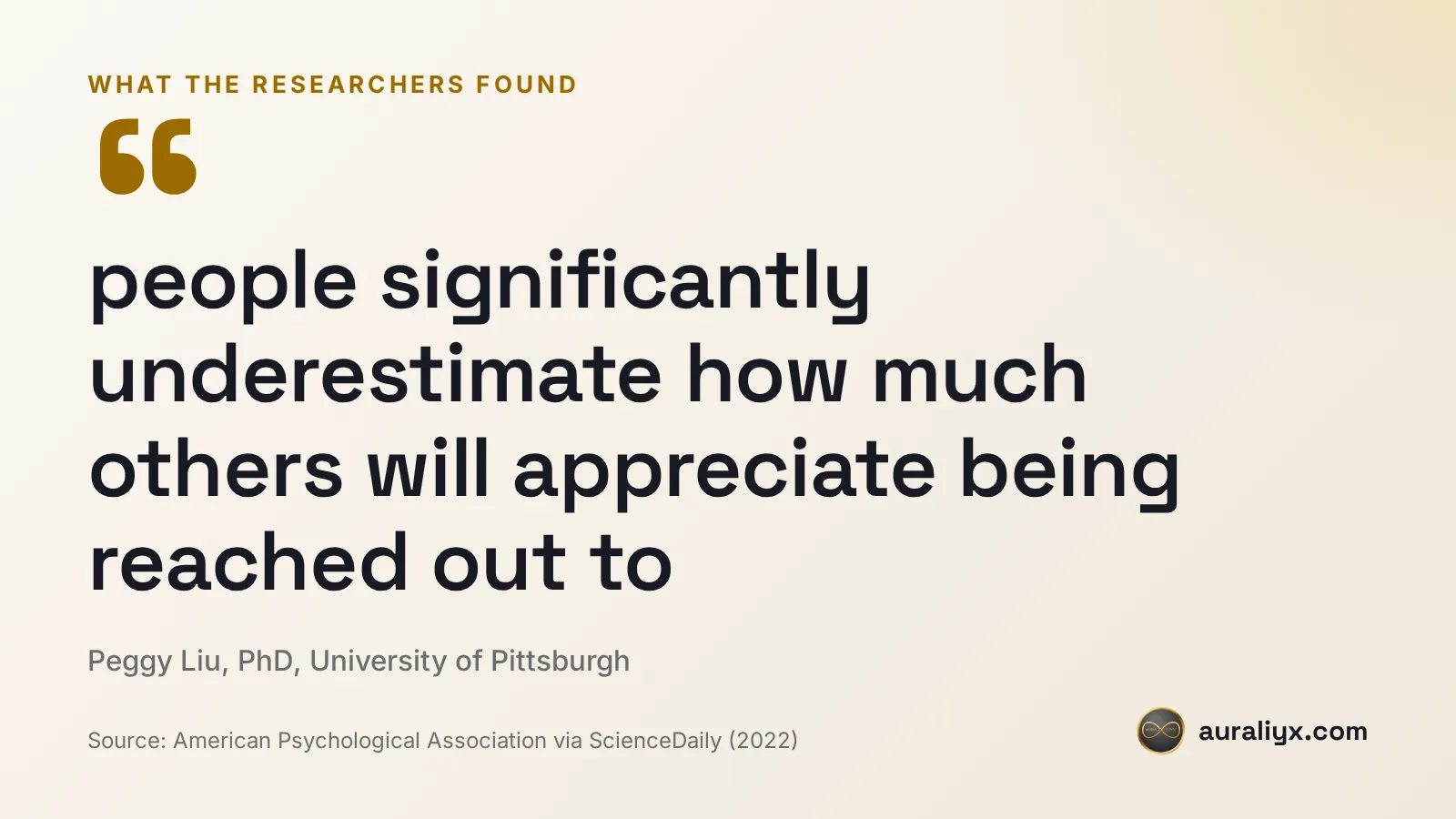
The fear behind most unsent texts is simple: what if it’s weird? Research published by the American Psychological Association suggests that fear is usually off. In a series of experiments with more than 5,900 participants, people who reached out to someone in their social circle “just because” consistently underestimated how much the other person appreciated it.
The surprise was part of the gift. People on the receiving end focused more on how unexpected the message was, and that surprise was linked to higher appreciation. The gap was biggest when the contact was out of the blue, or when the two people weren’t especially close.
These studies looked at friends and acquaintances, not dates or partners, so they can’t predict how your crush will react. But the fear they describe is the same one that keeps people from texting a friend they drifted from, someone they liked and never told, or a partner they’ve gone quiet with.
Why it works: It’s specific, warm and easy to answer. Apologizing for reaching out makes them work to reassure you; a shared memory gives them something to smile about.
Got a message you keep typing and deleting? Tell Auraliyx who it’s for, and see how they’re likely to feel before you hit send.
Try Auraliyx free →You’re worrying about the wrong thing
A study from the University of Chicago Booth School of Business found the same blind spot with gratitude. In four experiments, people wrote a letter to someone who had touched their life and predicted how that person would feel. Then the researchers asked the people who got the letters.
The writers underestimated how surprised and how positive the recipients would feel, and overestimated how awkward it would be. The most useful detail: the writers worried about choosing the right words, while the recipients were simply happy about the warmth of the gesture.
In other words, the person reading your message isn’t grading your sentences. They’re noticing that you thought of them. If you draft and redraft, remember that overthinking is often what kills the message, not the message itself. If shyness is the real block, these tips for texting when you’re shy can help.
Why it works: A specific memory makes gratitude feel real. The disclaimers at the start shrink the message before it even lands.
The “last chance” test: who would you text today?
Here’s a simple exercise. Imagine today was your last chance to tell people what they mean to you. Not to be dramatic, just to cut through the noise. Whose name comes to mind first? That’s usually your answer.
For most people, the list is short:
- Your partner, who hears “did you pay the electric bill?” a lot more often than “I’m lucky it’s you.”
- Someone you like, who you’ve been circling for weeks without saying it plainly.
- A friend you drifted from, with no fight, just time and busy schedules.
- Someone you owe an apology, where the silence has lasted longer than the mistake.
- A parent, sibling or mentor who shaped you and has never heard you say so.
What to text, with examples
You don’t need a crisis to send these. The research above points the other way: the less expected the message, the more it tends to mean. The best version is short, specific and asks for nothing in return. Here are two starting points you can make your own.
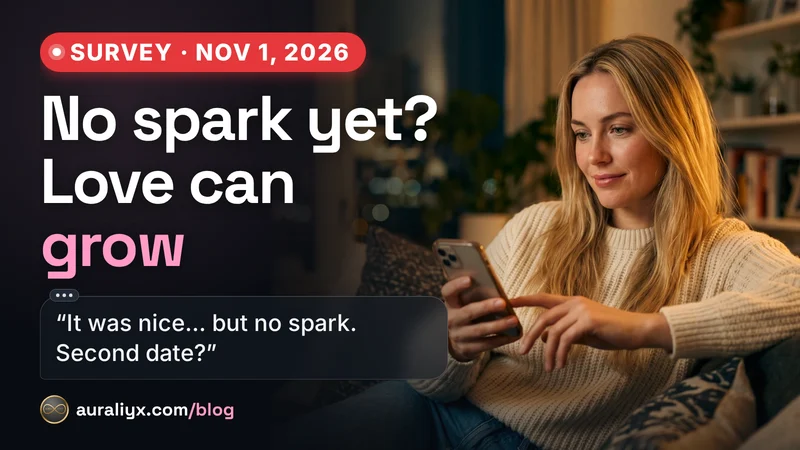
For more ways to open up to a crush, see how to tell someone you like them over text. And if a new relationship feels a little flat, don’t give up too fast: the slow burn might be worth waiting for.
Why it works: It’s affectionate with zero pressure. “We should talk more” sounds like a complaint, even when you mean it kindly.
Why it works: It shares the feeling and offers a light, clear next step. A heavy confession with a demand for an answer puts them on the spot.
How to say it without making it heavy
A few habits make a heartfelt message easy to receive:
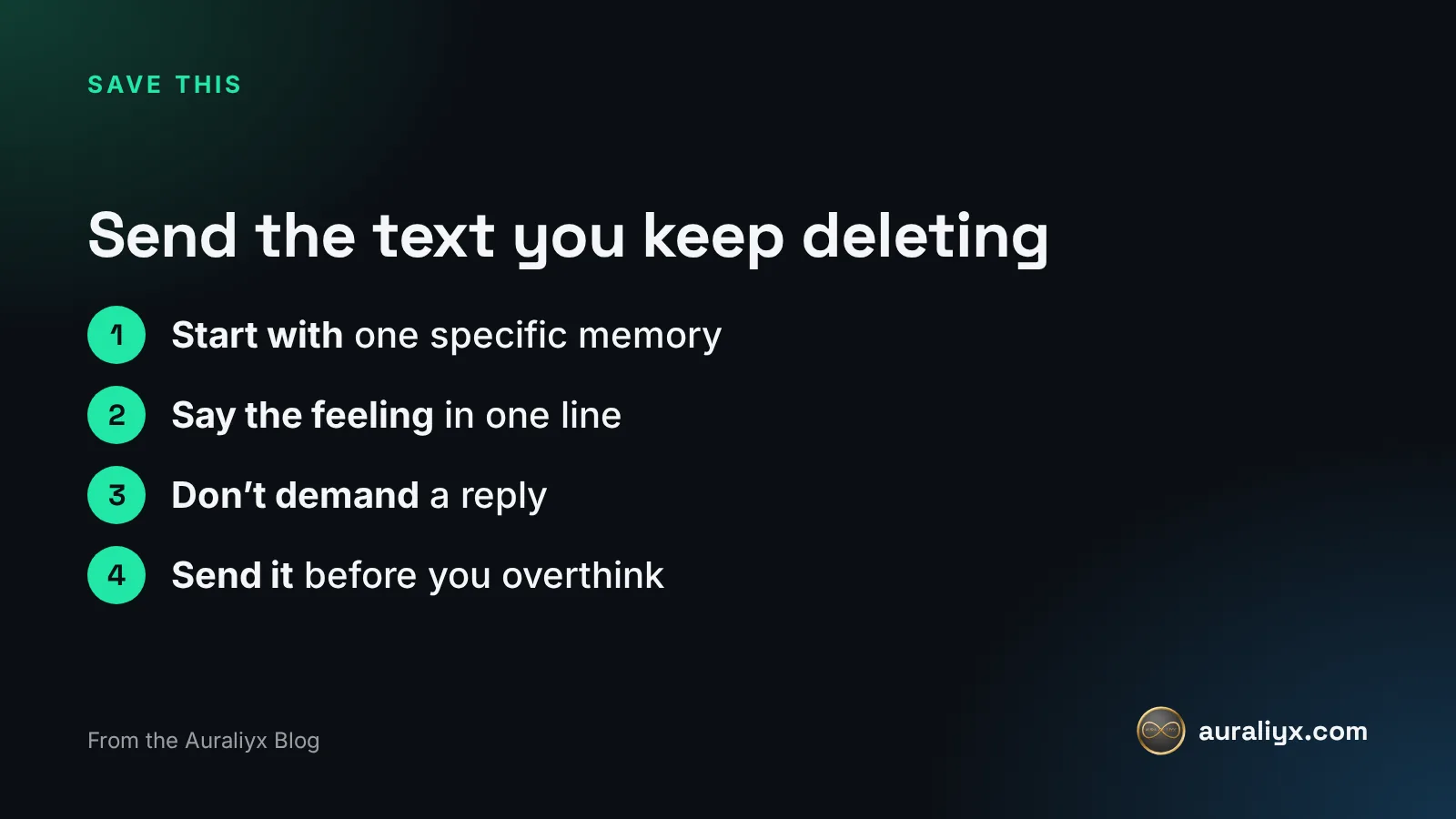
- Lead with the specific thing. “You made that week so much easier” says more than “You mean so much to me” on its own.
- Don’t demand a reply. Ending with “no need to answer, I just wanted you to know” takes the pressure off.
- Keep it short. If it needs more than a few lines, it might be a call or a coffee, not a text.
- Pick a calm moment. A thoughtful message in the afternoon lands better than an emotional one late at night.
- Skip the guilt trip. “I guess you forgot about me” turns a warm gesture into a test.
When the history is complicated
One honest exception. The research above is about people reaching out to friends and acquaintances; it says nothing about relationships that ended badly. If someone asked you not to contact them, respect that. If you’re thinking about texting an ex, ask yourself whether you want to say something kind or reopen the door, and be honest about which one it is.
With a partner, the stakes are different: the unsaid things pile up quietly. If things have felt distant, it helps to know the early signs a relationship is drifting, and to say the warm thing before the hard conversation, not instead of it.
When you know what you feel but not what to say
Sometimes the problem isn’t courage, it’s words. You know exactly what you feel, but every draft sounds either too much or not enough.
That’s where Auraliyx can help. She’s an AI relationship coach trained on dating and relationships, not a generic chatbot. Tell her who it is and what you want them to know, and she’ll suggest a few ways to say it, explain why each one works and show you how the other person is likely to feel when they read it. It’s not AI talking for you. It’s you, talking better.
Then send it. Not someday. Today, while it’s still a nice surprise.
Sources we checked
- Cornell University (via Futurity): These kinds of regrets last the longest (May 30, 2018)
- American Psychological Association (via ScienceDaily): Friends enjoy being reached out to more than we think (July 11, 2022)
- University of Chicago News: People underestimate value of sending letters of appreciation (September 5, 2018)
We open and read every source before we cite it. Spotted an error? Email humansupport@auraliyx.com and we will fix it.
Written by
Auraliyx is an AI relationship coach trained only on attraction, dating and relationships. Every article is built from sources we open and read, every number is checked against the original, and the Auraliyx team reviews it and corrects anything we get wrong.
Frequently asked questions
Is it weird to text someone out of the blue?
Usually not. In experiments published by the American Psychological Association, people who reached out “just because” consistently underestimated how much the other person appreciated it, and more surprising messages were appreciated even more.
Do people regret what they didn’t say more than what they said?
Over time, often yes. Cornell research found that people regret their actions more in the short term, but regrets about things they didn’t do stick around longer.
How do I tell someone how I feel without making it awkward?
Keep it short, mention something specific and don’t demand a reply. In studies on thank-you letters, writers overestimated how awkward the recipient would feel.
Should I text my ex to say what I never said?
Only if the breakup was respectful and they haven’t asked for no contact. If you’re secretly hoping to get back together, be honest with yourself about that before you hit send.
What would you say to someone if you knew it was your last chance?
Most people want to say thank you, I’m sorry or I love you. A specific memory plus one of those, in a few lines, says more than a long speech.
What if they don’t reply?
A message like this doesn’t need an answer to matter. Saying it is the part you control, and research suggests it’s likely appreciated more than you think, even if the reply is short.
Found it useful? Send it to someone who needs it
A friend with the same question will thank you.
Say it while it’s still a nice surprise
Tell Auraliyx who you’re thinking of and what you want them to know. She’ll suggest ways to say it in your own words and explain how each one is likely to land. It’s not AI talking for you. It’s you, talking better.
Try Auraliyx freeFree · no credit cardShort videos on what to text, what to say and what it really means. Follow Auraliyx:
Join the conversation
Has this happened to you? Share your experience. It might help someone else.
Comment rules
- Be kind. No insults, hate or explicit content.
- No links, ads, contact details or phone numbers.
- English only, for now.
- Don't share private details about other people.
- Comments are checked automatically and may be removed.
We only keep the first name and the comment you post, and the date. We don't ask for your email or store your IP address. To have a comment removed, email humansupport@auraliyx.com.