Couples Who Exercise Together Talk and Argue Better, a New BYU Study of U.S. Couples Suggests. How a Simple Walk Can Help
In a BYU study of nearly 1,700 young married U.S. couples, those who exercised together reported better communication, more peaceful conflict resolution and less marital conflict. Walking was the most common shared activity. What it means, what it doesn’t prove, and what to say on your next walk.
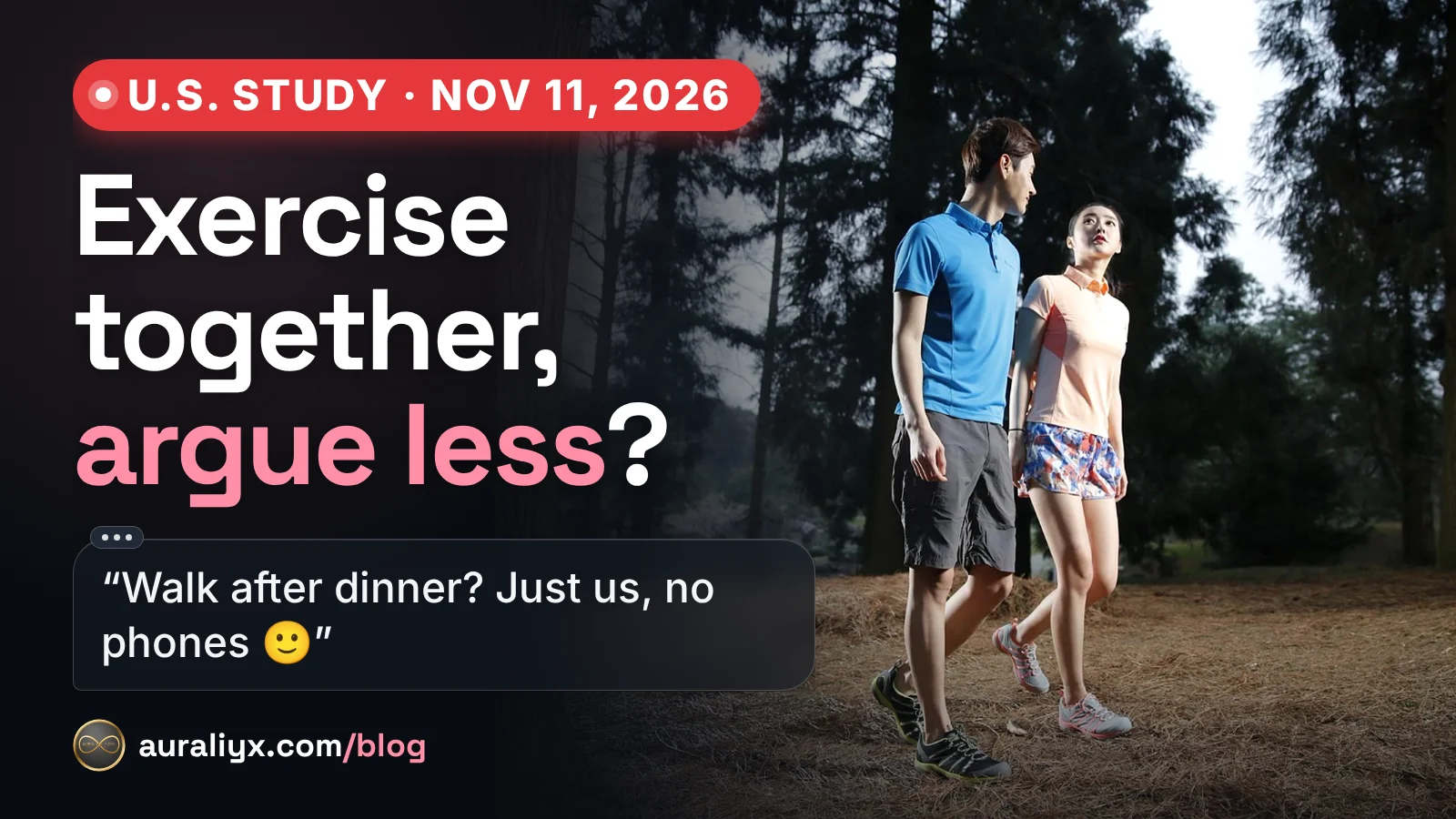
Couples who exercise together may have healthier marriages, according to a large U.S. study. Brigham Young University researchers looked at surveys from nearly 1,700 young married couples. Those who worked out together said they communicated better, handled conflict better and had less conflict in the marriage than couples who didn’t. The difference was small but consistent, and walking was the most common shared exercise. The study shows a link, not proof that working out causes a better marriage, but a regular walk together is an easy way to make time to talk and listen.
- A BYU study of nearly 1,700 young married U.S. couples linked exercising together with better communication and calmer conflict resolution.
- In BYU’s U.S. study, about 60% of husbands and wives reported exercising, yet only about a third of the sample worked out with their spouse.
- Walking was the most common shared exercise in BYU’s U.S. study, so you don’t need a gym or fancy gear.
- In BYU’s U.S. study, the link between exercising together and a healthier marriage was small but consistent, and it doesn’t prove cause and effect.
- A walk works best as a regular way to spend time together, not as the place to start your biggest fight.
It’s late on a weeknight. You’re both tired, the dishes are still in the sink, and a small comment about whose turn it was to call the plumber is turning into a standoff across the kitchen. Nobody is yelling, but nobody is really listening either.
A new study from Brigham Young University points to a surprisingly simple habit that may help: moving together. Couples who exercised together, most often by just going for a walk, reported communicating better and resolving conflict more peacefully. Here’s what the research found, where it falls short, and how to use a shared walk to make time to talk.
What the study on couples who exercise together found
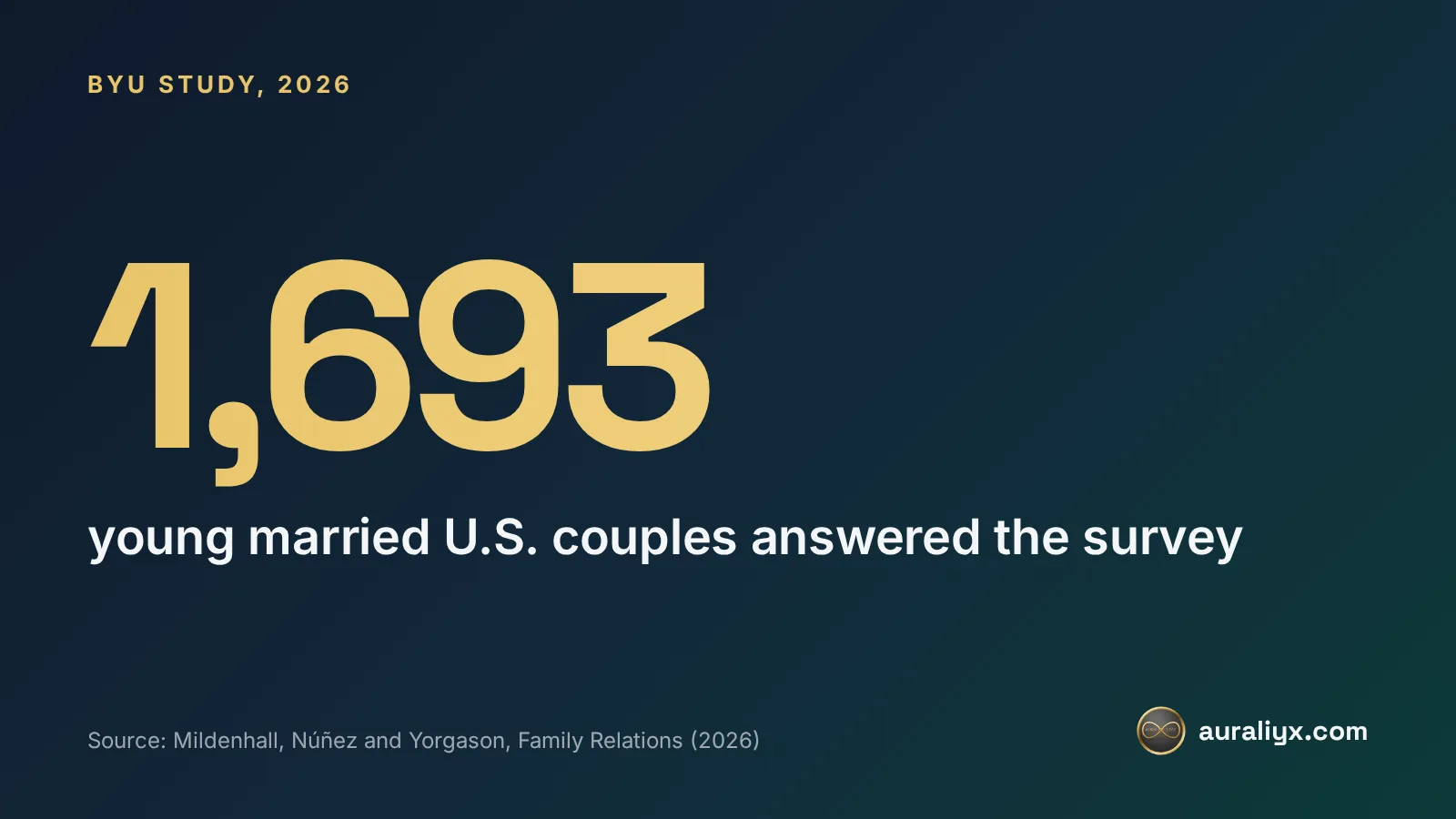
The study, published in the journal Family Relations, comes from first author Ashlyn Hiatt Mildenhall, Matthew L. Núñez and Jeremy Yorgason, a professor in BYU’s School of Family Life. They used answers from 1,693 young married couples in the Couple Relationships and Transition Experiences (CREATE) study, a nationally representative BYU project that has followed newly married couples across the United States for more than a decade.
The researchers compared two habits, exercising on your own and exercising as a couple, against three signs of a healthy relationship: how well the couple communicates, how they handle conflict and how much conflict they report in the marriage. Both habits were tied to healthier marriages. But shared physical activity consistently showed stronger links to good outcomes than working out separately.
In plain terms, couples who sweated, walked or played together tended to say they talked better, settled disagreements more calmly and reported less conflict in their marriage.
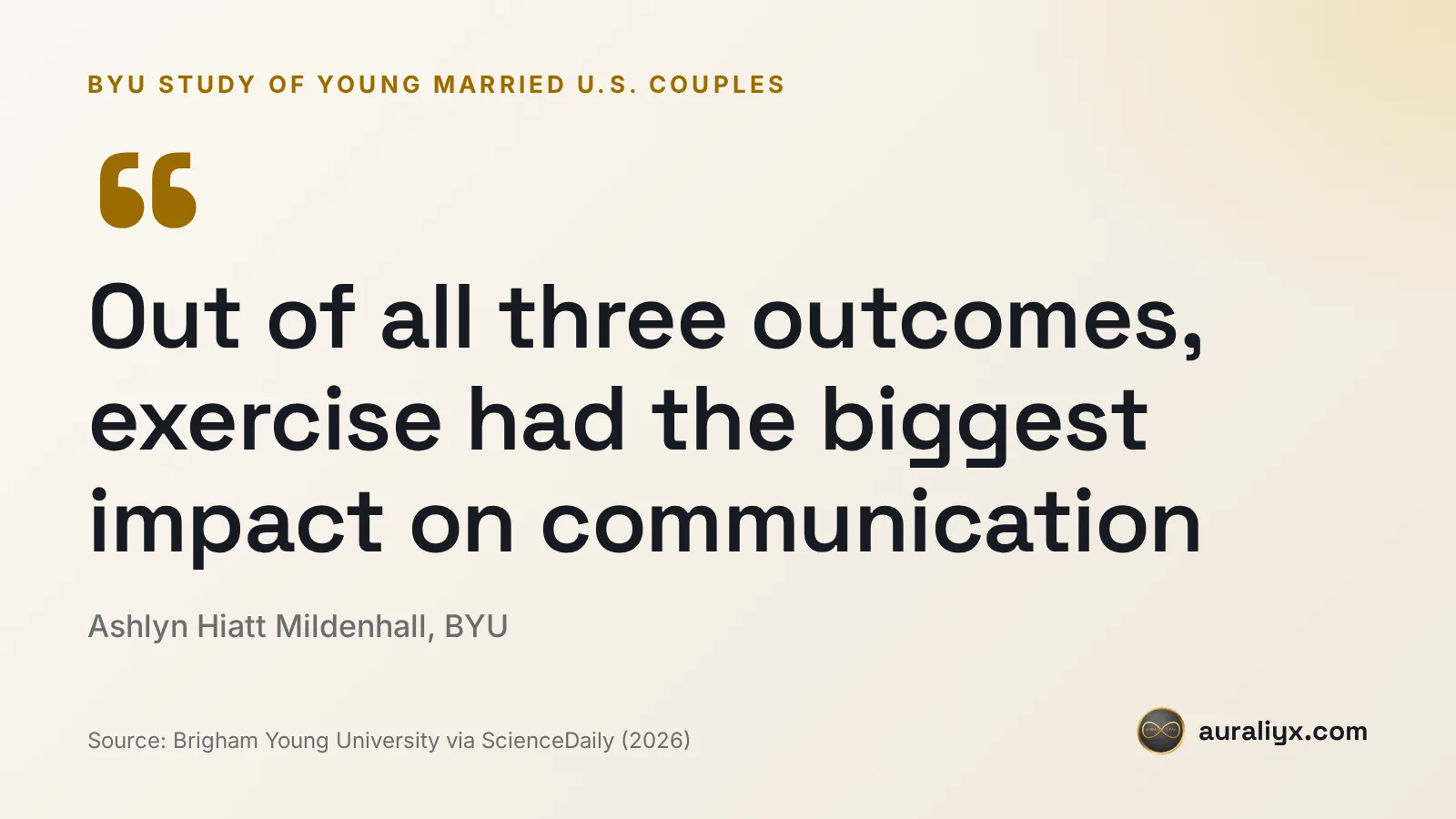
“Our findings suggest that conjoint exercise facilitates, in a small but significant way, the ability to resolve conflict peacefully”
Jeremy Yorgason, BYU School of Family Life (via ScienceDaily, 2026)
In the study, about half of spouses who worked out didn’t do it together
One of the most interesting details is how many spouses work out on their own. In this sample, about 60% of spouses said they worked out, and only about a third of all spouses did it with their partner. As Yorgason pointed out, that leaves roughly half of the people who exercise doing it without their spouse.
That isn’t a criticism. Different schedules, different fitness levels and a real need for time alone are all good reasons to train solo, and individual exercise was linked to healthier marriages, too. The point is that many couples already have the habit and simply aren’t sharing it.
This also isn’t the first time BYU researchers have seen this pattern. An earlier study by Yorgason and colleagues, published in 2018, looked at older couples and found that those who exercised together had more positive marital events, like enjoying a shared activity or feeling cared for and listened to, along with higher marital satisfaction.
Not sure how to bring up the thing that keeps turning into a fight? Tell Auraliyx what’s going on and work out what to say.
Try Auraliyx free →Why a walk might make hard conversations easier
The researchers suggest that exercising together naturally creates more chances for conversation and positive moments, and that repeated moments like these could strengthen a relationship over time. Partners who exercised together also said they listened better and felt more heard and supported by their spouse.
Walking was the most common shared activity in the study, and communication was the outcome most strongly linked to exercise. That combination makes sense in everyday life: on a walk, you can talk, pause, point at a dog, and pick the thread back up without any pressure.
There’s also something practical about walking side by side. You’re not staring at each other across a table, you’re heading in the same direction, and a silence feels natural instead of loaded. The study didn’t measure this directly, so treat it as a useful idea rather than a finding. Still, a walk may be an easier place to bring up something sensitive, like money, which is one of the top stressors for couples right now.
What the study doesn’t prove
This is good news, but it helps to read it carefully. A few limits are worth keeping in mind:
- It’s a link, not cause and effect. Couples who already get along well may simply be more likely to work out together. The survey can’t tell which came first.
- The link is small. Yorgason describes it as small but very consistent. A walk won’t fix a relationship on its own. If you’re afraid of your partner, a private walk isn’t the place for a hard talk: contact a local domestic violence service first.
- It studied young married couples in the U.S. The results may not apply in the same way to dating couples, long-distance partners or every culture.
- People reported their own habits and feelings. Self-reported surveys are useful, but they aren’t the same as watching couples argue in a lab.

How to start exercising together (without it becoming another chore)
The researchers are clear that shared workouts won’t fix every relationship problem, and that couples raising children may need to make time for those workouts on purpose. The good news is that the most common activity in the study was also the easiest one: walking.
Some practical ways to make it stick:
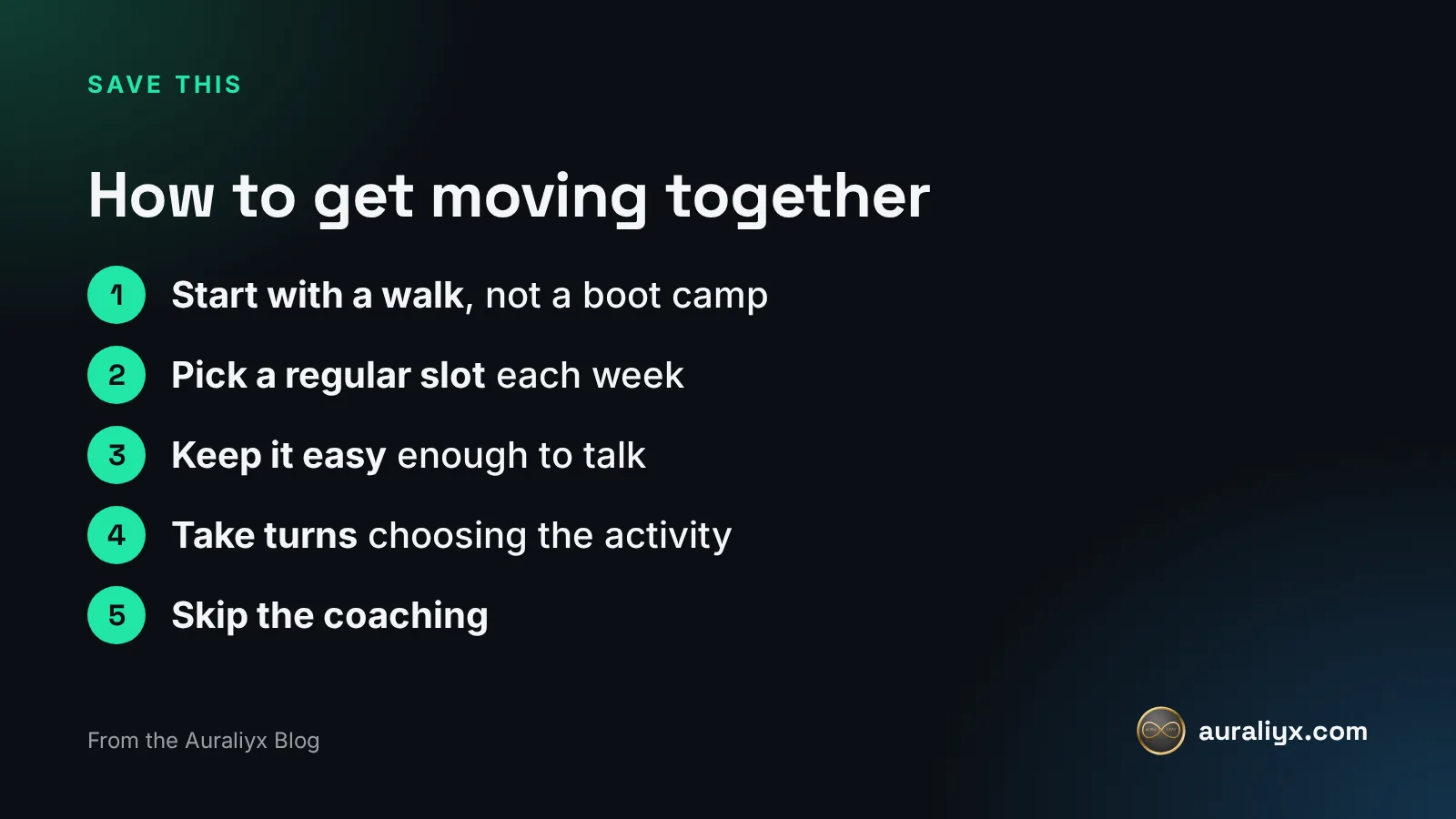
- Start with a walk, not a boot camp. Even 20 minutes around the block after dinner gives you time to talk.
- Pick a regular slot. Saturday morning or a set weeknight works better than “sometime this week.”
- Keep the pace conversational. If one of you can’t talk, you’re working out, and that’s a different kind of walk. Both are fine, just know which one you’re doing.
- Take turns choosing. A hike one week, a bike ride or a dance class the next keeps it from feeling like one partner’s hobby.
- Skip the coaching. Correcting your partner’s form or pace is a quick way to turn a nice walk into a fight.
This article is general information, not medical advice. Before starting a new exercise routine, especially if you have a health condition, talk to a doctor or another qualified professional. For reference, the U.S. CDC’s guideline for adults is at least 150 minutes a week of moderate-intensity activity, for example 30 minutes a day, 5 days a week.
What to say before and during the walk, and after a fight
How you invite your partner matters as much as the walk itself. If “let’s go for a walk” sounds like a summons to a serious talk, they’ll show up defensive. Make it about wanting time together. If you do have something hard to raise, don’t spring it on your partner mid-walk: ask first, and if they say “not now,” let it wait.
If a recent message from your partner felt short or distant, here’s what to say back before you suggest that walk.
Why it works: It says you want time together and doesn’t sound like a lecture is coming.
Why it works: It asks permission, describes your feeling instead of judging your partner, and ends with a shared problem to solve.
Why it works: It admits things went badly and gives you both a second try.
A holiday-season habit worth trying: the after-dinner walk
The holidays can pack in travel, family, money decisions and very little sleep, and small tensions tend to get loud. A walk after a big holiday meal is an easy tradition to borrow: it gets you out of a crowded house for a few minutes and gives you a private moment to check in.
Use it to ask simple questions. “How are you holding up?” or “Is there anything you need from me tonight?” goes a long way when you’re both running on empty. If choosing where to spend the holidays is a sore spot, here’s a fair way to split time between your families.
And if you do end up saying something you regret, a real apology beats winning the argument. Our guide to writing an apology text after a fight can help.
Poor sleep can shorten anyone’s fuse, and some couples now sleep apart to get more rest.
Sources we checked
- Family Relations (Mildenhall, Núñez and Yorgason): Conjoint Exercise among young married couples: Exploring associations with couple conflict, conflict resolution, and communication (August 5, 2026)
- Brigham Young University (via ScienceDaily): Scientists say this simple habit could strengthen your marriage (October 6, 2026)
- LeBaron-Black, Brigham Young University: Why That Run Might Be Saving Your Relationship (November 3, 2025)
- CDC: Adult Activity: An Overview (December 20, 2023)
We open and read every source before we cite it. Spotted an error? Email humansupport@auraliyx.com and we will fix it.
Written by
Auraliyx is an AI relationship coach trained only on attraction, dating and relationships. Every article is built from sources we open and read, every number is checked against the original, and the Auraliyx team reviews it and corrects anything we get wrong.
Frequently asked questions
Do couples who exercise together have better relationships?
In a BYU study of nearly 1,700 young married U.S. couples, those who exercised together said they communicated better, worked through disagreements more easily and reported less conflict in their marriage. The link was small but consistent, and it shows an association, not proof of cause and effect.
What is the best exercise for couples?
The one you will actually do together. In BYU’s U.S. study of young married couples, walking was the most common shared exercise, and it makes conversation easy. Hiking, cycling or a class you both enjoy can work just as well.
Is it bad to work out separately from my partner?
No. In BYU’s U.S. study of young married couples, individual exercise was also associated with healthier marriages. Shared exercise simply showed stronger links, so adding one shared activity a week is a simple place to start.
How can exercising together help with arguments?
The BYU researchers behind a U.S. study of young married couples suggest shared exercise creates more chances to talk, listen and enjoy positive moments together. Couples who exercised together also reported feeling more heard and supported by their spouse.
How do I ask my partner to exercise with me without pressuring them?
Make it about time together, not fitness. Try: “Want to get out for a walk Saturday morning? I’d love some time with you.” Keep the pace easy, let them pick the activity sometimes, and if they say no, take no for an answer and don’t bring it up later as a complaint.
Should we talk about problems while walking?
It can help, as long as the walk isn’t only for hard talks. Start relaxed, ask before raising an issue, describe your feelings instead of blaming, and stop if either of you gets heated. If you’re afraid of your partner, don’t raise it on a private walk: contact a local domestic violence service first.
Found it useful? Send it to someone who needs it
A friend with the same question will thank you.
Figure out what to say before your walk
Tell Auraliyx what keeps coming up between you two, or paste the last tense message. She suggests calm, specific words for your next walk and explains why she chose them, so you can say it your own way.
Try Auraliyx freeFree · no credit cardShort videos on what to text, what to say and what it really means. Follow Auraliyx:
Join the conversation
Has this happened to you? Share your experience. It might help someone else.
Comment rules
- Be kind. No insults, hate or explicit content.
- No links, ads, contact details or phone numbers.
- English only, for now.
- Don't share private details about other people.
- Comments are checked automatically and may be removed.
We only keep the first name and the comment you post, and the date. We don't ask for your email or store your IP address. To have a comment removed, email humansupport@auraliyx.com.