In a Situationship as the Holidays Get Close? What Research Says, and How to Ask “What Are We?” Without Making It Weird
A YouGov poll found 39% of U.S. adults have been in a situationship, and 50% of those aged 18 to 34. Researchers at Baylor and Curtin University describe why these undefined bonds feel so good and hurt so much. Here’s how to get clarity before the holiday invites start.

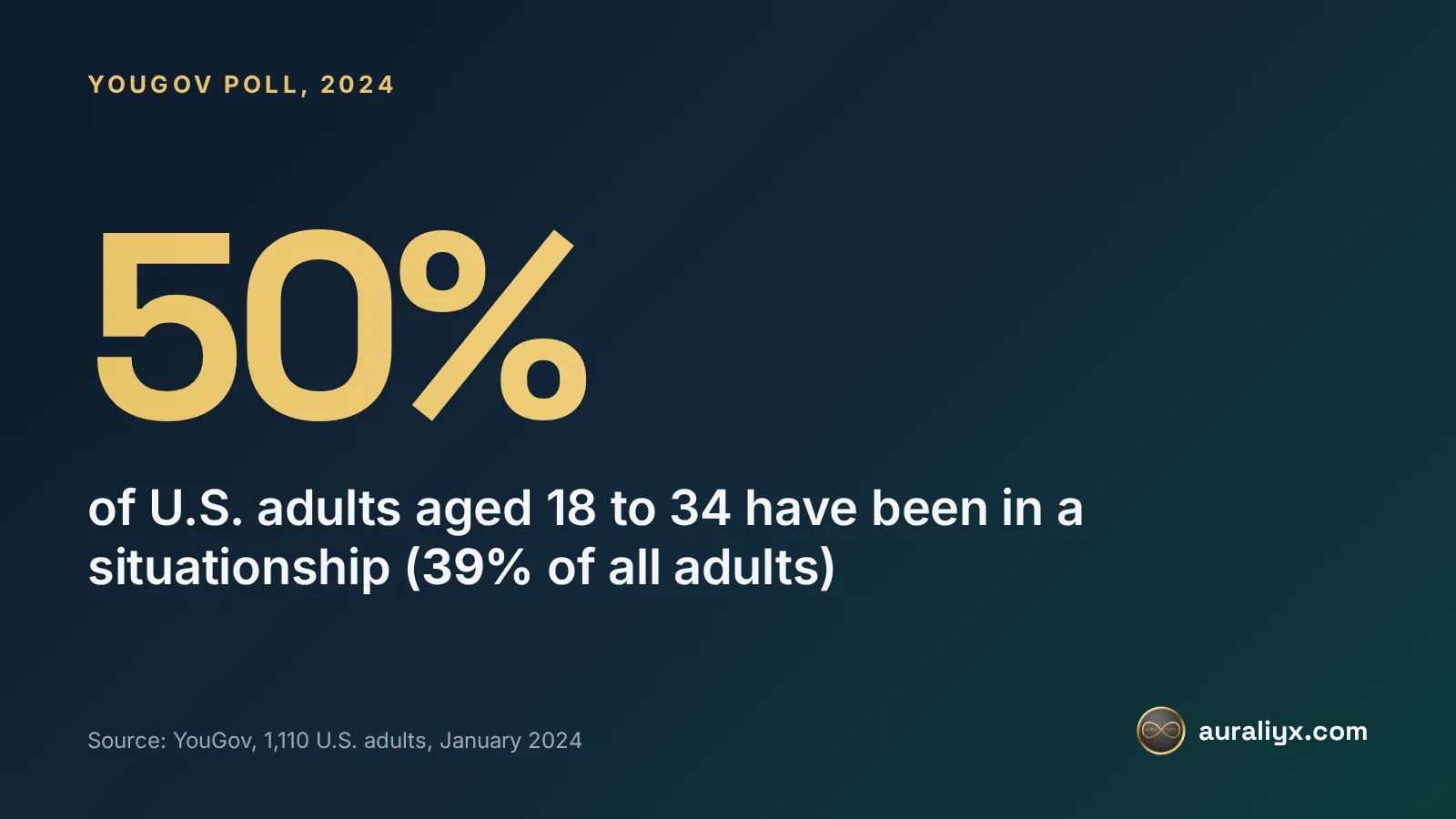
A situationship is a romantic connection where you spend time together and are physically close, but there is no clear label or commitment. It is common: in a YouGov poll, 39% of U.S. adults said they had been in one, rising to 50% of adults aged 18 to 34. If the holidays are making you wonder where you stand, ask calmly and specifically: name what you enjoy, say what you want, and ask what they want. A clear answer, even a disappointing one, beats months of guessing.
- In a YouGov poll of 1,110 U.S. adults, 39% said they had been in a situationship, and 50% of those aged 18 to 34.
- More than half of situationships (55%) started in person, and 7% began on dating apps, the same poll found.
- Researchers describe situationships as high in passion and closeness but low in commitment, and one person often wants more than the other.
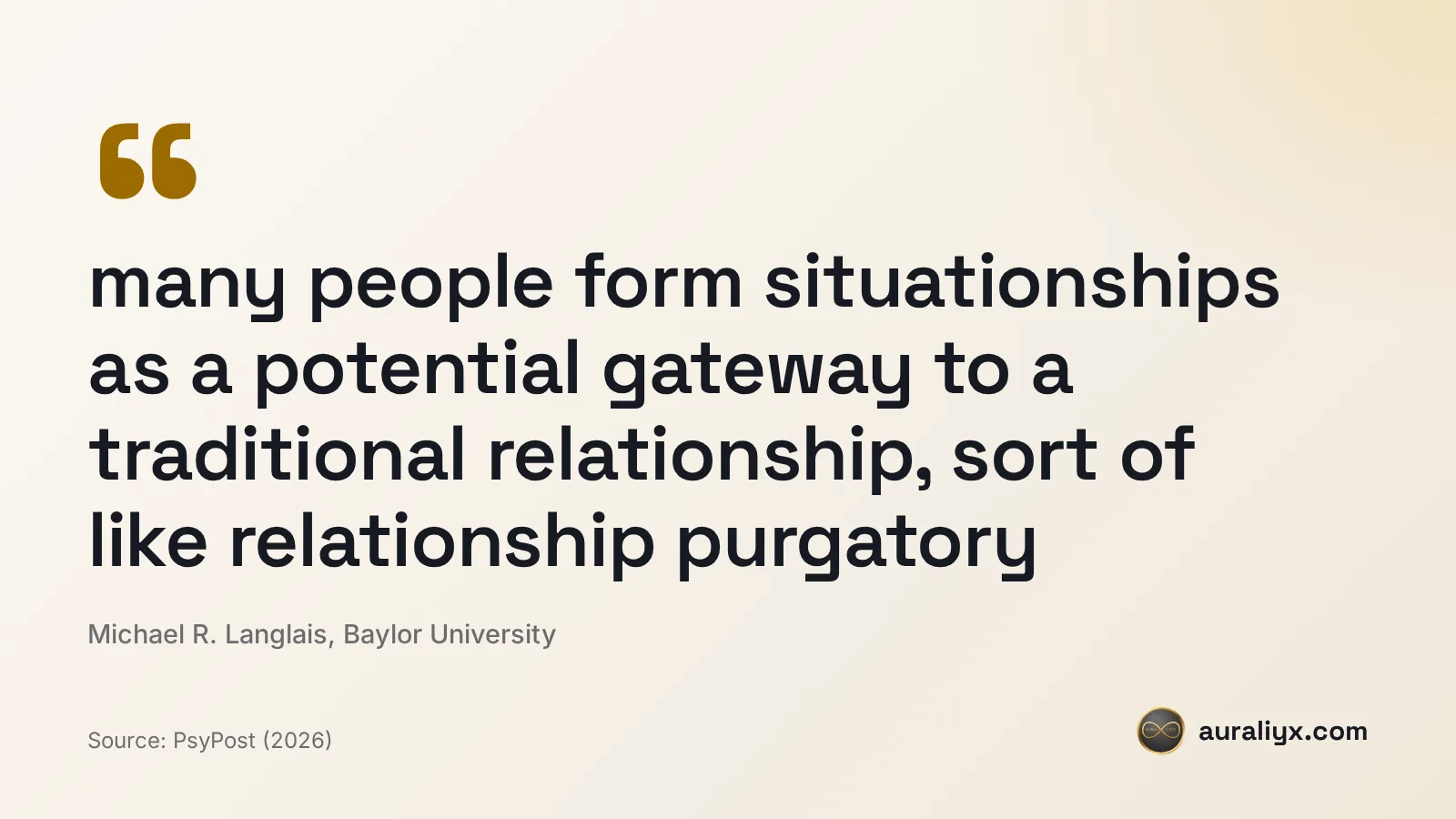
- Many people stay hoping it turns into a real relationship; one Baylor researcher calls it “relationship purgatory.”
- The holidays are a natural moment to ask “what are we?”, as long as you ask calmly and are ready for either answer.
You text almost every day. You have a coffee order you know by heart and a show you only watch together. But when your friend asks if you are bringing them to the holiday party, you freeze, because you honestly don’t know what you are.
That is the classic situationship, and the weeks between Thanksgiving and New Year’s have a way of making it impossible to ignore. Invites, gifts, family dinners and photos all quietly ask the same question. Here is what researchers have learned about situationships, why they are so hard to leave, and how to ask for clarity without starting a fight.
What is a situationship, according to researchers?
According to PsyPost, writer Kayla Kibbe popularized it in a 2017 Cosmopolitan article to describe something between a casual hookup and a committed partnership.
Researchers have since tried to pin it down. Michael R. Langlais and colleagues at Baylor University surveyed and interviewed college students and defined a situationship as a romantic connection that involves spending time together and physical intimacy, but lacks clarity, labels or commitment.
They used psychologist Robert Sternberg’s idea that love has three parts: intimacy (emotional closeness), passion (attraction) and commitment (deciding to build a future). In a typical relationship, commitment grows over time. In a situationship, the researchers found, it tends to stall: lots of passion and closeness, very little commitment.
That is also what separates it from a hookup, which is mostly about sex, or friends with benefits, which usually lacks deep romantic feelings. A situationship often feels like a relationship. It just never gets called one.
How common are situationships?
Very. In a YouGov poll of 1,110 U.S. adults conducted in January 2024, 39% said they had been in a situationship. Among adults aged 18 to 34, that figure was 50%.
The same poll found that 55% of situationships began in person, 17% started on social media and just 7% began on dating apps. Among 18- to 34-year-olds, 29% said theirs started through social media. So if yours grew out of a class, a job or a friend group, you are in good company.
Keep in mind that this is one survey, and people define the word in different ways. But the takeaway is clear: if you are not sure what you are, you are far from the only one.
Stuck on how to ask “what are we?” Paste your last few texts and see how your question is likely to land before you send it.
Try Auraliyx free →Why the holidays make a situationship feel louder
For most of the year, you can live with the gray area. Then November arrives, and suddenly there are real decisions. Do you buy a gift? How much? Do you invite them to Friendsgiving? Will they post a photo with you at the office party, or will you stay off their Instagram?
Couples already have to figure out whose family gets which holiday. In a situationship, you don’t even know if you are on the list. That uncertainty is why so many people feel the itch to define things right now, and it overlaps with what researchers have found about cuffing season.
Here is the good news: the holidays also give you an easy, low-drama opening. “Are you around for Thanksgiving?” is a normal question. It can lead to the bigger one without a big speech.
Signs you’re in a situationship
A qualitative study by Sarah Anderson and Matthew James Phillips at Curtin University in Australia, published in the journal Societies, and the Baylor work point to a few patterns that come up again and again:
- You can’t explain it. Participants described their connection as a “grey area” or “no man’s land.”
- Exclusivity was never discussed. You act like a couple, but nobody has said you stopped seeing other people.
- You are mostly offline. You might meet a few of their close friends, but the relationship rarely shows up on social media.
- The effort feels lopsided. One person usually wants commitment and ends up starting the conversations, planning the dates and asking where things stand.
- It runs hot and cold. Warm and close one week, distant the next, which keeps you hoping.

Why it’s so hard to ask (or to leave)
If a situationship makes you this unsure, why stay? In a follow-up study, the Baylor team found that people stay when they get enough out of it, like affection, attention and support, to make the uncertainty feel worth it. Time already invested and fear of starting over play a part, too.
The biggest reason, though, is hope. Many people treat a situationship as a possible path to a real relationship and wait to see if the other person will get there. When participants felt their emotional needs were met, they were more satisfied, and even vague talk about the future helped them feel calmer.
The Curtin study is more cautious: situationships rarely turn into committed relationships unless both people are emotionally available, communicate clearly and want the same thing. Waiting quietly doesn’t give you any of that. A direct, kind question does. If the not knowing is what weighs on you most, research on relationship anxiety and doubts about the future may sound familiar.
How to ask “what are we?” without making it weird
You don’t need a sit-down talk with a list of demands. You need one honest question at a calm moment, ideally in person or on a call. A text works if that is how you two really talk. A few things help:
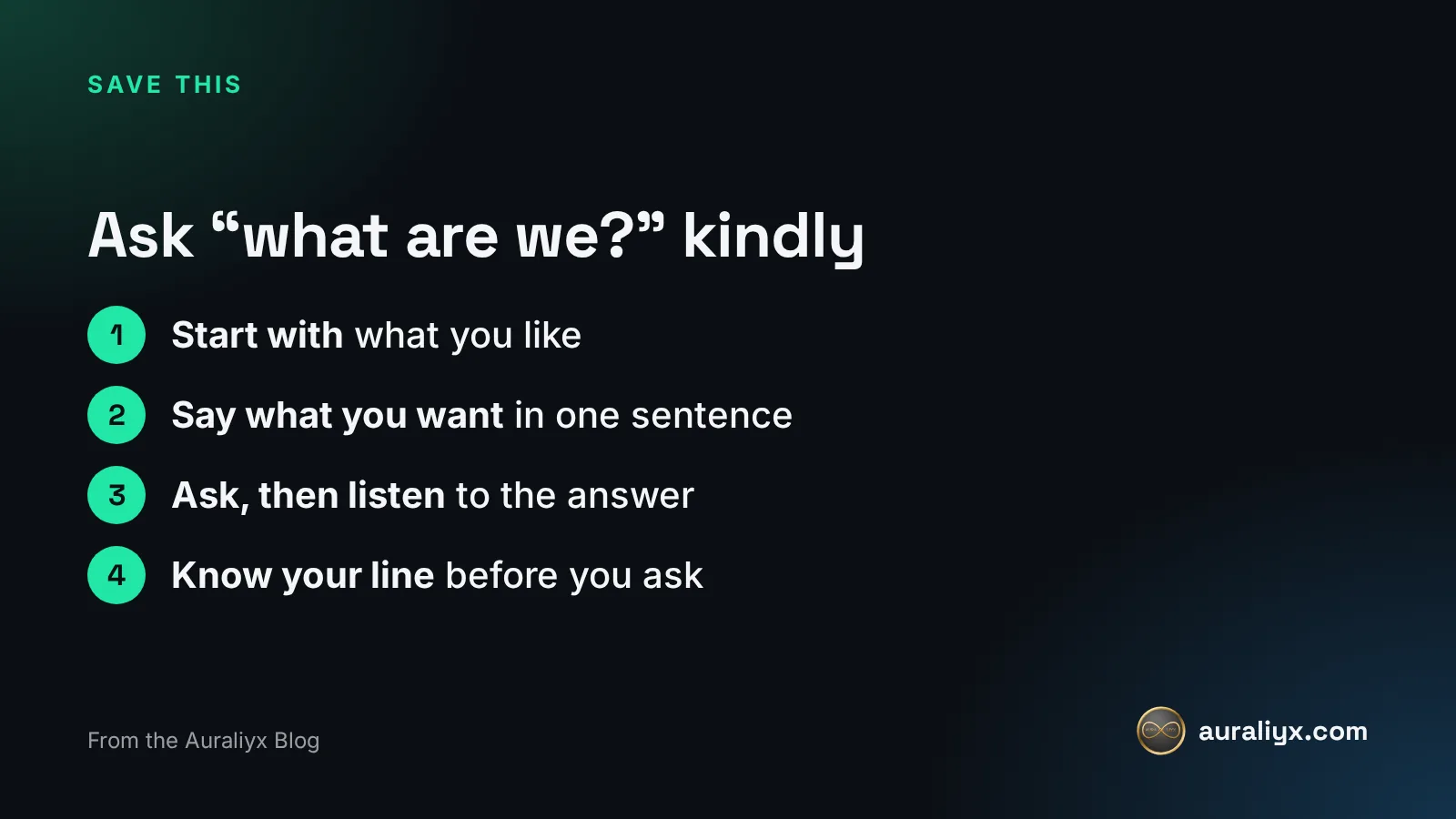
- Start with what you like. It shows you are not attacking the connection, you are asking about it.
- Say what you want, in one sentence. “I’d like us to be exclusive” is clearer than hinting for weeks.
- Ask, then actually listen. Their answer is information, not a verdict on your worth.
- Decide your line beforehand. If they want to keep it casual and you don’t, know what you will do next.
Why it works: It leads with warmth, states your wish without blame and invites a real answer instead of a defensive one.
Why it works: It uses the holidays as a natural opening and asks directly, so neither of you has to decode a hint.
If the answer isn’t what you hoped
Sometimes the answer is “I’m not looking for anything serious.” That hurts, but it also hands you the clarity you were missing. You get to decide if casual works for you, rather than waiting for something that may not come.
The Baylor researchers found that situationships often end without any real conversation, through ghosting or a slow fade. You can do better than that, whichever side you are on. A short, kind goodbye gives both of you closure. If you are the one who got ghosted, here is what to do (and what to text) when someone disappears.
And give yourself permission to be sad. Participants in the Curtin study described the end of a situationship as painful and felt their grief didn’t “count” because it was never official. It counts. Missing someone you were close to is normal, label or not. If the sadness doesn’t lift after a few weeks, or it starts getting in the way of sleep, work or friendships, talking to a therapist can really help.
Why it works: It respects their honesty, protects your goal and ends things cleanly, without burning a bridge you may cross again.
This article is general information, not mental health advice. If you are struggling, talk to a licensed mental health professional.
Sources we checked
- PsyPost: The psychology of situationships: What they are and signs you are in one (February 23, 2026)
- YouGov: Half of 18 to 34 aged Americans have been in a ‘situationship’ (January 31, 2024)
We open and read every source before we cite it. Spotted an error? Email humansupport@auraliyx.com and we will fix it.
Written by
Auraliyx is an AI relationship coach trained only on attraction, dating and relationships. Every article is built from sources we open and read, every number is checked against the original, and the Auraliyx team reviews it and corrects anything we get wrong.
Frequently asked questions
What is a situationship?
It is a romantic connection where two people spend time together and are physically close, but there is no clear label or commitment. Researchers describe it as high in passion and closeness but low in commitment.
How common are situationships?
In a January 2024 YouGov poll of 1,110 U.S. adults, 39% said they had been in a situationship. Among adults aged 18 to 34, it was 50%.
How do I know if I’m in a situationship?
Common signs include no talk about exclusivity, a relationship that stays offline, mismatched effort and a connection that runs hot and cold. If you can’t explain what you are, that is a sign too.
Can a situationship turn into a relationship?
It can, but research suggests it rarely happens on its own. Both people need to be emotionally available, communicate clearly and want commitment. Asking directly is the fastest way to find out.
How do you ask “what are we” without scaring them off?
Pick a calm moment, start with what you enjoy about the connection, say what you want in one sentence and ask how they feel. Avoid ultimatums and accusations.
Should I buy a gift for my situationship?
Keep it small and personal if you do, like a favorite snack or a book you talked about. If gift-giving feels confusing, that is often a sign it is time to talk about where things stand.
Why does ending a situationship hurt so much?
You were emotionally close, and the hot-and-cold pattern can keep hope alive. Because it was never official, people often feel they aren’t allowed to grieve, which can make it harder to move on.
Found it useful? Send it to someone who needs it
A friend with the same question will thank you.
Ask for clarity, kindly
Describe your situationship or paste the conversation. Auraliyx helps you find the words to ask what you want and explains why they work. It’s not AI talking for you. It’s you, talking better.
Try Auraliyx freeFree · no credit cardShort videos on what to text, what to say and what it really means. Follow Auraliyx:
Join the conversation
Has this happened to you? Share your experience. It might help someone else.
Comment rules
- Be kind. No insults, hate or explicit content.
- No links, ads, contact details or phone numbers.
- English only, for now.
- Don't share private details about other people.
- Comments are checked automatically and may be removed.
We only keep the first name and the comment you post, and the date. We don't ask for your email or store your IP address. To have a comment removed, email humansupport@auraliyx.com.